



Rediscover Odaiba! A Fun-Filled Trip Featuring a Historical Stroll and a Tour of the World’s Largest Fountain, “Tokyo Aqua Symphony”
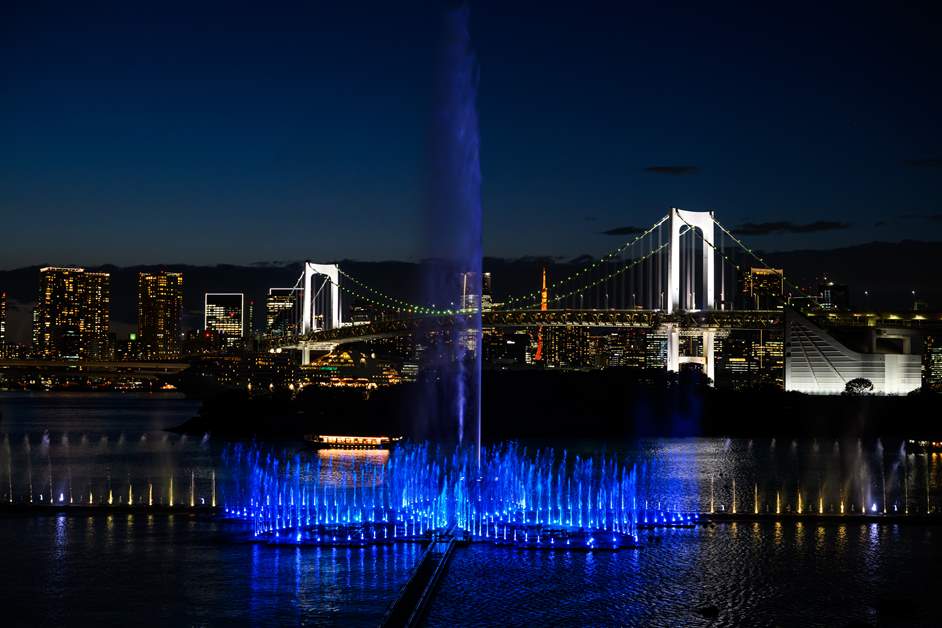
While Odaiba is known for shopping and entertainment, it’s actually dotted with numerous spots where you can enjoy yourself all day long, including historic sites that bring the past to life and parks rich in nature. Furthermore, on March 28, 2026, the “Tokyo Aqua Symphony”—a massive fountain installation set to become Odaiba’s new landmark—began operations. In this article, we’ll introduce an itinerary perfect for a “mini-outing” in Odaiba, as well as the best viewing spots to watch the latest fountain show.
Odaiba Park: Where You Can Experience Edo’s History and the Sea Breeze Firsthand
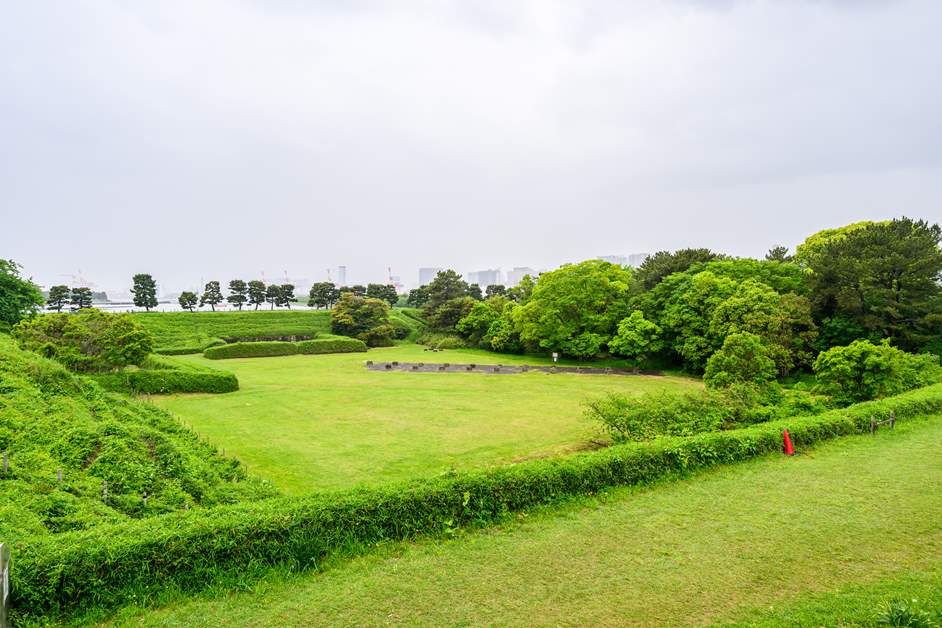
For a short outing in Odaiba, we recommend the route that circles the Bay Area (recreational waters). The area stretching from Odaiba Park to Odaiba Seaside Park is perfect for a leisurely stroll while enjoying the waterfront scenery. Odaiba Park, the starting point and a lush green space, was originally the site of a炮台 known as the Third Odaiba. In 1928 (Showa 3), it was developed into a park and opened to the public.
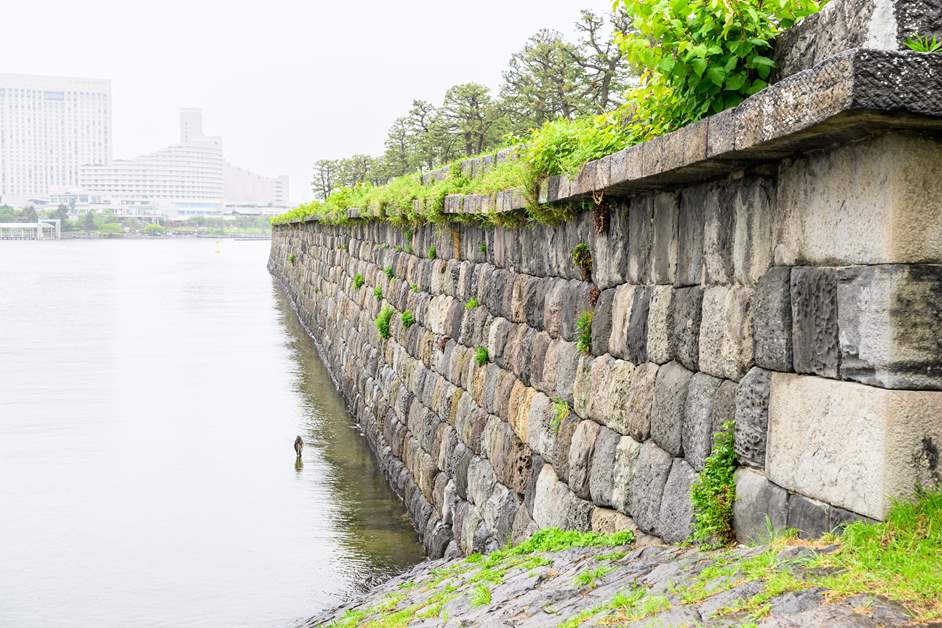
The name “Odaiba” derives from the fortifications (batteries) built off the coast of Shinagawa by the Edo Shogunate, which felt threatened by the arrival of the “Black Ships” during the final years of the Edo period. In 1853 (the 6th year of the Kaei era), construction began the month after Commodore Perry’s arrival, and six fortifications were completed in just one year and three months. In 1926 (Taisho 15), the Third and Sixth Batteries were designated as National Historic Sites as valuable remnants that preserve traces of this history to this day. At Daiba Park, which was once the site of the Third Battery, you can see stone embankments piled up 5 to 7 meters above sea level.
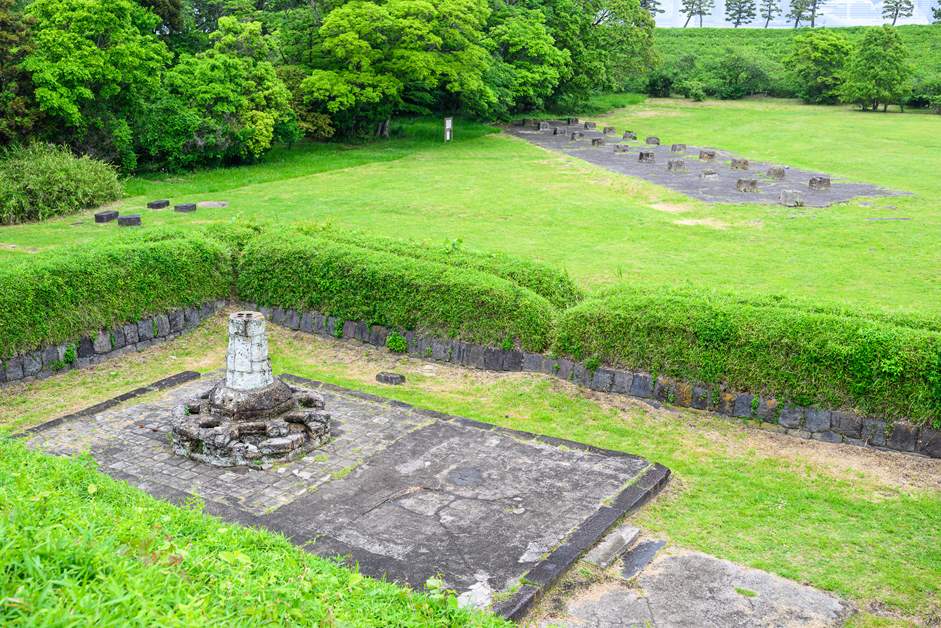
The perimeter of Daiba Park is approximately 550 meters. In the sunken area in the center, the ruins of the “jinya”—the quarters for the guards stationed to protect Daiba—and the remains of an octagonal hearth made of Ōya stone catch the eye. However, the hearth ruins do not date back to the Edo period; they were installed in 1928 when the area was developed as a park.
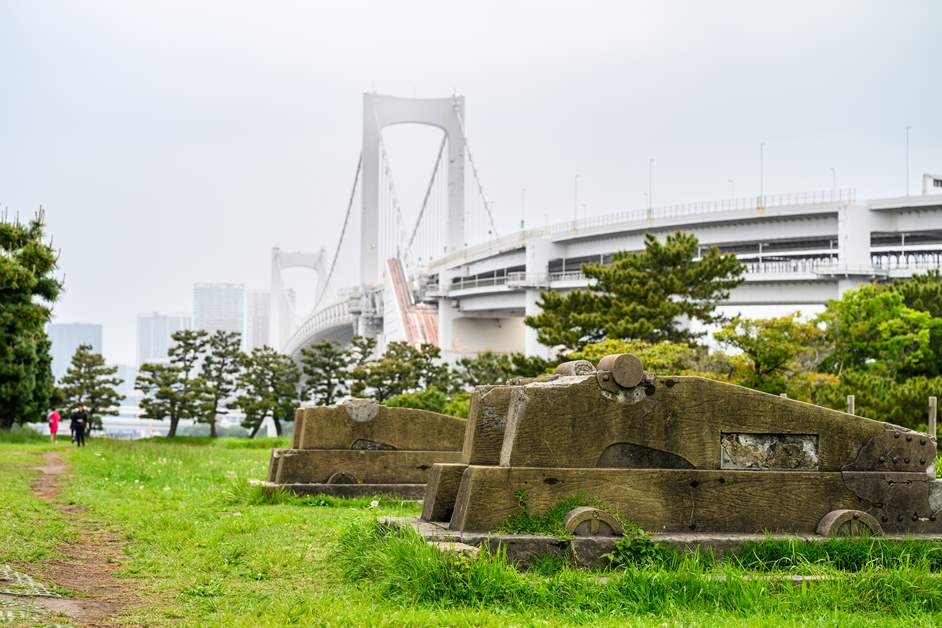
Along the perimeter of the park stand the ruins of a炮台, its barrel pointing out to sea. Although this炮台 was a key defensive position, there are no records of any shots actually being fired at the Black Ships. The炮台 currently on site was restored in 1933 (Shōwa 8).
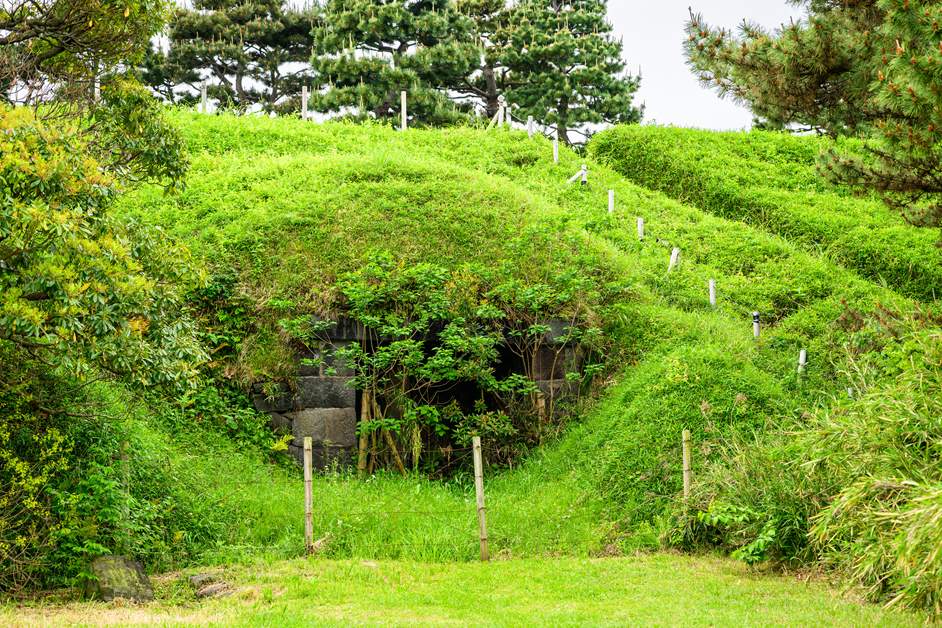
In preparation for the unlikely event of a fire or enemy fire, the gunpowder used in cannon shells was stored in separate locations. As a result, the remains of the powder magazines where the ammunition was stored are scattered throughout the park. It is said that the powder magazines were wooden, tile-roofed buildings surrounded by earthen embankments.
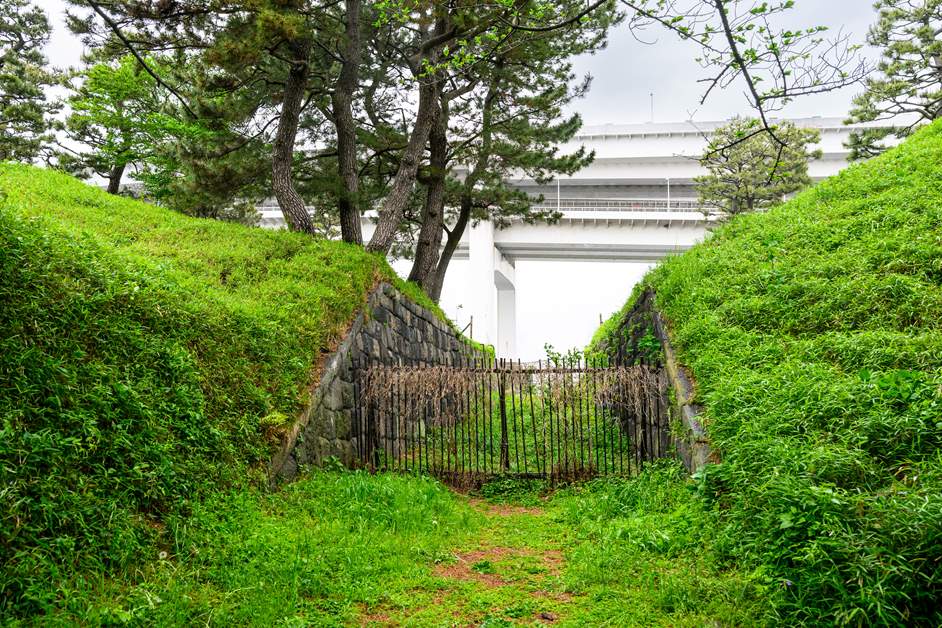
Odaiba Park is a rare spot where you can experience nature right in the heart of the city. Black pines and other trees are planted throughout the park, allowing you to stroll through the greenery while enjoying the sea breeze.
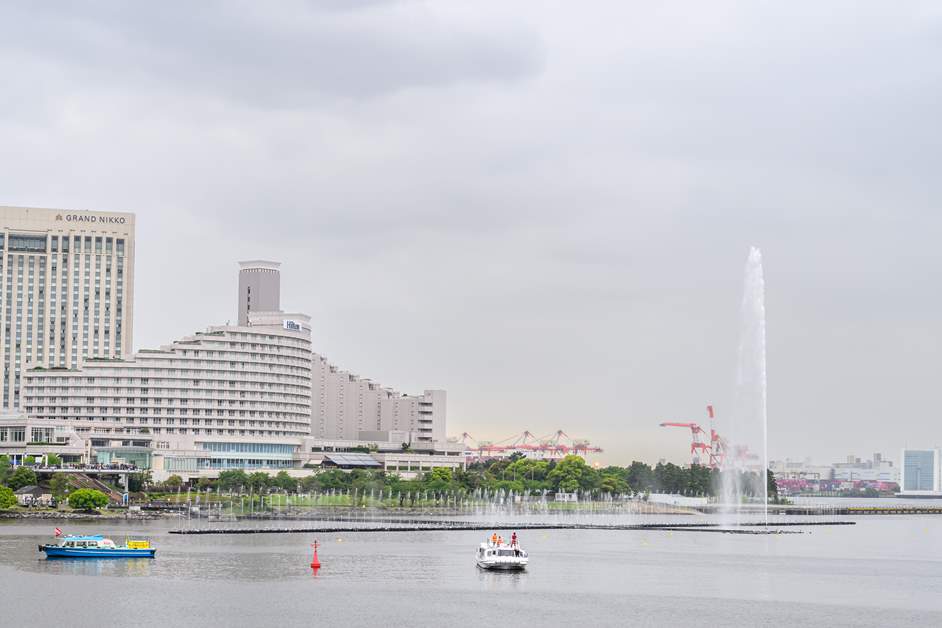
Odaiba Park is also a hidden gem where you can leisurely watch the Tokyo Aqua Symphony fountain show taking place on the opposite shore. On the day of our visit, we watched the 3:00 p.m. performance from this spot. We were able to enjoy the sight of the water columns soaring high into the air in the distance. However, due to the distance, the music—one of the highlights of the show—wasn’t very audible.
A relaxing time spent on white sandy beaches and in green parks
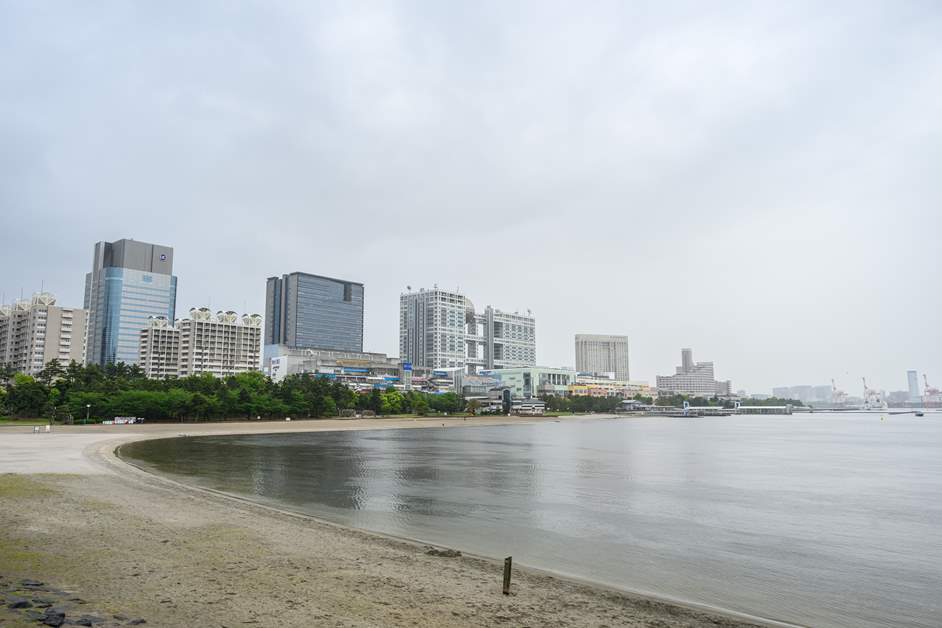
If you walk along the old breakwater from Odaiba Park, you’ll arrive at Odaiba Beach, which stretches across Odaiba Seaside Park. This beach is a beautiful artificial sandy shore that extends for about 800 meters. Although swimming is prohibited for safety reasons, you can spend your time however you like—whether splashing around in the water at the water’s edge or sunbathing on the sand.
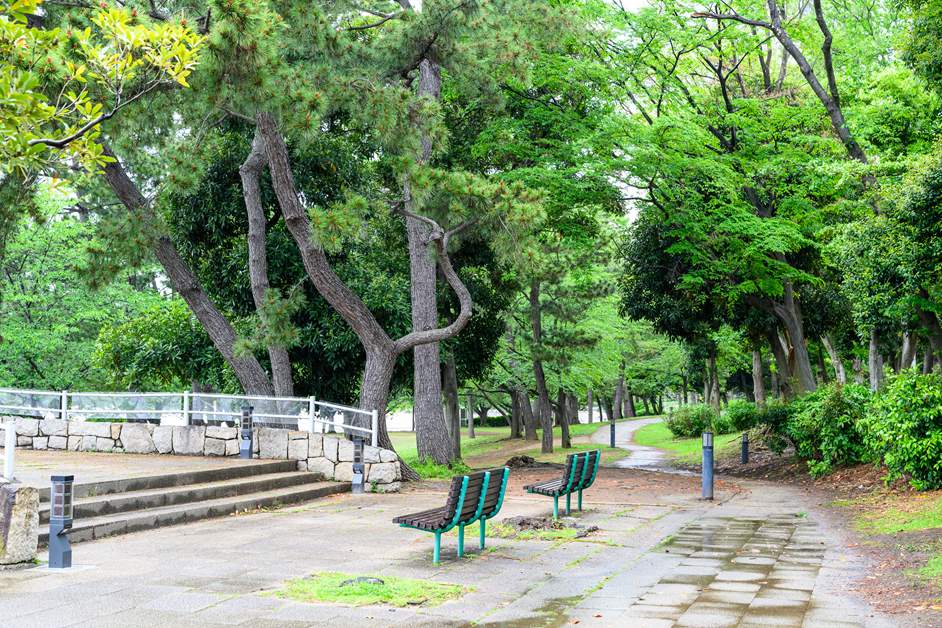
Odaiba Seaside Park, a lush green space stretching along the beach, also features a running trail. You can run through the sea breeze while enjoying views of the Rainbow Bridge and the opposite shore. The trail is well-equipped with water fountains, vending machines, and restrooms.
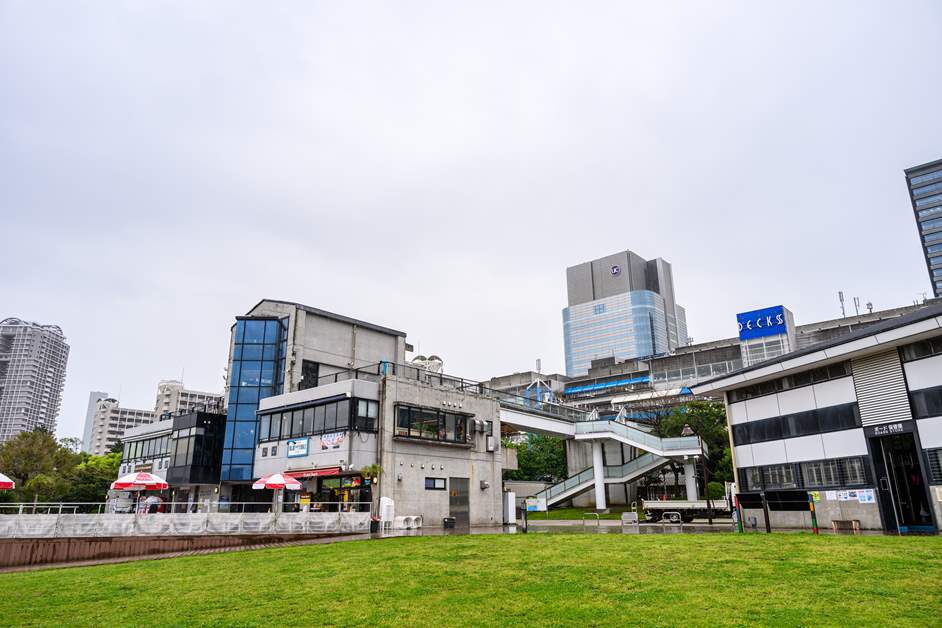
In the recreational waters along the beach, you can enjoy water sports such as canoeing and windsurfing. The first floor of the Marine House, which serves as the hub of the area, features an information center, as well as showers and lockers available for hourly rental, a snack bar, and more. Water sports equipment is also available for rent.
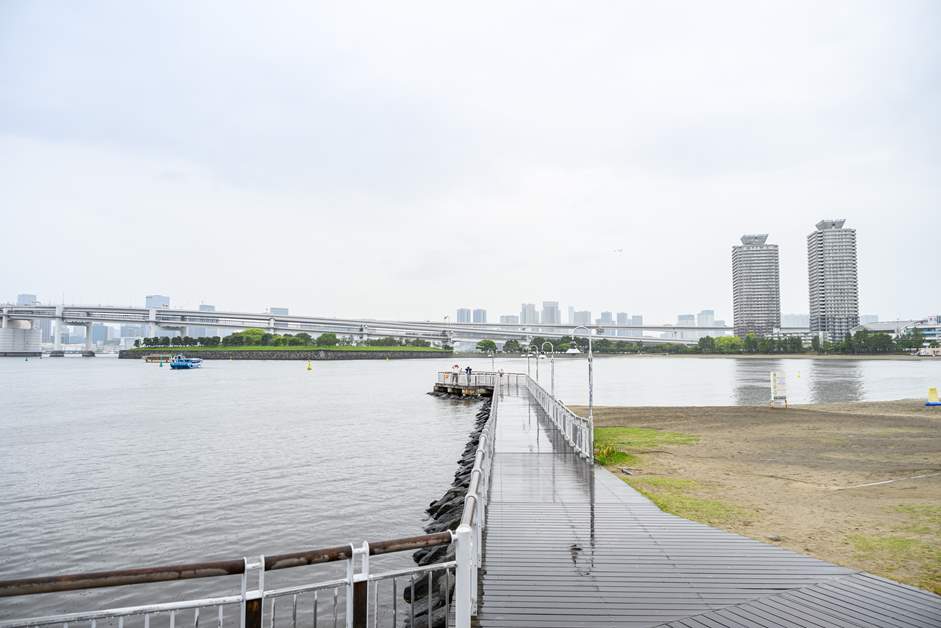
The observation pier jutting out into the ocean is a popular photo spot among tourists. With nothing to block the view, you can feel even closer to the ocean.
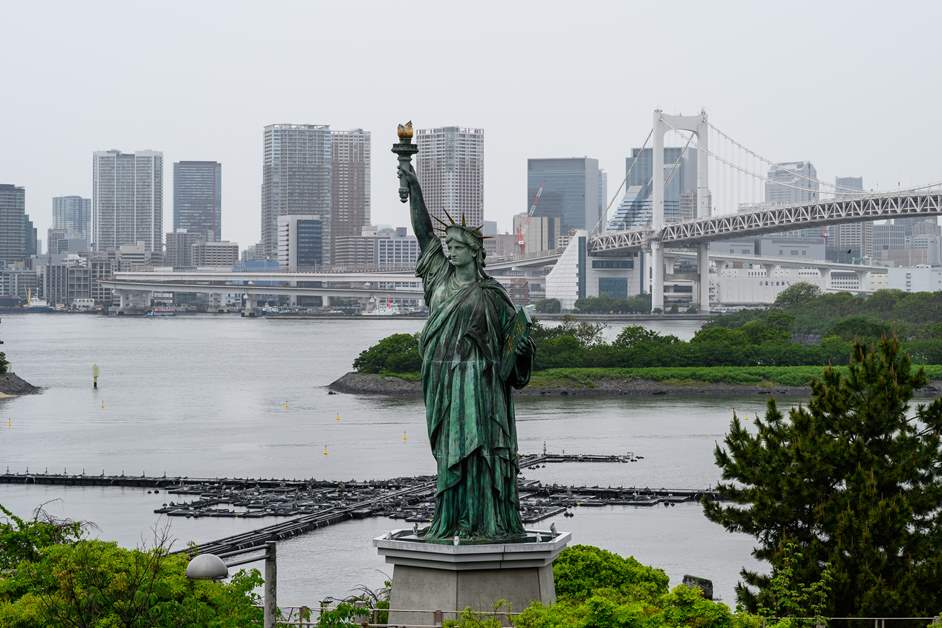
As you pass Marine House, the Statue of Liberty comes into view. Standing in front of Aqua City Odaiba, this statue is a replica cast from a mold of the Statue of Liberty in Paris. During the “Year of France in Japan,” held from 1998 to 1999, the Statue of Liberty from Paris was temporarily relocated to Odaiba. Subsequently, there were calls for a permanent installation, so a replica was created with permission from the City of Paris. It was installed at its current location in 2000. In front of the Statue of Liberty is a skywalk (an elevated walkway) where you can view the statue up close, and if you continue walking toward Daiba Station, you’ll arrive at the observation deck. The Tokyo Aqua Symphony fountain show is best enjoyed from this observation deck.
Water spray that turns golden at dusk
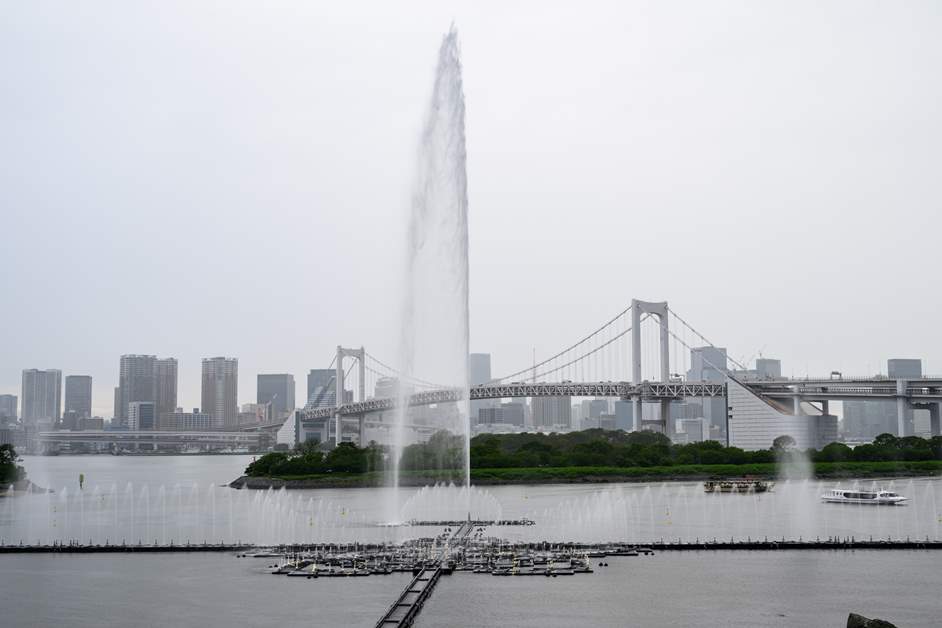
Tokyo Aqua Symphony is a fountain facility developed by the Tokyo Metropolitan Government to further enhance the appeal of the Rinkai Sub-Central Business District and create new vitality in the area. Construction began in July 2025, and following a trial run, the facility began operations on March 28, 2026. Performances are scheduled daily from 11:00 a.m. to 9:00 p.m., with 10 shows per day (each lasting about 10 minutes). During the 5:00 p.m. performance at the time of our visit, we took photos from the observation deck with the Rainbow Bridge in the background. During the daytime, visitors can appreciate the dynamic, sculptural beauty of the water more than the light displays.
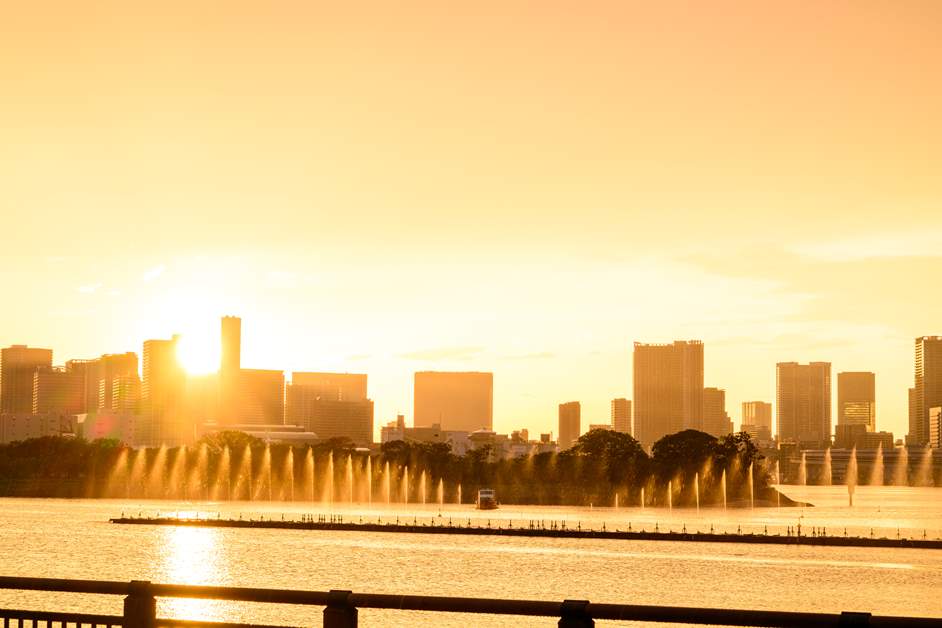
While the true beauty of the Tokyo Aqua Symphony—a fusion of water, music, and light—is best experienced at night, the evening hours are actually also highly recommended. For the 6:00 p.m. performance just before sunset, I went down to the observation deck and watched the show from right next to the water’s edge on the first floor. The water jets, glowing golden in the setting sun, were breathtakingly beautiful. The program for this performance featured “Dragon Quest” (including “Roto’s Theme” and “And So the Legend Begins”), composed by Koichi Sugiyama and performed by the Tokyo Metropolitan Symphony Orchestra, as well as the original composition “SAKURA FUBUKI.”
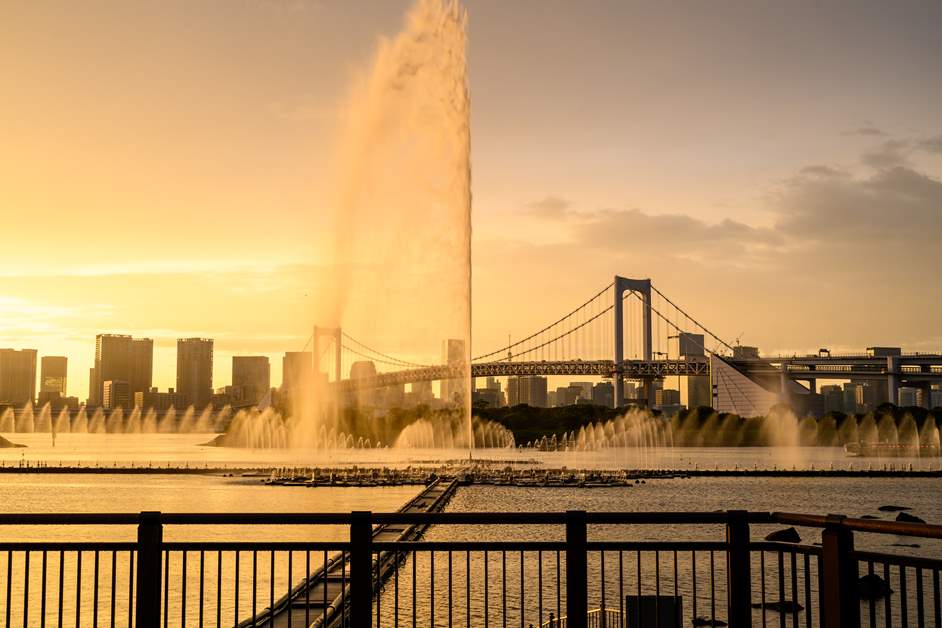
In *Dragon Quest*, water surges dynamically in time with the music that heralds the beginning of an epic adventure. The spectacle of the splash fountains bursting in sync with the sound of the cymbals is truly breathtaking. The familiar melody and the fountains blended perfectly together.
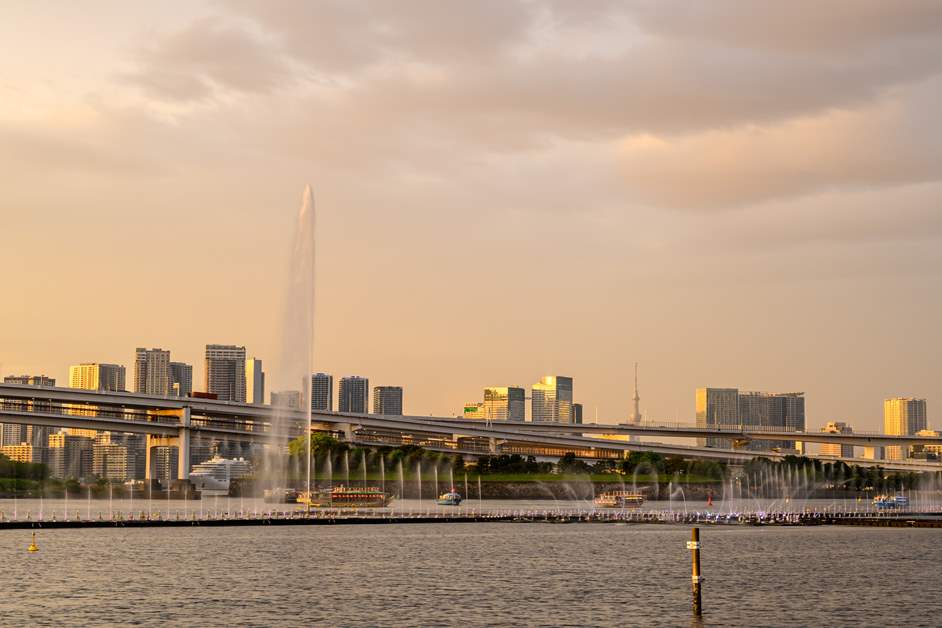
Just as the music and visuals transitioned from “Dragon Quest” to “SAKURA FUBUKI,” I turned my back on the Statue of Liberty and walked over to the Hilton Tokyo Odaiba side. From this spot, you can capture both the fountain and the Tokyo Skytree in the same frame.
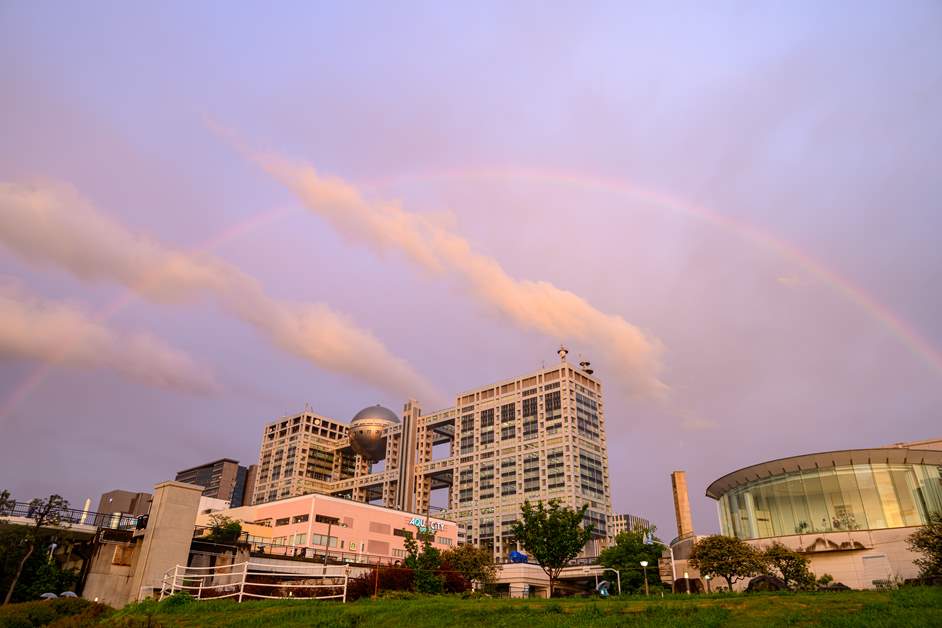
The weather kept changing by the minute on the day of our shoot, but by evening the rain had stopped and a rainbow appeared in the sky. After a rain shower, the air in Odaiba is crisp and the way the light reflects is beautiful, so it’s precisely on days with unstable weather that you might find a special photo opportunity.
An art installation featuring light and water floating in the darkness illuminates the Bay Area at night
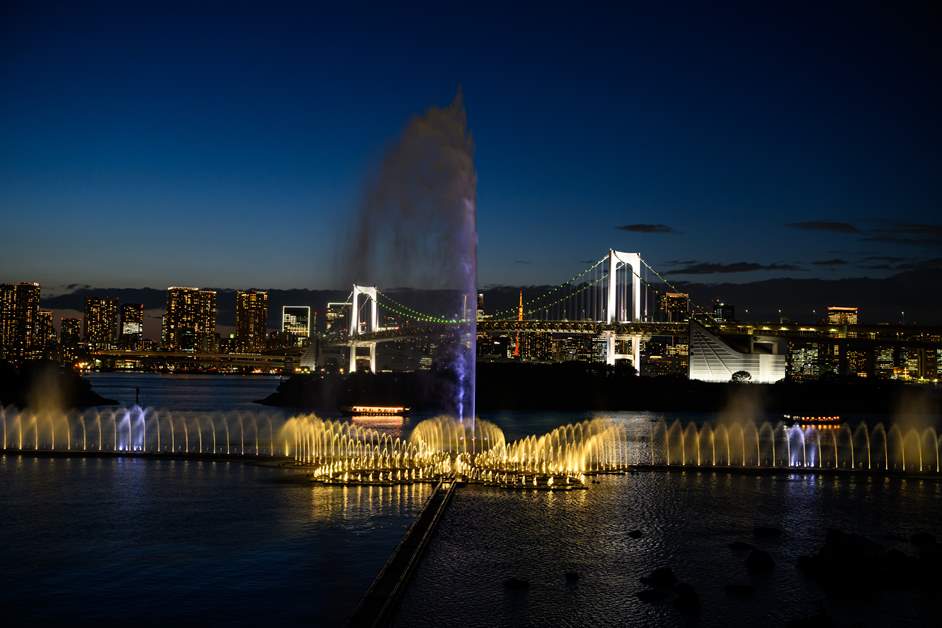
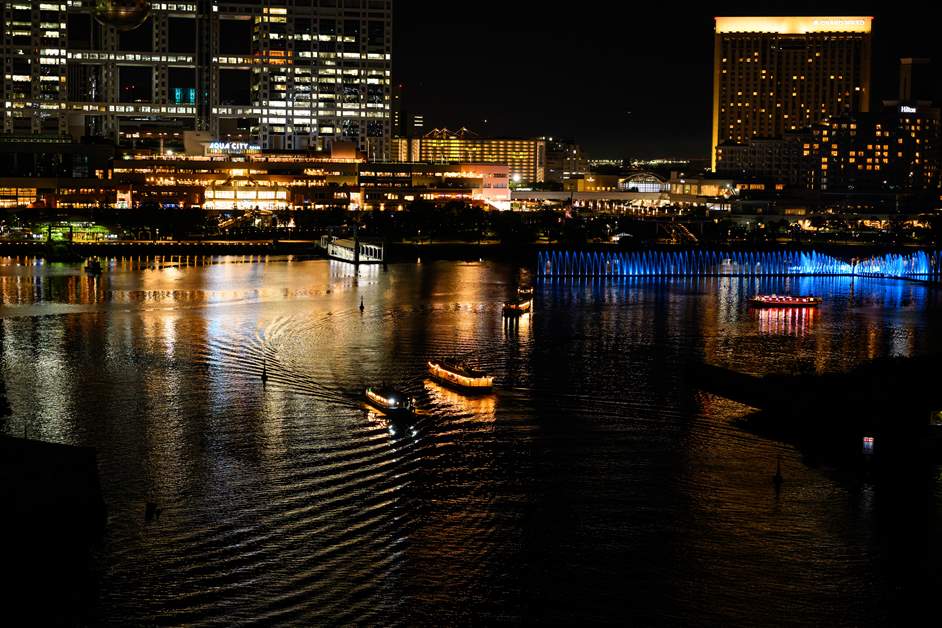
Once the sun has completely set, the symphony—where water, music, and light truly come to life—finally begins. For the 7:00 p.m. show, set against the backdrop of the night view, we highly recommend watching from the second-floor observation deck, which offers a higher vantage point.
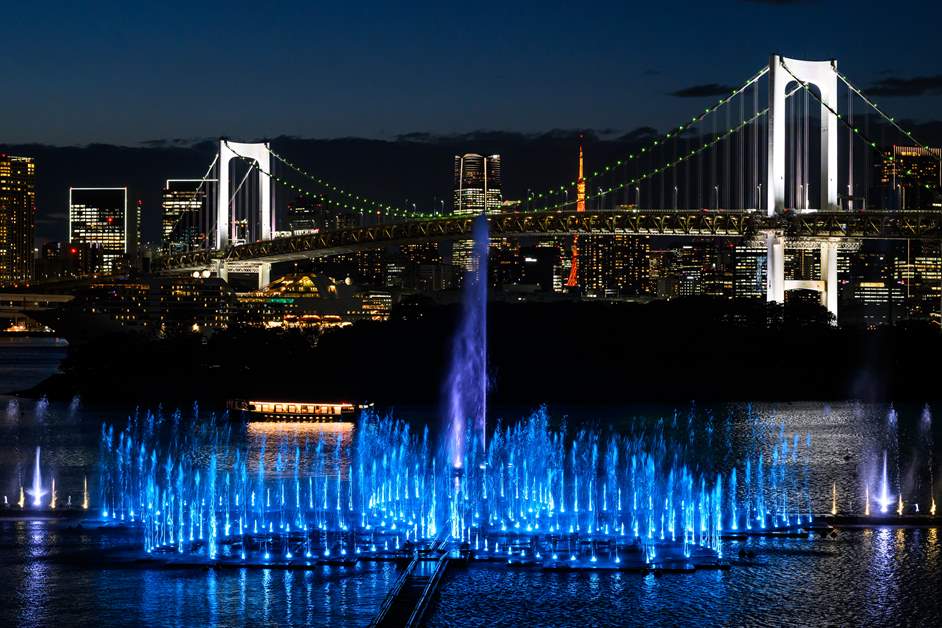
The lighting design for the “Dragon Quest” fountain show is a testament to the attention to detail. Based on a dazzling champagne gold that evokes the gold and “Small Medals” featured in the game, the display incorporates accent colors such as a vivid blue reminiscent of Slimes and a sky blue symbolizing the vast ocean and sky. The contrast of colors emerging against the darkness of the night is truly mesmerizing.
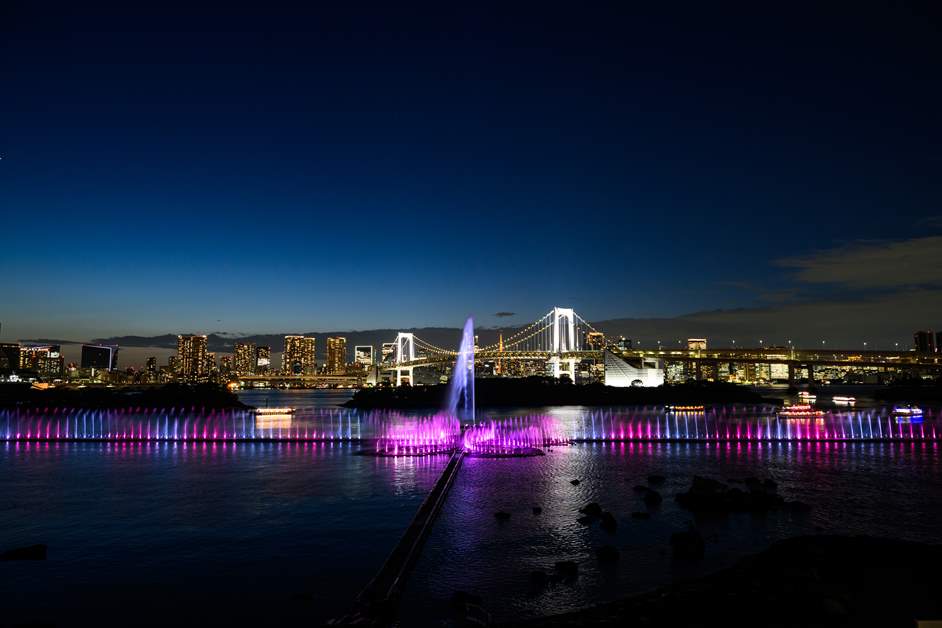
In the original song “SAKURA FUBUKI,” the atmosphere shifts dramatically to a world of “Japanese tradition.” A fountain spanning 250 meters in width dances in time with the melody of the shamisen and the tones of the shinobue and shakuhachi flutes. The lighting is adorned with various shades of “cherry blossom colors,” using light to depict the scene of cherry blossoms scattering across the night sky. I was captivated by the power of the music, accentuated by strobe effects, and the sense of speed conveyed by the gradient shifting from pink to white.
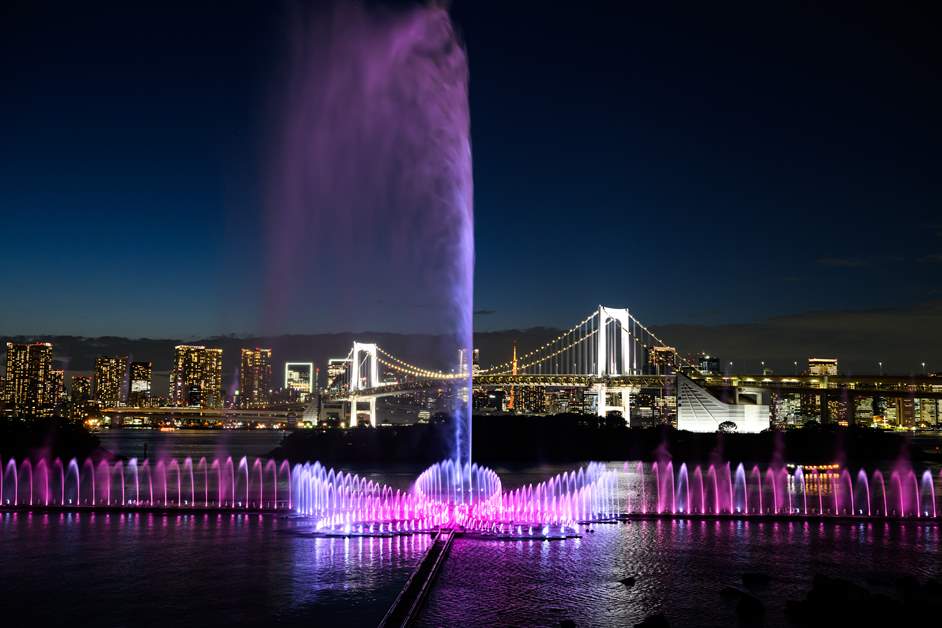
As “SAKURA FUBUKI” nears its finale, the water’s movement becomes even more intense. In a dramatic shift from its delicate movements, the fountains reach heights of up to 150 meters, perfectly synchronized with the song’s crescendo. This sense of scale can only be experienced in person.
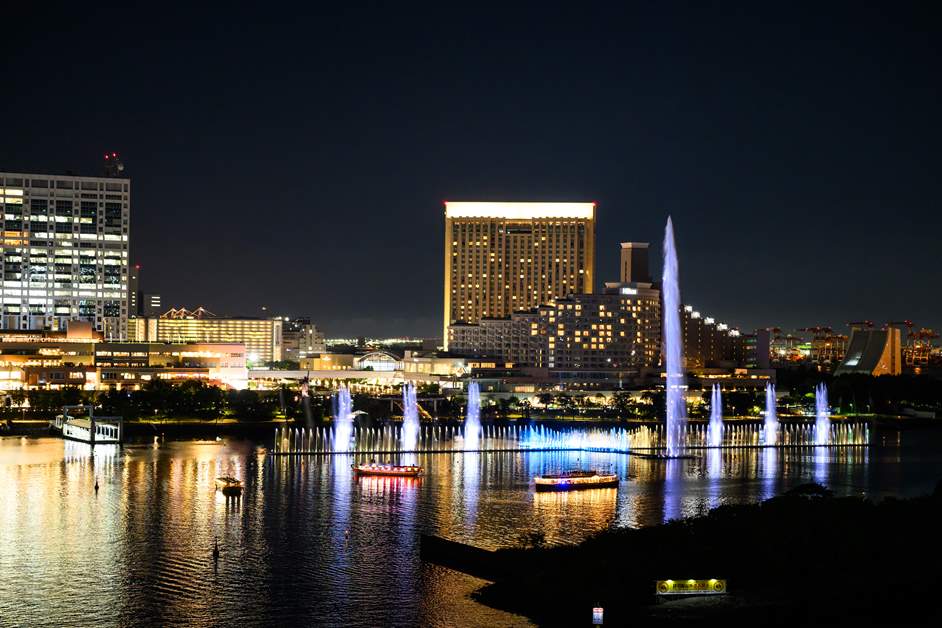
The classic route is to enjoy the fountain show from the Odaiba side with the Rainbow Bridge in the background, but it might also be nice to walk a little further and watch the fountain show from the Rainbow Bridge promenade (Rainbow Promenade). From the promenade, you can enjoy the light and water show spreading out over the water, with the Odaiba cityscape and the illuminations of the Fuji TV headquarters serving as the backdrop.
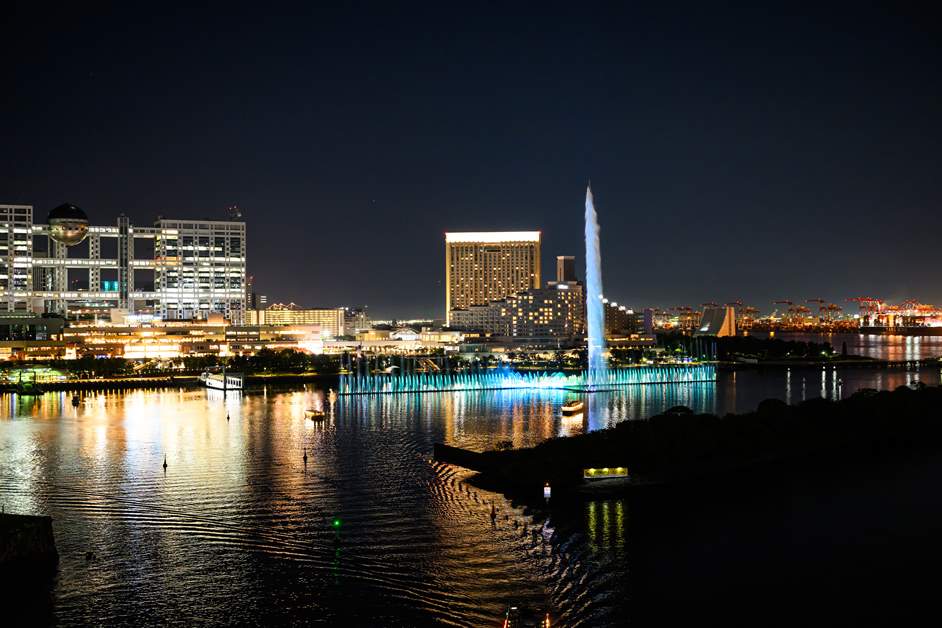
The day of our interview happened to be the premiere of the new production, “Canon.” The fountain show, performed by the Tokyo Metropolitan Symphony Orchestra (conducted by Kazuhiro Koizumi) to the tune of Pachelbel’s “Canon,” featured water tracing beautiful arcs and rippling delicately like gentle waves. The lighting design centered on refreshing shades of light green and light blue. It was a show that felt like a refreshing breeze blowing across the night sea.
From Odaiba Park, which tells the story of the Bakumatsu period, to the state-of-the-art Tokyo Aqua Symphony fountain, my stroll through Odaiba allowed me to once again appreciate the dual nature of this city—its “history” and “innovation.” According to estimates by the Tokyo Metropolitan Government, this fountain show is expected to attract as many as 30 million visitors annually. This water art spectacle, staged on a scale that ranks among the world’s largest, is poised to become a highlight of sightseeing in Odaiba. However, please note that the fountain show’s program may be altered or canceled depending on weather conditions, so be sure to check the official website in advance for the latest information. Be sure to experience the breathtaking performance created by this new waterfront landmark.
《Tokyo Aqua Symphony Official Website》
https://tokyoaquasymphony.jp/
https://tokyoaquasymphony.jp/