



Explore 5 Areas of Minato Ward! A Tour of Instagram-Worthy Spots Featuring “Giant Structures” of Overwhelming Scale
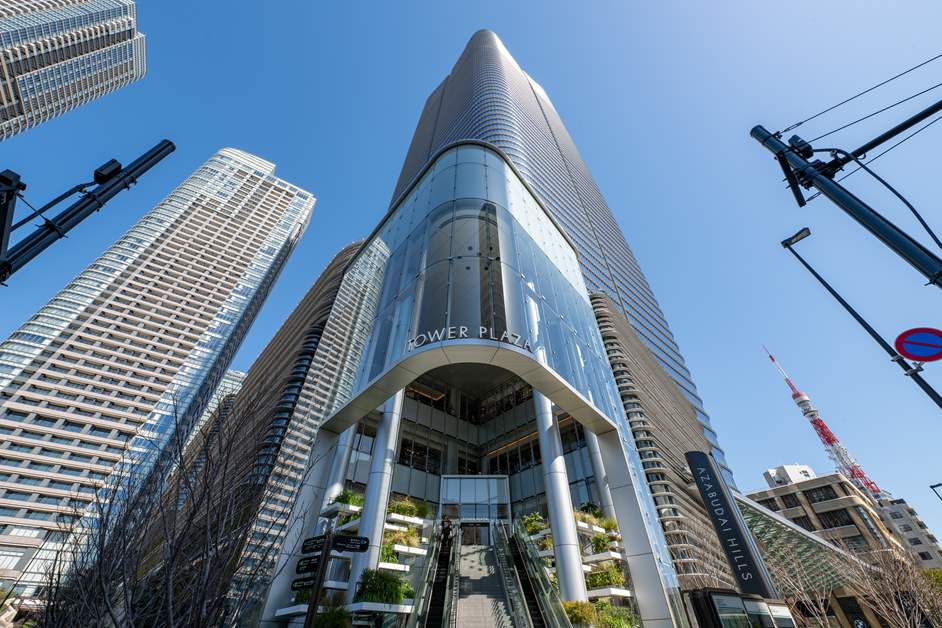
Minato Ward, which boasts a diverse character despite its central location, is composed of five areas: Shiba, Azabu, Akasaka, Takanawa, and Shibaura Konan. Each area possesses its own unique character rooted in its topography and history, and when you actually visit these places, you’ll be greeted by massive structures that symbolize their respective eras. From Tokyo Tower, a symbol of Showa-era Tokyo, to Azabudai Hills Mori JP Tower—Japan’s tallest building and a new landmark of the Reiwa era—these massive structures, with their overwhelming scale that captivates all who see them, and their surrounding areas are among Minato Ward’s most Instagrammable spots. On this occasion, we toured the five areas of Minato Ward to experience firsthand the power and presence of each of these massive structures.
Tokyo Tower in Shiba, which has continued to grace the sky since the Showa era
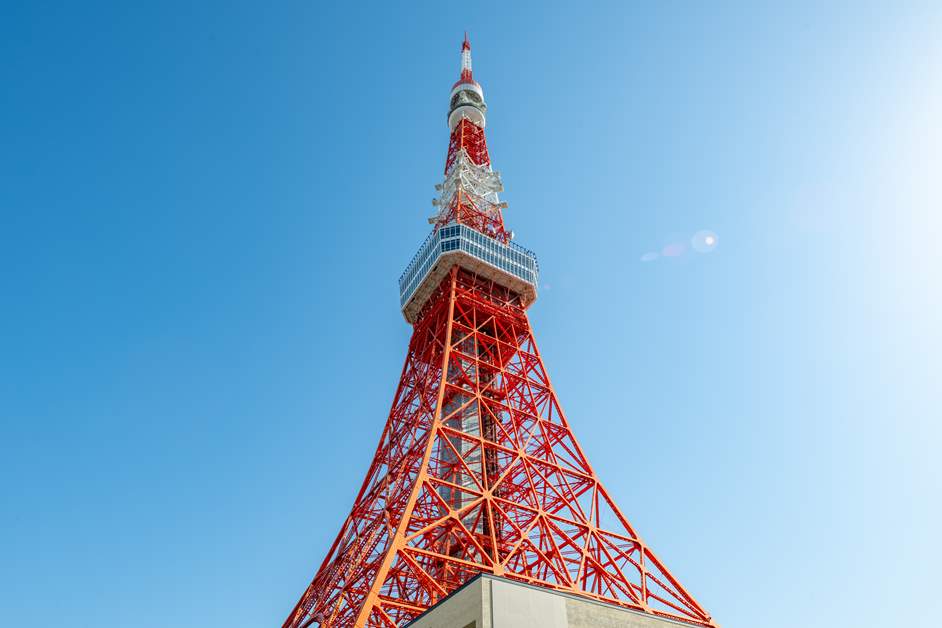
The Shiba district is home to some of Japan’s most prominent business districts, such as Shimbashi and Toranomon. At the same time, it is an area where tranquility and bustle coexist, with historic temples and shrines like Zojo-ji Temple situated within it. Against the skyline of Shiba, the “Tokyo Tower” adds a splash of color with its striking contrast of International Orange and white. Since its completion in 1958 (Showa 33), this 333-meter-tall tower has always been cherished as a landmark of Tokyo.
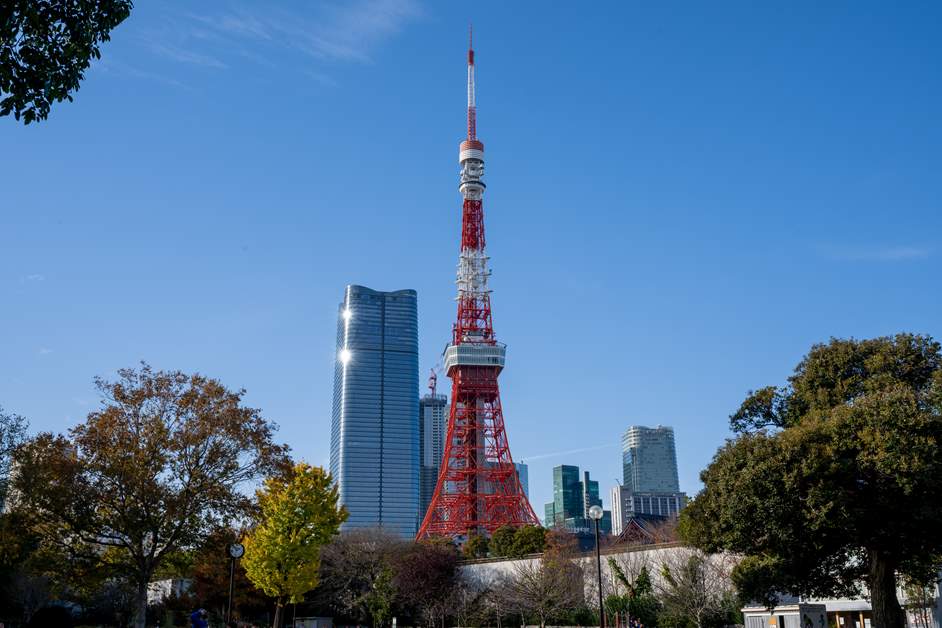
The greatest appeal of Tokyo Tower is, without a doubt, its steel frame structure, which embodies the ultimate in functional beauty. The silhouette of the steel frame, assembled in a lattice-like pattern, is delicate in a way, yet conveys a sense of strength firmly rooted in the ground.
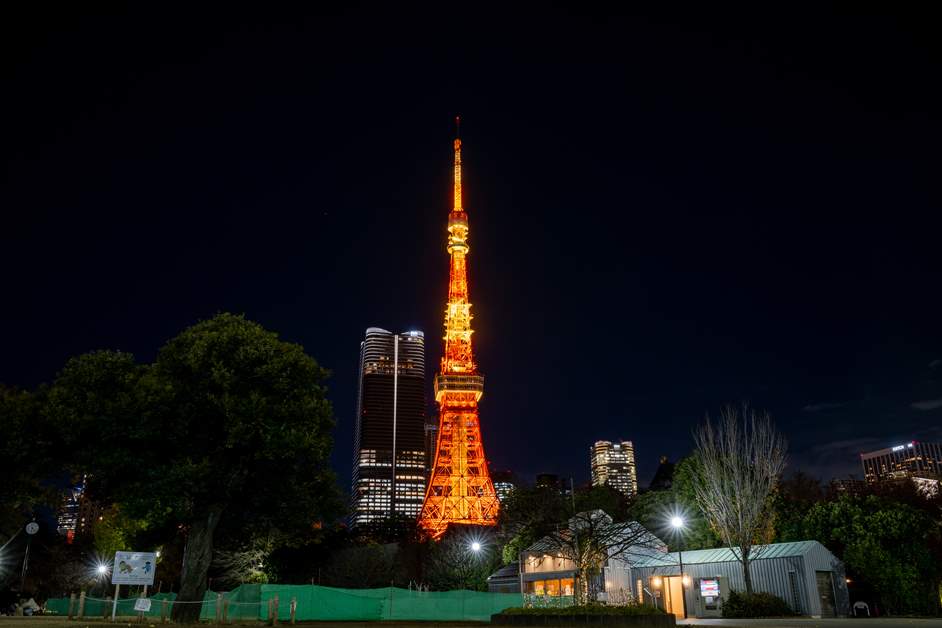
As the sun sets, the scenery becomes even more beautiful, illuminated in orange by approximately 180 lights. There are two lighting patterns: a warm “winter version” and a cool “summer version.” The lighting also changes depending on the occasion or event, so if you plan to take photos of the night view, be sure to check the lighting calendar on the official website.
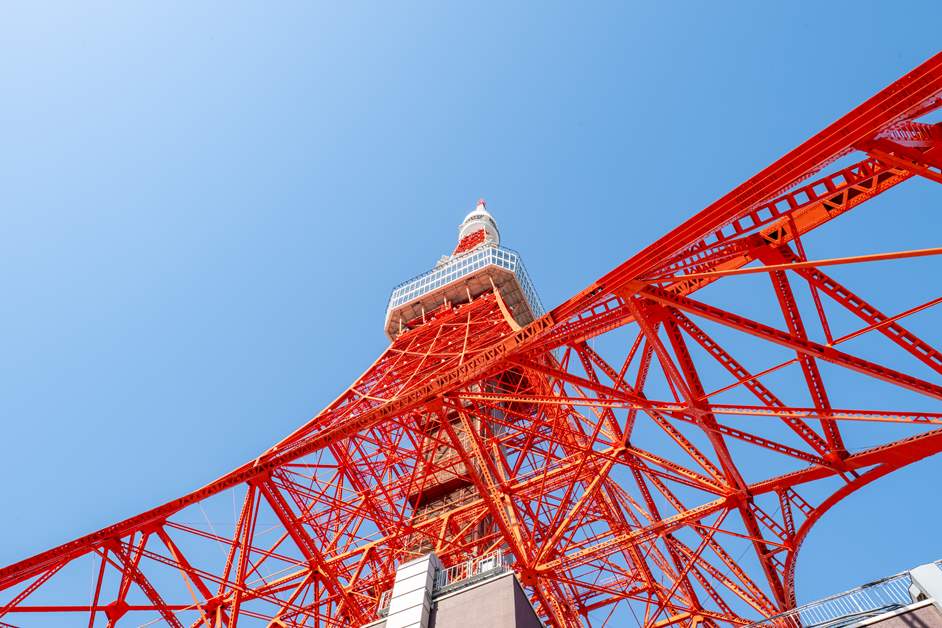
If you're heading to Tokyo Tower, I recommend taking the route that exits to street level via the Akabanebashi Exit at Akabanebashi Station on the Toei Oedo Line—it's the closest way. It took about a 5-minute walk from the station to reach the base of Tokyo Tower.
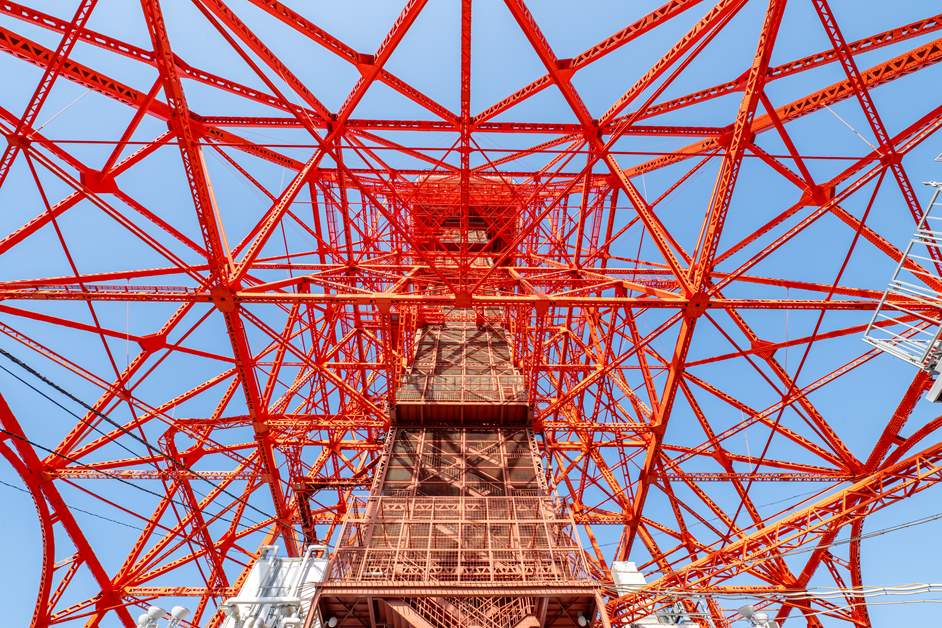
Once you arrive directly beneath the tower, look straight up. The geometric patterns formed by the intricately intertwined steel beams resemble a giant kaleidoscope. This overwhelming sense of density is a unique aesthetic beauty of Tokyo Tower that’s hard to appreciate from a distance.
Azabu's Skyscraper: Looking Toward the Future from Japan's Tallest Building
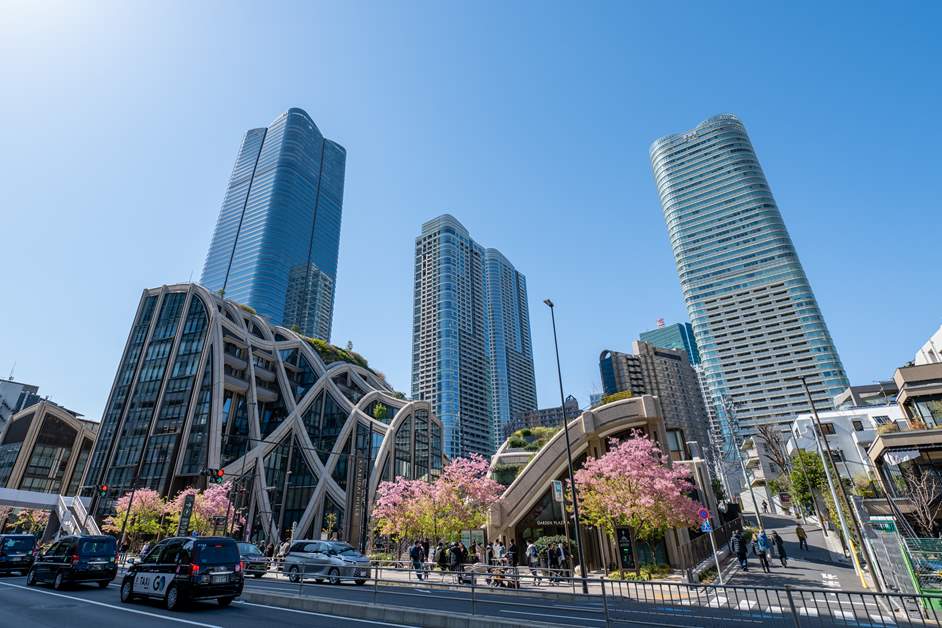
The Azabu district is a historic area where samurai residences belonging to various feudal domains stood side by side during the Edo period—a legacy still reflected in the names of hills such as Toriizaka and Sendai-zaka. Since the Meiji era, these samurai residences have been transformed into embassies of various nations, and today the area is characterized by a vibrant international atmosphere coexisting with a sophisticated residential neighborhood. It is in this very Azabu that “Azabudai Hills” has emerged as a new neighborhood. Spanning a vast site, it brings together offices, residences, hotels, schools, and medical facilities, possessing all the functions befitting the name “compact city.”
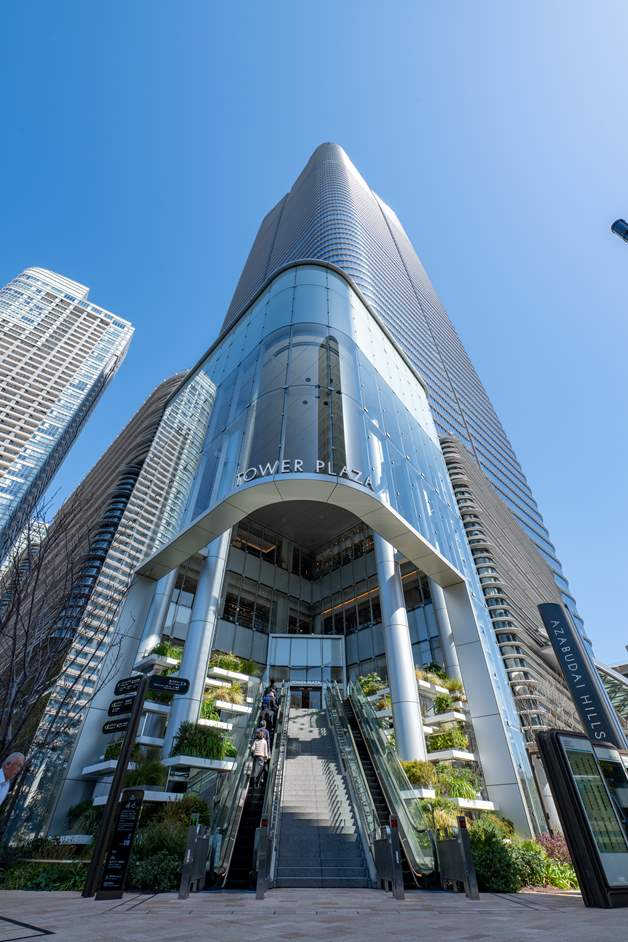
The “Azabudai Hills Mori JP Tower” exudes an overwhelming presence as a symbol of the city. It is known as Japan’s tallest building, standing 64 stories above ground and boasting a height of approximately 330 meters (as of April 2026).
A defining feature of this building is its elegant silhouette. Rather than being linear, its barrel-shaped design—with a slight bulge in the center—ensures that, despite its immense size, it does not feel oppressive and blends gracefully into the surrounding cityscape.
A defining feature of this building is its elegant silhouette. Rather than being linear, its barrel-shaped design—with a slight bulge in the center—ensures that, despite its immense size, it does not feel oppressive and blends gracefully into the surrounding cityscape.
The beauty of Mori JP Tower stands out even more when viewed from a distance. Its all-glass exterior reflects the color of the sky and the cityscape depending on the season and time of day, revealing a different appearance at every moment.
When night falls, it takes on a different kind of radiance. With lights glowing on every floor, the entire building stood out against the night sky like a giant sculpture of light.
Azabudai Hills is dotted with art and greenery throughout. With attractions such as the world-renowned “TeamLab Borderless” and galleries showcasing world-class art, the neighborhood itself feels like one giant art museum. Exploring the massive buildings while taking in the art is a unique way to enjoy Azabudai Hills.
A Landmark in Akasaka Towering Over the Heart of Broadcasting Culture
The Akasaka district has flourished since the Meiji period as a home to state guesthouses and a district of traditional Japanese restaurants, and after World War II, it developed into a vibrant commercial district teeming with retail establishments. At the heart of this neighborhood, frequented by many cultural figures and entertainers, stands “Akasaka Sacas,” which had its grand opening in 2008. Centered around the “TBS Broadcasting Center”—the headquarters of TBS Television and TBS Radio—it has become a hub for entertainment, featuring a lineup of theaters, office buildings, and commercial facilities.
The "TBS Broadcasting Center," which towers over the heart of Akasaka Sacas, was completed in 1994. It is affectionately known as the "Big Hat" because the massive circular parabolic deck on its rooftop resembles a hat. This 20-story building continuously broadcasts the latest news and information.
The building is equipped with multiple studios for both television and radio. It’s a strange feeling to realize that the various programs I watch and listen to every day are produced right here. Incidentally, I’ve heard that TBS is the only commercial broadcaster in Tokyo that airs both television and radio programs from its own facilities.
The “Akasaka Biz Tower,” located near the TBS Broadcasting Center, is a 39-story, approximately 179-meter-tall supertall mixed-use building. Since its completion in 2008, it has served as a hub supporting Akasaka’s business community. The “Shops & Dining” commercial area on the lower floors features a mix of long-established shops beloved by Akasaka residents and the latest cafes, serving as a relaxing retreat for businesspeople working in the neighborhood and tourists alike.
Akasaka Sakas is also a hub for live entertainment. “Akasaka BLITZ,” which once hosted many legendary live performances, has now been transformed into “TBS AKASAKA BLITZ STUDIO,” a studio where programs are recorded and open to the public. The adjacent “TBS Akasaka ACT Theater” has been operating since 2022 as the dedicated venue for the stage play “Harry Potter and the Cursed Child,” and both the theater’s exterior and the surrounding area are designed to reflect the world of Harry Potter.
A cluster of massive skyscrapers standing in Takanawa’s new district, where history and the future intersect
The Takanawa district is a historic area that has long flourished as the “southern gateway to Edo.” While it is home to numerous historical sites—such as Sengakuji Temple, associated with the Ako Ronin, and the ruins of the Takanawa Ōkido—it is currently undergoing a transformation into a futuristic city that attracts people from around the world with the launch of “TAKANAWA GATEWAY CITY.” This vast area, which celebrated its grand opening on March 28, 2026, is lined with massive structures that blend cutting-edge technology with traditional Japanese aesthetics.
Adjacent to Takanawa Gateway Station and serving as one of the area’s landmarks is “THE LINKPILLAR 1.” These massive twin towers, standing approximately 160 meters tall, consist of two buildings: NORTH (North Tower) and SOUTH (South Tower). The NORTH Tower has 29 stories above ground, while the SOUTH Tower has 30 stories above ground. The complex houses not only offices and retail spaces but also a luxury hotel, an international conference center, and other diverse facilities.
As you pass through the south ticket gate at Takanawa Gateway Station, the overwhelming scale of THE LINKPILLAR 1 looms before you. The transparent exterior of the twin towers, which makes extensive use of glass, reflects the color of the surrounding sky and shimmers differently with each season.
As viewed from the station, “THE LINKPILLAR 2” is located to the right of the twin towers. With 31 stories above ground and a height of approximately 167 meters, it stands out as one of the tallest buildings in the city and commands a striking presence. In addition to office floors, the building is fully equipped with a clinic and a fitness center, serving as a hub that supports the well-being of both those who work and live here.
Located next to THE LINKPILLAR 2 is “MoN Takanawa: The Museum of Narratives,” an exhibition space and hall. Designed by Kengo Kuma & Associates, this building is a low-rise structure with six stories above ground and three below. It features a unique design that spirals upward from the ground toward the sky, and its exterior makes extensive use of wood.
The Rainbow Bridge in Shibaura-Konnan, connecting the canal district and Odaiba
The Shibaura Minami district, crisscrossed by numerous canals, remains a vibrant hub for logistics to this day. The Rainbow Bridge, which opened in this area in August 1993, is a multi-purpose maritime transportation infrastructure carrying expressways, general roads, and the “Yurikamome” line. This 798-meter-long suspension bridge traces an elegant, single line that seems to symbolize Tokyo’s bay area.
To support the suspension bridge’s massive main cables, enormous concrete structures called “anchorages” have been installed on both banks. These massive structures, equivalent in size to a seven-story building, are the unsung heroes that support the bridge. When viewed up close, their inorganic, overwhelming mass is truly awe-inspiring. You can also cross the Rainbow Bridge on foot, and you can access the pedestrian walkway from these anchorage structures.
The main tower, which rises 126 meters above sea level, is one of the key elements that give the bridge its elegant silhouette. The main cables extending from the tower are about 80 centimeters in diameter and consist of bundles of individual wires.
One of the best ways to enjoy the Rainbow Bridge is to take a look at “the underside of the bridge.” If you look up from beneath the anchorage on the Shibaura side, you’ll see a series of intricately interlocking truss structures (a framework made up of interconnected triangles). In the distance, you can see the anchorage on the Odaiba side, giving you a sense of geometric depth.
You also can’t miss the panoramic view from the Odaiba side across the water. While the bridge seen from the Shibaura side has the powerful presence of a major piece of infrastructure, the bridge viewed from Odaiba looks like an elegant work of art set against the backdrop of the city’s skyscrapers.
Minato Ward is one of Japan’s leading metropolitan areas, yet just a step off the main streets, you’ll find historic temples and shrines as well as lush, green parks. The contrast between massive structures and the changing seasons of nature, as well as historic sites and landmarks, is perhaps the greatest delight of strolling through Minato Ward. Why not set out on a journey to capture your favorite photo, using the iconic structures representing Minato Ward’s five areas as your starting points?