



Toward the Future 100 Years from Now! The Multifunctional Museum “MoN Takanawa: The Museum of Narratives” Opens Its Doors
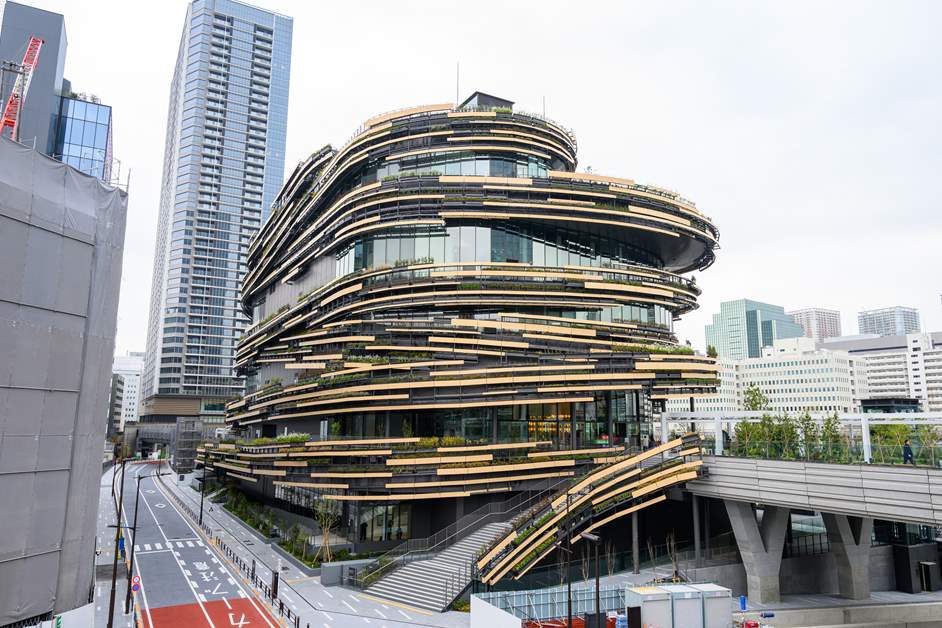
On March 28, 2026, coinciding with the grand opening of “TAKANAWA GATEWAY CITY,” the multi-purpose museum “MoN Takanawa: The Museum of Narratives” opened its doors. With the ambitious mission of “connecting culture for the next 100 years,” this facility serves as a “hub” where culture, people, and ideas intersect, showcasing a new form of Japanese culture to the world through collaborative creation with diverse partners. Here, we present a comprehensive look at this museum, which is set to become a new symbol of Takanawa.
The Architectural Beauty of a Spiral, Woven from the Warmth of Wood and Landscaping
From JR Takanawa Gateway Station, walk along the deck inside TAKANAWA GATEWAY CITY for about 5 minutes. You’ll see a unique building that appears to spiral upward toward the sky. The exterior design was created by Kengo Kuma & Associates, a world-renowned architectural firm. The exterior walls feature abundant use of wood, and the greenery from the landscaping is also striking. It almost looks like a giant tree stump.
The words “MoN Takanawa: The Museum of Narratives” are displayed at the entrance on the second floor. It is said that “MoN” embodies two meanings: “gate” (門), as a gateway to a new world, and “question” (問), which is essential for living in the future.
The entrance lobby and experimental space that welcome visitors
The museum holds exhibitions twice a year, each based on a different theme. The theme for the grand opening is “To Live Is to Create Culture.” The “Gateway to Future Culture,” installed in the entrance lobby, features personal items and messages from 32 “culture creators”—including artists, creators, and researchers who represent contemporary Japan—in response to the question, “What culture would you like to leave behind 100 years from now?”
The second floor also features a select shop curated by “Spiral Market.” It offers a selection of outstanding craft items and designer goods from all over Japan, as well as MoN’s original tote bags and stationery, and unique keychains inspired by Edo-period travel permits.
"Box300," an approximately 300-square-meter event space adjacent to the entrance lobby, is a highly flexible experimental space. The "Open Up, Mon! Exhibition: The Beginning of Beginnings," which explores the history of Takanawa from a contemporary perspective, is on view through Saturday, June 6.
A "Lab" for the Sky, Sea, and Earth, and a Relaxing Terrace
On the third floor, there are three small exhibition spaces named “Sun Lab,” “Land Lab,” and “Sea Lab.” In addition to exhibitions, these spaces will host events and workshops. Each is themed around the sun, the earth, and the sea—the colors of the “MoN” logo.
As the name suggests, the outdoor “Train Terrace” offers a view of trains on the Yamanote Line, Keihin-Tohoku Line, and other lines passing through Takanawa Gateway Station. Below, the “Rolling Stock Center,” where trains are parked, stretched out before us.
When you get hungry, head to “MoN Kitchen” on the same floor. The spacious restaurant, which offers a total of 78 seats indoors and outdoors, is produced by “Spiral Cafe.” Here, you can enjoy a wide variety of dishes, ranging from carefully selected natural wines and seasonal mocktails to hearty meat dishes and delicate desserts.
Next to the kitchen is a stair-step bench that leads to “Land Lab”; it creates an open space where visitors can relax as they please—whether reading a book or chatting with friends.
A luxurious space of approximately 100 tatami mats made from recycled tea leaves
When you go up to the 4th floor, you’ll find “Tatami,” a vast tatami space spanning approximately 100 tatami mats. Here, events that take full advantage of the tatami flooring—such as performances of traditional Japanese instruments, rakugo storytelling, Taikagura, and live flower-arranging demonstrations—are held.
"Tatami" uses "Tea-Leaf-Blended Tatami" and "Sarari Tatami," which are made by reusing tea leaves left over from the manufacturing process of Ito En's "Oi Ocha." These products incorporate tea leaves equivalent to approximately 53,000 plastic bottles and offer deodorizing and antibacterial properties.
"The Round and Round Exhibition": An Experience of Human Evolution and the Cycle of Life
As you walk up the gentle slope from the 4th floor, you’ll arrive at “Box1500,” the museum’s largest event space, spanning approximately 1,500 square meters. Here, the special opening exhibition, “The Round and Round Exhibition: The Ever-Evolving Story of Humanity,” is on view through Wednesday, September 23 (a national holiday).
The word “Guruguru” embodies the concept of a “spiral,” a motif that is also reflected in the museum’s architectural design. The exhibition features approximately 100 items—more than 50 different types—all centered around the “Guruguru” theme. Visitors can explore the exhibition while being guided by the voices of UZU and Meguru, the characters from the audio guide.
A three-dimensional artwork in which countless bicycle wheels rotate in unison. It visualizes how human power is transmitted.
"The Round-and-Round Housework Encyclopedia," which quantifies daily chores using a giant calculator, helps us realize that even the mundane routines of everyday life are a form of culture.
Inside the venue, you'll find a giant balloon called "Big UZU." This unique character, lying on its back, is definitely worth capturing in a photo.
The “Guruguru Exhibition” also features a merchandise shop. It offers a selection of items created in collaboration with the curated thrift store PASS THE BATON, including T-shirts, bags, and sandals.
A Healing Garden Where You Can Soak in Warm Water and Be Enveloped by Moonlight
The “Foot Bath Terrace,” located in the garden on the 6th floor, is a relaxation spot where you can soak your feet in water heated by solar energy while gazing out at the sky and cityscape of Minato Ward. Surrounded by plants and trees, this space allows you to directly experience the sound of the wind and the scents of the seasons, helping to soothe both your mind and body.
During the Edo period, the Takanawa coastline was such a beautiful place that it was even depicted in ukiyo-e prints as a famous spot for moon viewing. The “Moon Viewing Terrace,” located in a corner of the garden, incorporates the shimmering reflection of the moon on the water’s surface into its design. The stepping stones at your feet are made from authentic stones from the “Takanawa Embankment,” which was constructed in 1872 when Japan’s first railway opened. Why not let your thoughts wander to the coastline of long ago as you touch the stones that supported Japan’s modernization during the Meiji era?
"LAUBE," located adjacent to the garden, is a rooftop restaurant whose name means "a hut in the shade of the leaves" in German. It offers dishes made with an abundance of seasonal ingredients from various locations along the JR East railway lines, as well as vegetable- and grain-based platters and soups, homemade sweets such as cakes and baked goods, and craft beverages.
A serene rooftop where local deities and nature coexist
Take the stairs up from the 6th floor. At the very top of the facility stands the “MoN Shrine.” It enshrines deities derived from “Takanawa Shrine” and “Ota Hachiman Shrine”—both local guardian deities—and quietly watches over the safety and prosperity of this newly developed neighborhood.
At the “MoN Farm” on the rooftop, we plan to grow herbs, vegetables, and seasonal flowers. It promises to be a spot where visitors can experience the cycle of the ecosystem up close, even in the heart of the city. In addition, the rooftop features a “Hanami Terrace” where seven varieties of cherry blossoms bloom in succession each spring, allowing visitors to enjoy the changing seasons of Japan throughout the year.
The café on the first floor and the futuristic theater in the basement
From the rooftop to the first floor. Here, the “MoN Park Café,” located next to the park, is open for business. It’s a takeout-focused café where people who live or work in the neighborhood can easily stop by. It’s said that once the park is completed, visitors will be able to see the “Takanawa Embankment Ruins”—the site of the embankment built so that the railroad could run over the sea.
One of the museum’s highlights is the massive theater space that spans from the first basement level to the third floor. At “Box1000,” where LED screens cover the entire stage, the live performance “MANGALOGUE: Phoenix”—a reinterpretation of Osamu Tezuka’s timeless masterpiece from a new perspective—is currently running through Saturday, May 16.
The theater also features a “Library” where an entire wall has been transformed into a massive bookshelf. Books, merchandise, and other items related to the current programs and artists are scheduled to be displayed there.
From the tatami mats fragrant with the scent of used tea leaves to exhibits depicting the flow of people and a soothing spot that tells the history right at your feet, “MoN Takanawa: The Museum of Narratives” was a place where the past and future, along with diverse values, blended together, allowing visitors to feel the “excitement” of the moment when a new culture is born. It looks set to remain a bustling cultural destination accessible from Takanawa Gateway Station. Why not step through the “gate” of this new museum during the pleasant early summer season?