



What Is the Bond Between Akasaka Hikawa Shrine and the Local Community? The Wishes Embodied in the “Akasaka Hikawa Festival,” Featuring Processions of Shrine Portables and Edo-Style Floats
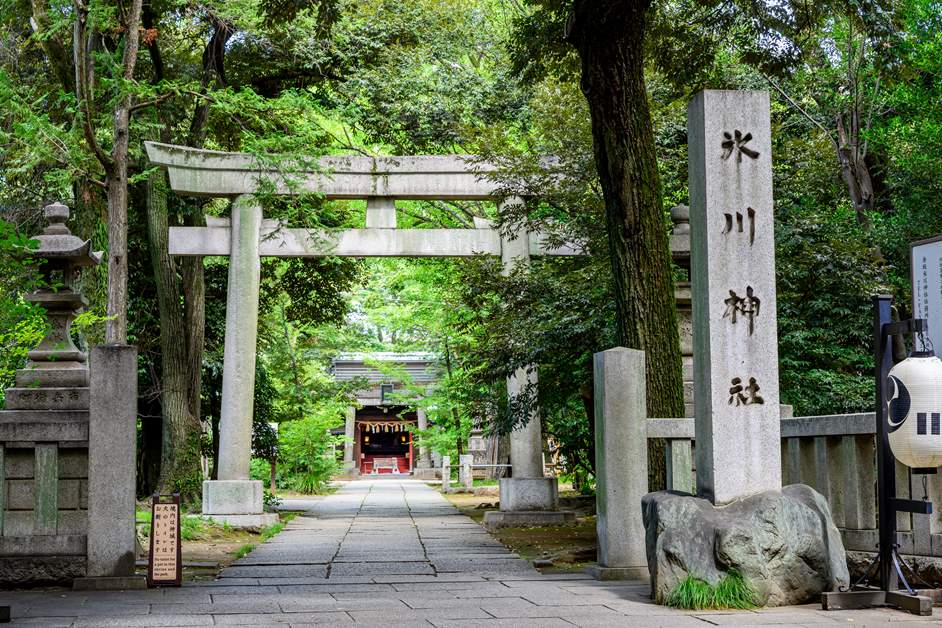
A faint hint of autumn can now be felt in the morning and evening breezes. The Minato City Tourism Association has selected some recommended fall festivals worth visiting this season. In this second installment, we’ll introduce the “Akasaka Hikawa Festival,” held every September at Akasaka Hikawa Shrine, located in Akasaka 6-chome, Minato Ward, Tokyo. The highlight of this year’s Akasaka Hikawa Festival is the joint procession featuring a majestic shrine mikoshi and two Edo-style floats. Located right in the heart of the metropolis, Akasaka Hikawa Shrine boasts a history of over 1,000 years and preserves the atmosphere of the Edo period to this day. We spoke with Chief Priest Yoshitaka Ekawa about the shrine’s rich history and the deep passion he has for the festival and the local community.
A shrine that preserves the atmosphere of Edo to this day and a giant ginkgo tree that survived the ravages of war
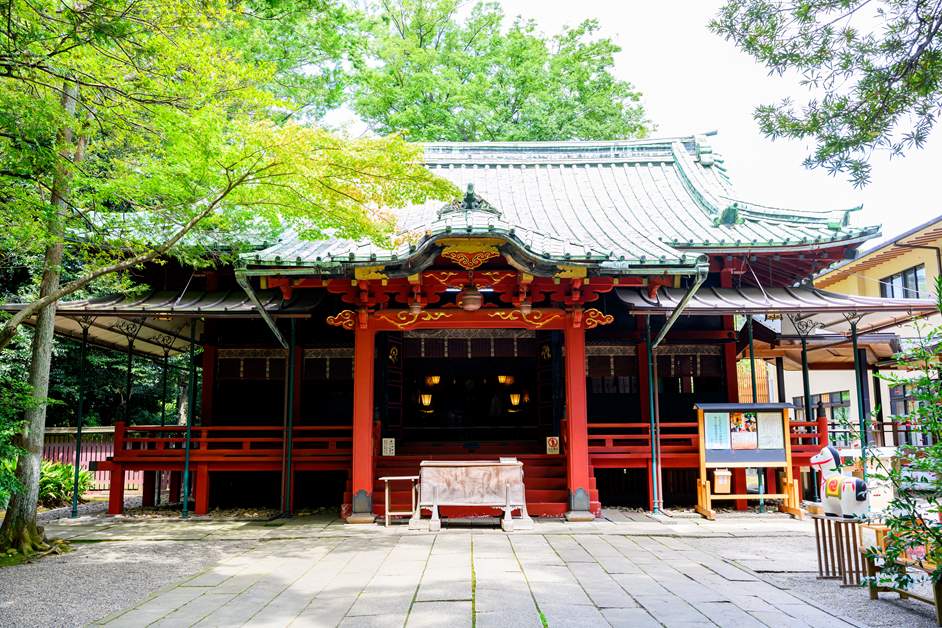
――First, could you tell us what points visitors to Akasaka Hikawa Shrine should pay attention to, and what the highlights of the main hall are?
“Our main hall is an extremely valuable structure in Tokyo that has remained unchanged since the Edo period. It was built by order of Lord Tokugawa Yoshimune, but at that time, society was under the strict influence of the ‘Kyōhō Reforms,’ which emphasized frugality and austerity. Consequently, the design is simple and free of ornate decorations. On the other hand, since it was built by order of the shogun’s family, the shrine’s decorations—such as the cloud-shaped timber joints and rafters—combine dynamism with delicacy. Although the general public cannot view the interior from the outside, the shrine building still houses a dazzling ceiling painting dedicated by Chōka-gai in Shōwa 4 (1929), prior to World War II, to commemorate the 200th anniversary of the shrine’s relocation.”
“Our main hall is an extremely valuable structure in Tokyo that has remained unchanged since the Edo period. It was built by order of Lord Tokugawa Yoshimune, but at that time, society was under the strict influence of the ‘Kyōhō Reforms,’ which emphasized frugality and austerity. Consequently, the design is simple and free of ornate decorations. On the other hand, since it was built by order of the shogun’s family, the shrine’s decorations—such as the cloud-shaped timber joints and rafters—combine dynamism with delicacy. Although the general public cannot view the interior from the outside, the shrine building still houses a dazzling ceiling painting dedicated by Chōka-gai in Shōwa 4 (1929), prior to World War II, to commemorate the 200th anniversary of the shrine’s relocation.”
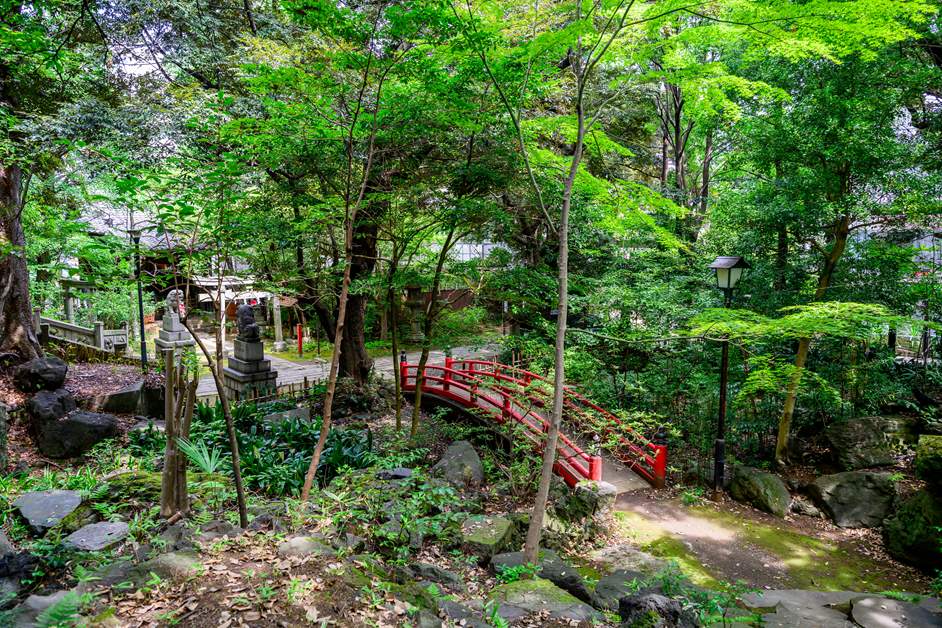
――I was also amazed by the lush natural surroundings.
“As soon as you step onto the shrine grounds, you’ll see dense trees and the traditional plaster walls known as ‘Nobunaga-bari.’ Even though we’re located in the modern city of Akasaka, I think you’ll feel that the authentic, old-fashioned Edo-era atmosphere—largely untouched by modern development—remains vividly preserved here. While many shrines today have neatly laid cobblestone paths, even the cobblestones here are slightly misaligned. Some might call it old-fashioned, but I think that very fact—that the scenery of the past remains intact—is what makes it a unique attraction.”
“As soon as you step onto the shrine grounds, you’ll see dense trees and the traditional plaster walls known as ‘Nobunaga-bari.’ Even though we’re located in the modern city of Akasaka, I think you’ll feel that the authentic, old-fashioned Edo-era atmosphere—largely untouched by modern development—remains vividly preserved here. While many shrines today have neatly laid cobblestone paths, even the cobblestones here are slightly misaligned. Some might call it old-fashioned, but I think that very fact—that the scenery of the past remains intact—is what makes it a unique attraction.”
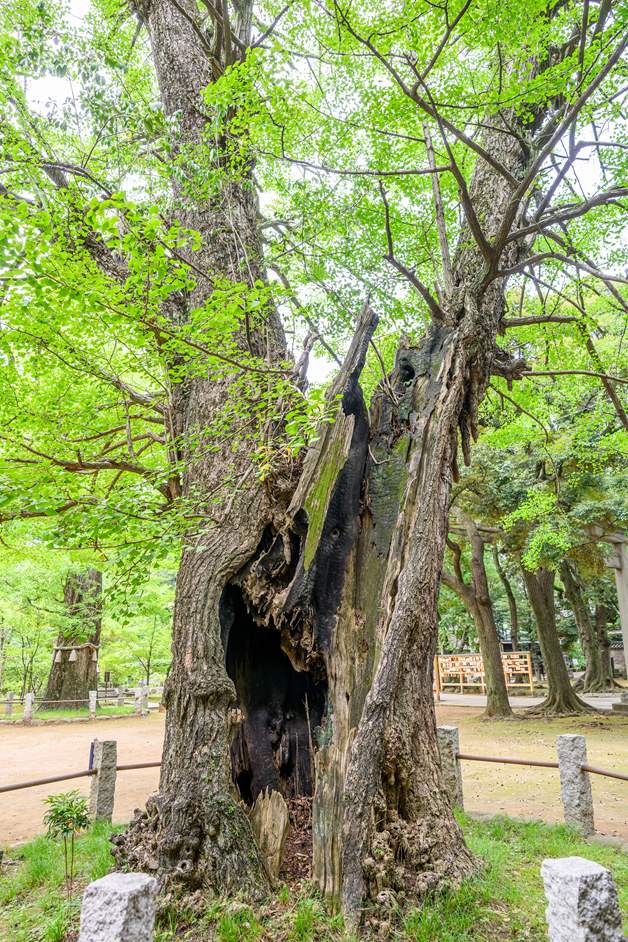
――So, it truly retains its Edo-period appearance just as it was. I believe the large ginkgo tree towering over the temple grounds is also a symbol that conveys that history to the present day—could you tell us more about its history as well?
“The Akasaka location where the main hall stands today was, 300 years ago, the site of the residence of Lady Yōsen-in, the principal consort of Asano Takumi-no-kami. The giant ginkgo tree has been growing here since that time. Actually, if you go around to the back of the tree, you’ll see that a large portion of the trunk is missing. During the war, it was damaged by a direct hit from an incendiary bomb during an air raid, and the scorch marks remain to this day. A few years ago, experts examined the tree and found that 87 percent of its interior is hollow; it is said to be surviving on just the remaining 13 percent of the trunk. We don’t know how much longer it will last, but it is a revered tree that has long watched over the entire town of Akasaka from its hilltop vantage point. When I was a child, staff from traditional Japanese restaurants in Akasaka would even come to the temple grounds to collect the ginkgo nuts that had fallen, and they would use them in their dishes.”
“The Akasaka location where the main hall stands today was, 300 years ago, the site of the residence of Lady Yōsen-in, the principal consort of Asano Takumi-no-kami. The giant ginkgo tree has been growing here since that time. Actually, if you go around to the back of the tree, you’ll see that a large portion of the trunk is missing. During the war, it was damaged by a direct hit from an incendiary bomb during an air raid, and the scorch marks remain to this day. A few years ago, experts examined the tree and found that 87 percent of its interior is hollow; it is said to be surviving on just the remaining 13 percent of the trunk. We don’t know how much longer it will last, but it is a revered tree that has long watched over the entire town of Akasaka from its hilltop vantage point. When I was a child, staff from traditional Japanese restaurants in Akasaka would even come to the temple grounds to collect the ginkgo nuts that had fallen, and they would use them in their dishes.”
The Inari Shrine Associated with Katsu Kaishu and Prayers for “Matchmaking”
――Could you also tell us about the komainu (guardian lion-dogs) on the shrine grounds and their connection to Katsu Kaishu?
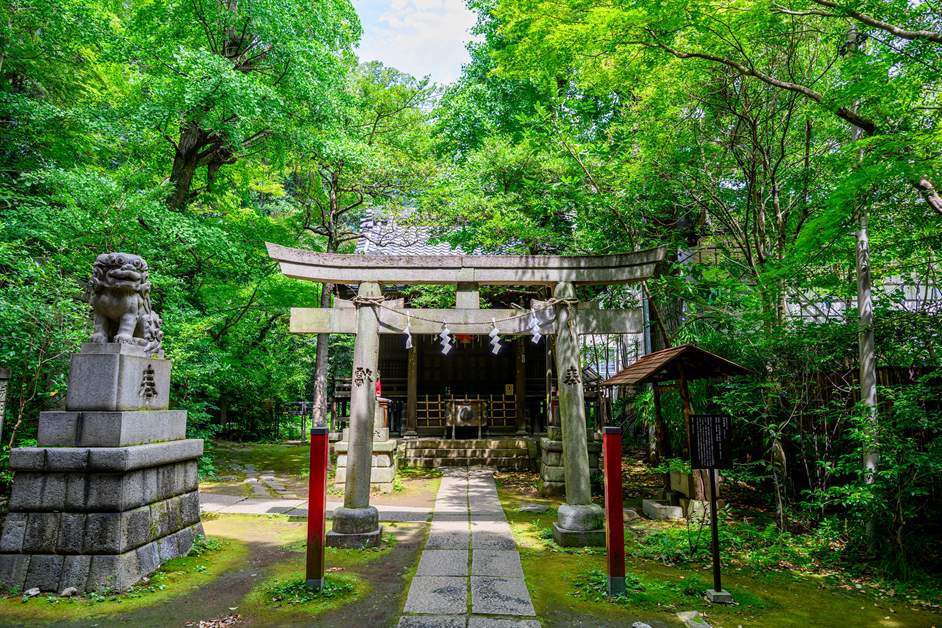
“Normally, a shrine has one or two pairs of komainu, but our shrine has seven pairs, each of which was dedicated in conjunction with a festival or ceremony. The oldest pair dates back to Enpō 3 (1675) and has a cute, stocky appearance. From there, the designs gradually became more slender, and some even feature “Shishiyama”—a mother-and-child pair of komainu—allowing us to observe the changing trends and techniques of each era. Furthermore, Akasaka is the area where Katsu Kaishū spent much of his life. It is said that he visited our shrine to pray, practice swordsmanship, or even to escape from assassins. Within the shrine grounds stands an Inari shrine called “Shiawase Inari” (Four-Combination Inari), a name also given by Katsu Kaishū. We came to take charge of four Inari shrines that had once been enshrined in the many samurai residences in Akasaka, and since we enshrined them together in a single location—much like an apartment complex—the shrine was named “Shiawase Inari.” The name combines the meaning of “the joint enshrinement of four shrines” with the concepts of “uniting one’s aspirations” and “happiness” (shiawase). The plaque still bears Katsu Kaishu’s own handwriting.”
“Normally, a shrine has one or two pairs of komainu, but our shrine has seven pairs, each of which was dedicated in conjunction with a festival or ceremony. The oldest pair dates back to Enpō 3 (1675) and has a cute, stocky appearance. From there, the designs gradually became more slender, and some even feature “Shishiyama”—a mother-and-child pair of komainu—allowing us to observe the changing trends and techniques of each era. Furthermore, Akasaka is the area where Katsu Kaishū spent much of his life. It is said that he visited our shrine to pray, practice swordsmanship, or even to escape from assassins. Within the shrine grounds stands an Inari shrine called “Shiawase Inari” (Four-Combination Inari), a name also given by Katsu Kaishū. We came to take charge of four Inari shrines that had once been enshrined in the many samurai residences in Akasaka, and since we enshrined them together in a single location—much like an apartment complex—the shrine was named “Shiawase Inari.” The name combines the meaning of “the joint enshrinement of four shrines” with the concepts of “uniting one’s aspirations” and “happiness” (shiawase). The plaque still bears Katsu Kaishu’s own handwriting.”
――Another unique attraction is the “Knife Mound.”
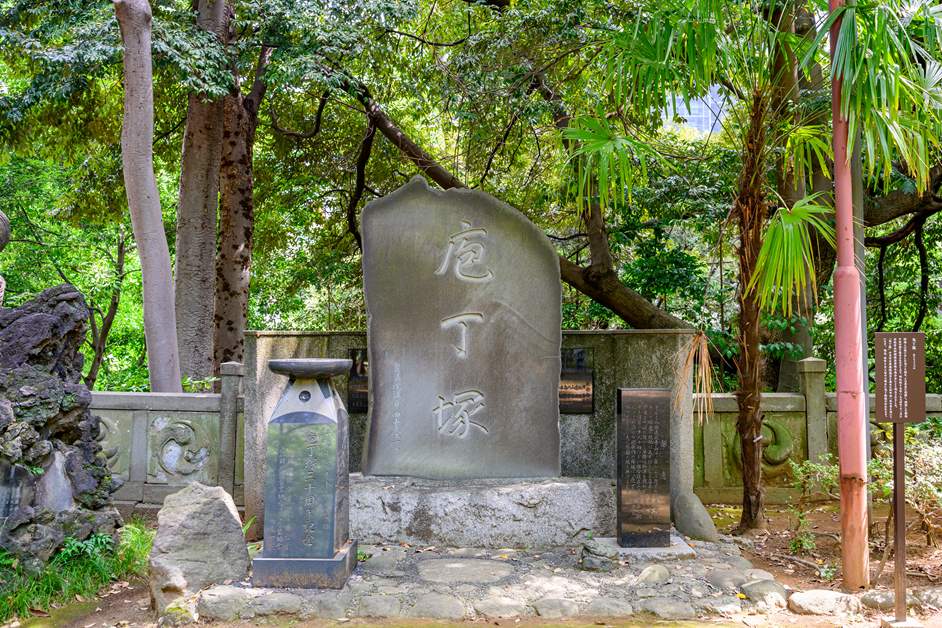
“In the past, there were about 200 traditional Japanese restaurants in Akasaka. Since it seemed too heart-wrenching to simply throw away knives imbued with the chefs’ spirit—which are traditionally donated to temples—the local restaurant and bar association, due to its deep ties to the community, erected the Knife Mound and enshrines the knives within its grounds. We still receive inquiries about this, but we no longer accept new donations—it’s a one-time-only offering. Instead, as a token of our gratitude, we hold a Shinto ritual called the ‘Knife Mound Festival’ once a year.”
“In the past, there were about 200 traditional Japanese restaurants in Akasaka. Since it seemed too heart-wrenching to simply throw away knives imbued with the chefs’ spirit—which are traditionally donated to temples—the local restaurant and bar association, due to its deep ties to the community, erected the Knife Mound and enshrines the knives within its grounds. We still receive inquiries about this, but we no longer accept new donations—it’s a one-time-only offering. Instead, as a token of our gratitude, we hold a Shinto ritual called the ‘Knife Mound Festival’ once a year.”
――Speaking of community ties, you’re also involved in an initiative to grow “akakusa,” aren’t you? Furthermore, I’ve heard that while the shrine is known as one of “Tokyo’s Three Great Matchmaking Shrines,” the nighttime “matchmaking pilgrimage” is also very popular.
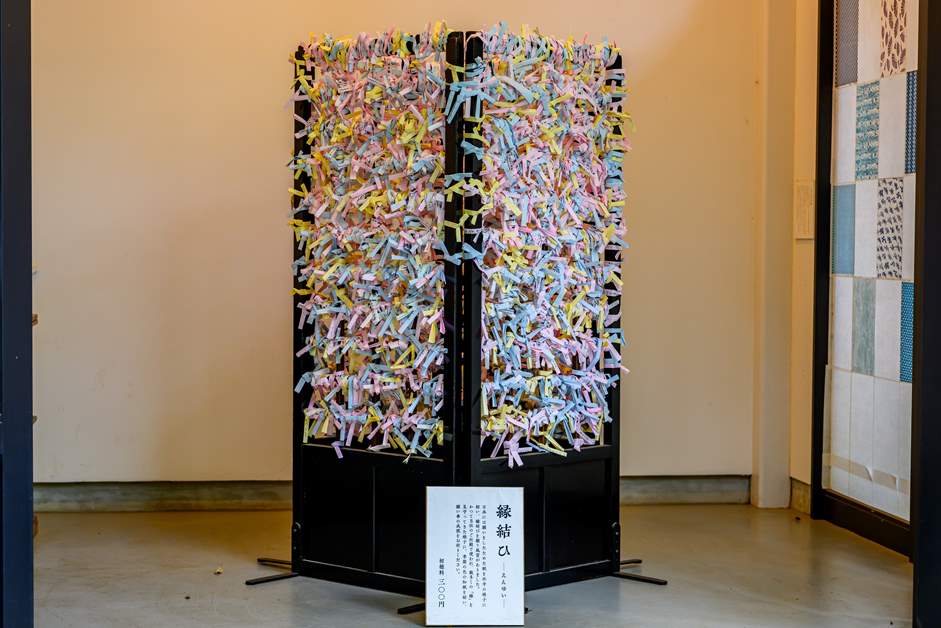
“Yes. We’re growing madder—which is said to be one of the origins of the name ‘Akasaka’—in collaboration with local elementary schools and organizations. However, the goal isn’t simply to grow the plant; rather, we hope this will serve as an opportunity for people to learn about Akasaka’s history and develop a sense of attachment to the community. In our pursuit of authenticity for our shrine’s goshuin stamps, we use plant-based dyes made from the madder we’ve grown, as well as fallen leaves and dry branches from the shrine grounds—we’re committed to using nothing that isn’t found within the grounds. As for matchmaking, I believe the shrine naturally came to be known by this name because, since ancient times, many people have visited and found romantic connections here. Although we do not officially claim the title of one of the “Three Great Matchmaking Shrines,” we carry out our duties in the belief that the gods will give you a gentle push from behind to support your efforts. Our “Matchmaking Pilgrimage” is a monthly evening prayer service held for those who cannot visit during the day, and it has been held for about 20 years. “Every month, the slots fill up the moment registration opens at 9:00 a.m., and we have conducted prayer services for thousands of people to date.”
“Yes. We’re growing madder—which is said to be one of the origins of the name ‘Akasaka’—in collaboration with local elementary schools and organizations. However, the goal isn’t simply to grow the plant; rather, we hope this will serve as an opportunity for people to learn about Akasaka’s history and develop a sense of attachment to the community. In our pursuit of authenticity for our shrine’s goshuin stamps, we use plant-based dyes made from the madder we’ve grown, as well as fallen leaves and dry branches from the shrine grounds—we’re committed to using nothing that isn’t found within the grounds. As for matchmaking, I believe the shrine naturally came to be known by this name because, since ancient times, many people have visited and found romantic connections here. Although we do not officially claim the title of one of the “Three Great Matchmaking Shrines,” we carry out our duties in the belief that the gods will give you a gentle push from behind to support your efforts. Our “Matchmaking Pilgrimage” is a monthly evening prayer service held for those who cannot visit during the day, and it has been held for about 20 years. “Every month, the slots fill up the moment registration opens at 9:00 a.m., and we have conducted prayer services for thousands of people to date.”
Akasaka’s Future, Connected Through the Revival of Mikoshi and Festival Floats
――Please tell us about your own background, Chief Priest Ekawa. I understand you previously worked at a private company—could you describe the path you took before taking over the shrine?
“I am the second son, and since my older brother was supposed to take over the shrine, I initially thought I would never be involved with it, so I joined a private company in the distribution industry. After working as a buyer, I became a full-time union official and eventually served as vice-chairman. Those were extremely grueling days when I could only sleep four to five hours a night, but I learned deeply the spirit of union activity—not about following orders, but about everyone working together in cooperation. However, about 12 years ago, my older brother passed away, and I ended up succeeding him as the head of the shrine. I remember it as if it were yesterday: after agonizing over the decision for a long time, I submitted my resignation in front of the union chairman at the time. Although I was anxious about moving to a different environment, the experience I gained in the labor union—working together with everyone—has been extremely valuable in my service at the shrine and in organizing festivals. Today, the Akasaka community has very strong ties among local business owners and shopping district members—the spirit of mutual support is so deeply rooted that we affectionately refer to it as our “village.”
“I am the second son, and since my older brother was supposed to take over the shrine, I initially thought I would never be involved with it, so I joined a private company in the distribution industry. After working as a buyer, I became a full-time union official and eventually served as vice-chairman. Those were extremely grueling days when I could only sleep four to five hours a night, but I learned deeply the spirit of union activity—not about following orders, but about everyone working together in cooperation. However, about 12 years ago, my older brother passed away, and I ended up succeeding him as the head of the shrine. I remember it as if it were yesterday: after agonizing over the decision for a long time, I submitted my resignation in front of the union chairman at the time. Although I was anxious about moving to a different environment, the experience I gained in the labor union—working together with everyone—has been extremely valuable in my service at the shrine and in organizing festivals. Today, the Akasaka community has very strong ties among local business owners and shopping district members—the spirit of mutual support is so deeply rooted that we affectionately refer to it as our “village.”
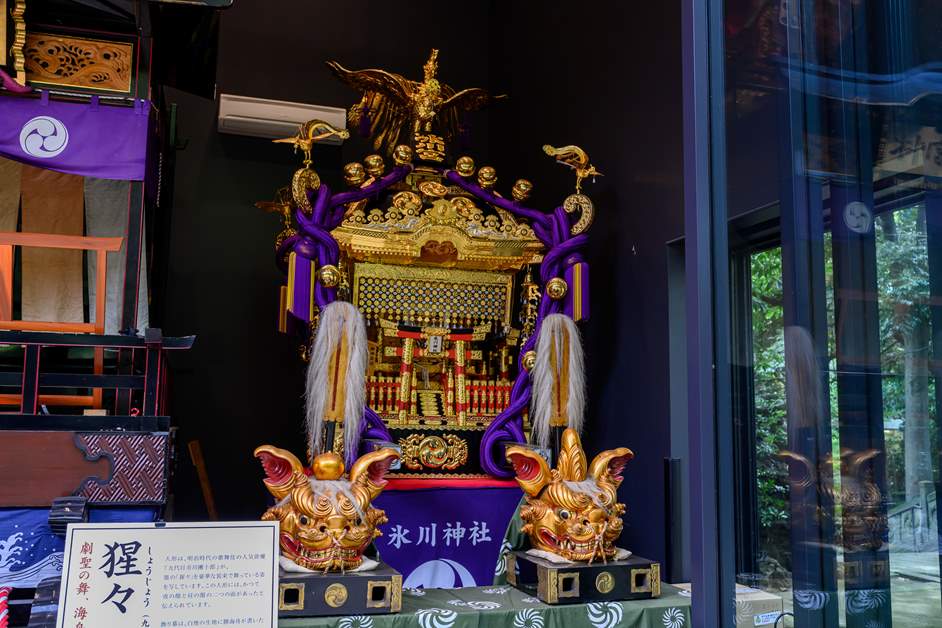
――The “Akasaka Hikawa Festival,” which begins on September 11, is organized in collaboration with the local community. Please tell us about the history of the festival and your feelings toward it.
“Akasaka Hikawa Shrine was originally located near Akasaka-Mitsuke, but it was relocated to its current site by order of Lord Tokugawa Yoshimune. Under the patronage of Lord Yoshimune and Lord Ieshige, the ‘Akasaka Hikawa Festival’ held such a special status that it was once considered one of the ‘Three Great Festivals of Edo.’ After the war, the shrine mikoshi and the Edo-style festival floats had been lost, but in Heisei 18 (2006), the Akasaka Hikawa Festival Float Preservation Society was established, and efforts to revive the floats began. Then, in Heisei 28 (2016), marking the 300th anniversary of Lord Yoshimune’s appointment as shogun, the shrine mikoshi was restored and newly constructed, and a joint procession featuring both the shrine mikoshi and the Edo-style festival floats took place for the first time in about 100 years. Although there was some initial skepticism about restoring and building a new “Miya-mikoshi”—which is eight times heavier than a typical neighborhood mikoshi—and restoring and reviving the remaining festival floats for the procession, working together to achieve this major undertaking forged deep bonds within the community. “In recent years, with the increase in high-rise apartment buildings, community ties—such as those within neighborhood associations—have been weakening. However, festivals make it easier for new residents to participate. Getting to know one another through the festival and fostering the spirit of ‘mutual aid’—which goes beyond self-reliance—is one of the goals of making the ‘Akasaka Hikawa Festival’ even bigger.”
“Akasaka Hikawa Shrine was originally located near Akasaka-Mitsuke, but it was relocated to its current site by order of Lord Tokugawa Yoshimune. Under the patronage of Lord Yoshimune and Lord Ieshige, the ‘Akasaka Hikawa Festival’ held such a special status that it was once considered one of the ‘Three Great Festivals of Edo.’ After the war, the shrine mikoshi and the Edo-style festival floats had been lost, but in Heisei 18 (2006), the Akasaka Hikawa Festival Float Preservation Society was established, and efforts to revive the floats began. Then, in Heisei 28 (2016), marking the 300th anniversary of Lord Yoshimune’s appointment as shogun, the shrine mikoshi was restored and newly constructed, and a joint procession featuring both the shrine mikoshi and the Edo-style festival floats took place for the first time in about 100 years. Although there was some initial skepticism about restoring and building a new “Miya-mikoshi”—which is eight times heavier than a typical neighborhood mikoshi—and restoring and reviving the remaining festival floats for the procession, working together to achieve this major undertaking forged deep bonds within the community. “In recent years, with the increase in high-rise apartment buildings, community ties—such as those within neighborhood associations—have been weakening. However, festivals make it easier for new residents to participate. Getting to know one another through the festival and fostering the spirit of ‘mutual aid’—which goes beyond self-reliance—is one of the goals of making the ‘Akasaka Hikawa Festival’ even bigger.”
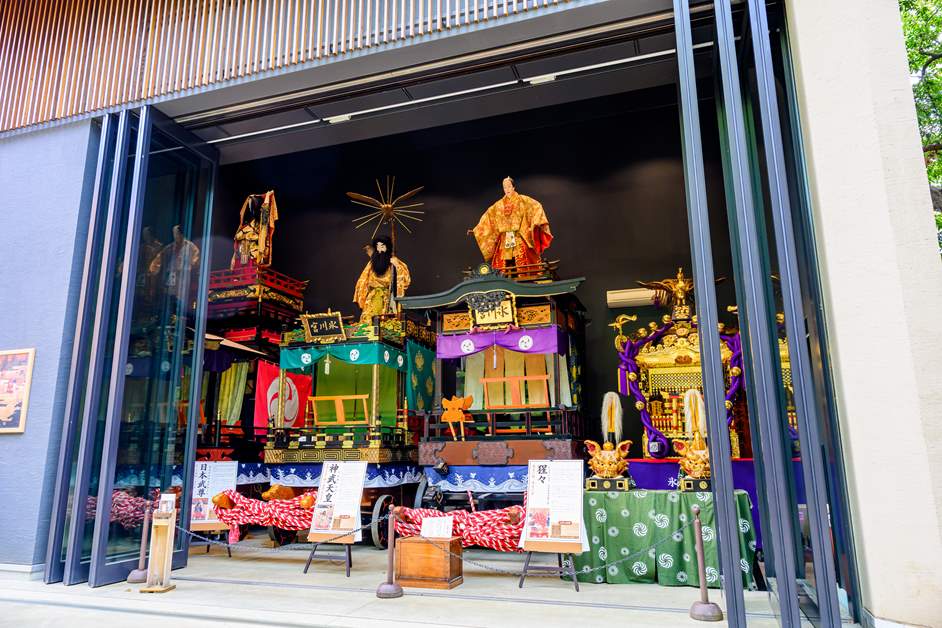
――I also understand that one of your next goals is to organize multiple float processions in anticipation of the 300th anniversary of the shrine’s relocation in 2030. Finally, please share a message for our readers and visitors to the shrine.
“As we approach the 300th anniversary of the shrine’s construction in 2030, our major goal is to safely parade all eight floats—which have now been fully restored—simultaneously. This year’s ‘Akasaka Hikawa Festival’ will center on the Miyakoshi, and for the Shin-ko Festival on September 13, we plan a joint procession featuring the shrine procession, the Miyakoshi, and two Edo-style floats. This year marks a significant milestone: 10 years since the restoration and reconstruction of the shrine mikoshi, and 20 years since the establishment of the Float Preservation Society. As the saying goes, ‘Harmony is to be cherished.’ I hope you will experience firsthand the excitement of this festival, which was made possible through the cooperation of people from diverse backgrounds coming together. Furthermore, the shrine itself is a place of prayer where one can find peace. It reveals the beauty of the changing seasons—from the sunlight filtering through fresh greenery to the ginkgo trees turning red for a brief period, and even the quiet stillness when it is sometimes blanketed in snow. Amid the shrine buildings dating back to the Edo period and the lush, verdant forest, please take some time to step away from the hustle and bustle of daily life and find tranquility.
“As we approach the 300th anniversary of the shrine’s construction in 2030, our major goal is to safely parade all eight floats—which have now been fully restored—simultaneously. This year’s ‘Akasaka Hikawa Festival’ will center on the Miyakoshi, and for the Shin-ko Festival on September 13, we plan a joint procession featuring the shrine procession, the Miyakoshi, and two Edo-style floats. This year marks a significant milestone: 10 years since the restoration and reconstruction of the shrine mikoshi, and 20 years since the establishment of the Float Preservation Society. As the saying goes, ‘Harmony is to be cherished.’ I hope you will experience firsthand the excitement of this festival, which was made possible through the cooperation of people from diverse backgrounds coming together. Furthermore, the shrine itself is a place of prayer where one can find peace. It reveals the beauty of the changing seasons—from the sunlight filtering through fresh greenery to the ginkgo trees turning red for a brief period, and even the quiet stillness when it is sometimes blanketed in snow. Amid the shrine buildings dating back to the Edo period and the lush, verdant forest, please take some time to step away from the hustle and bustle of daily life and find tranquility.
[Akasaka Hikawa Shrine · Akasaka Hikawa Festival]
Dates: Friday, September 11, Reiwa 8 – Tuesday, September 15, Reiwa 8
Friday, September 11: Eve of the Festival Procession
September 12 (Sat): Children’s Procession
September 13 (Sun): Shin-kō Festival
September 15 (Tue): Annual Festival
https://www.akasakahikawa.or.jp/hikawasai-r08/
Dates: Friday, September 11, Reiwa 8 – Tuesday, September 15, Reiwa 8
Friday, September 11: Eve of the Festival Procession
September 12 (Sat): Children’s Procession
September 13 (Sun): Shin-kō Festival
September 15 (Tue): Annual Festival
https://www.akasakahikawa.or.jp/hikawasai-r08/