



Now Open in Minami-Aoyama! Discover the History and Fun of Cosmetics at the “Cosmetics Culture Gallery”
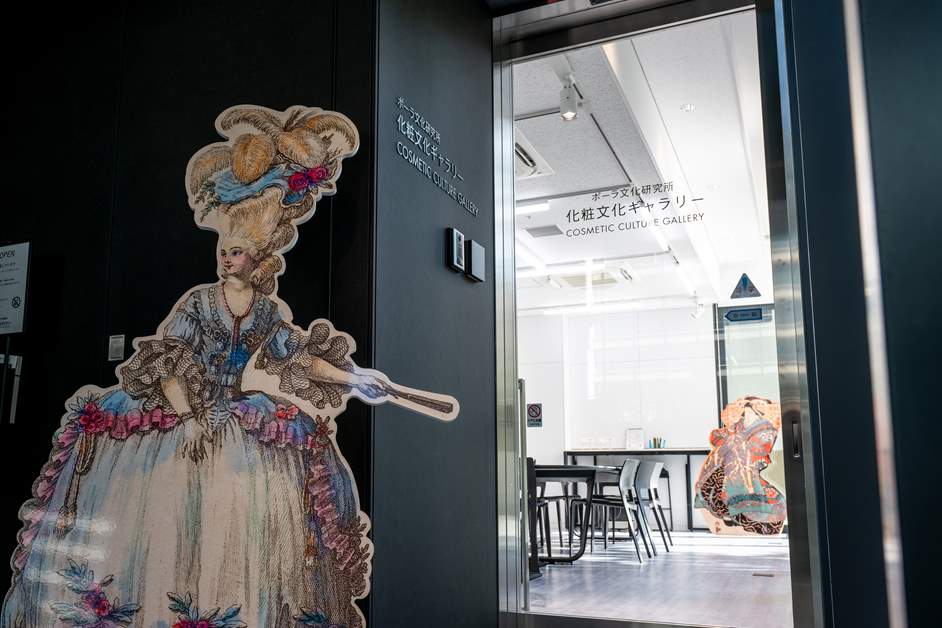
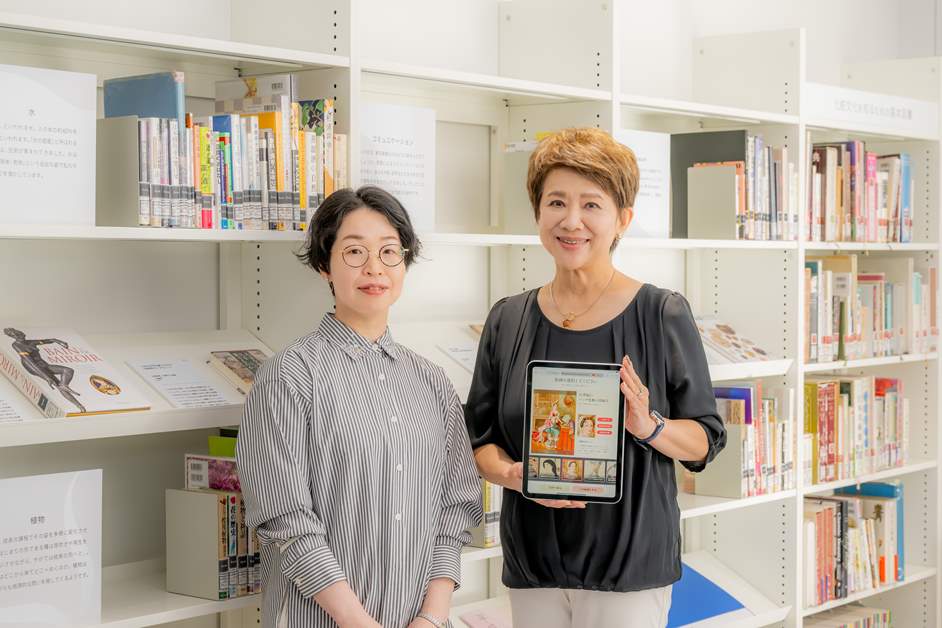
Pola Orbis Holdings Co., Ltd. (then known as Pola Cosmetics Honpo), a cosmetics manufacturer, established the “Pola Cultural Research Institute” on May 15, 1976, with the aim of conducting academic research on cosmetics. Since then, the institute has continued to collect, preserve, research, and disseminate information related to cosmetic culture. A facility to showcase the collected materials and accumulated knowledge has now opened in Minami-Aoyama, Minato Ward. The “Cosmetics Culture Gallery,” which opened on May 15, 2024, as the new hub of the Pola Cultural Research Institute, conveys the culture of cosmetics through exhibitions and publications, while also hosting programs such as gallery talks and workshops. For this feature, we asked Taeko Nishihara, manager of the Cosmetics Culture Gallery, and Michiyo Watanabe, curator at the Pola Cultural Research Institute, to guide us through the facility’s features and initiatives.
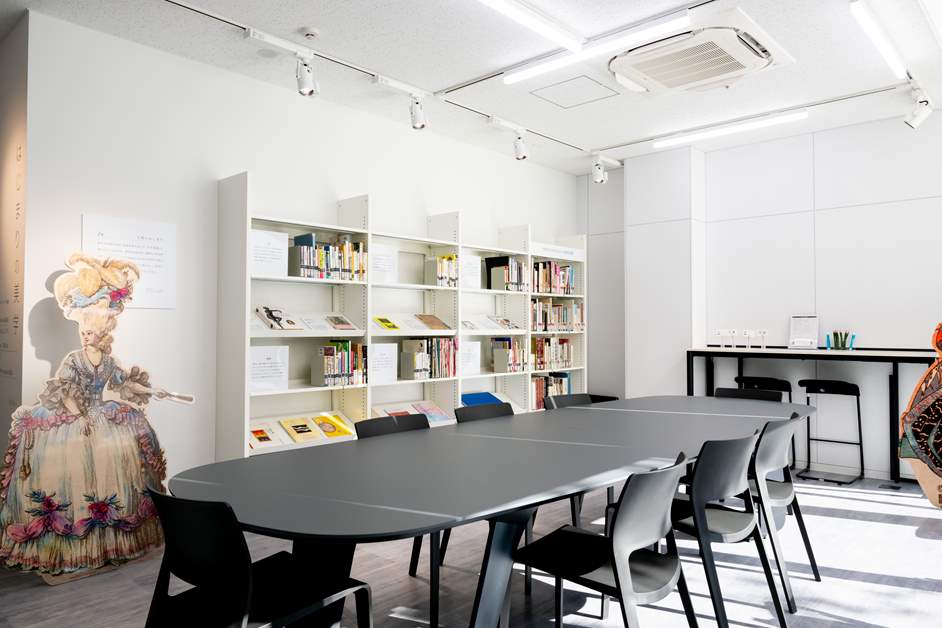
The "Books" section, where you can read books about makeup
The Cosmetics Culture Gallery is located on the first floor of the Pola Aoyama Building, a 2-minute walk from Aoyama-itchome Subway Station and a 5-minute walk from Gaienmae Station. At the entrance in the far right corner of the lobby, a panel depicting a lady in the style of Marie Antoinette welcomes visitors. The gallery is open every Thursday and Friday, but please note that admission on Thursdays is by reservation only. The facility consists of two areas: “Art” and “Books.” The large bookshelves in the “Books” area are lined with books related to makeup.
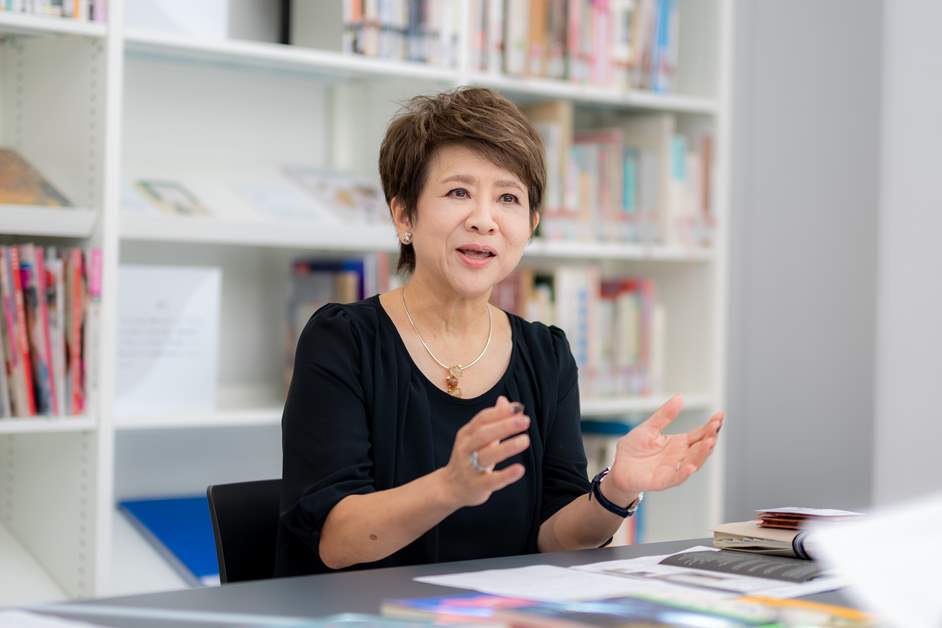
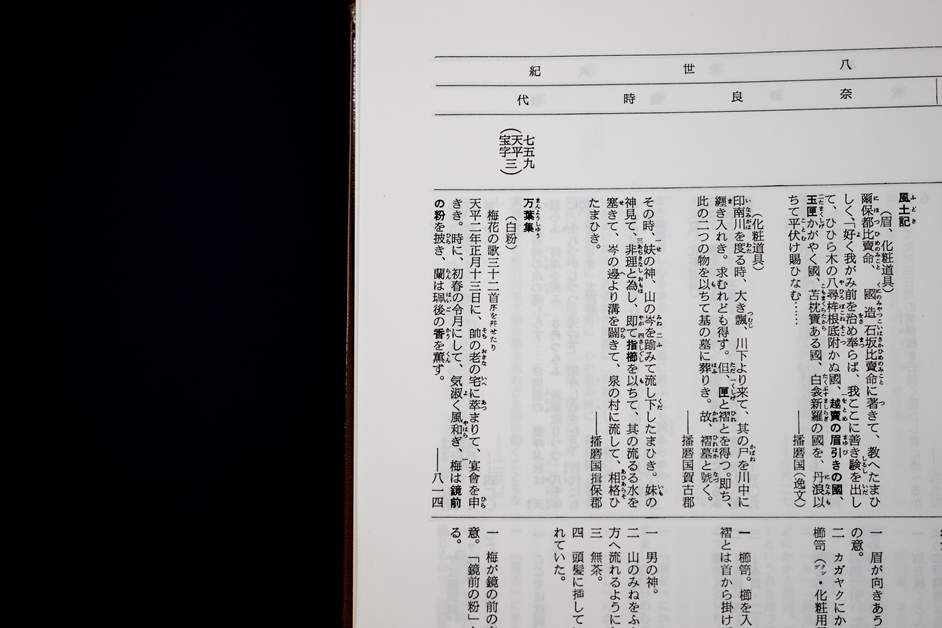
According to Ms. Nishihara, the first task undertaken by the Pola Cultural Research Institute—which had just been established in 1976—was to extract and compile scenes and descriptions related to makeup from a vast array of literature. “At a time when the public perception of makeup was, if anything, that it was materialistic and superficial, the curators of that era were convinced that makeup was a cultural practice rooted in human life, and they systematically identified passages related to makeup from various texts,” said Ms. Nishihara.
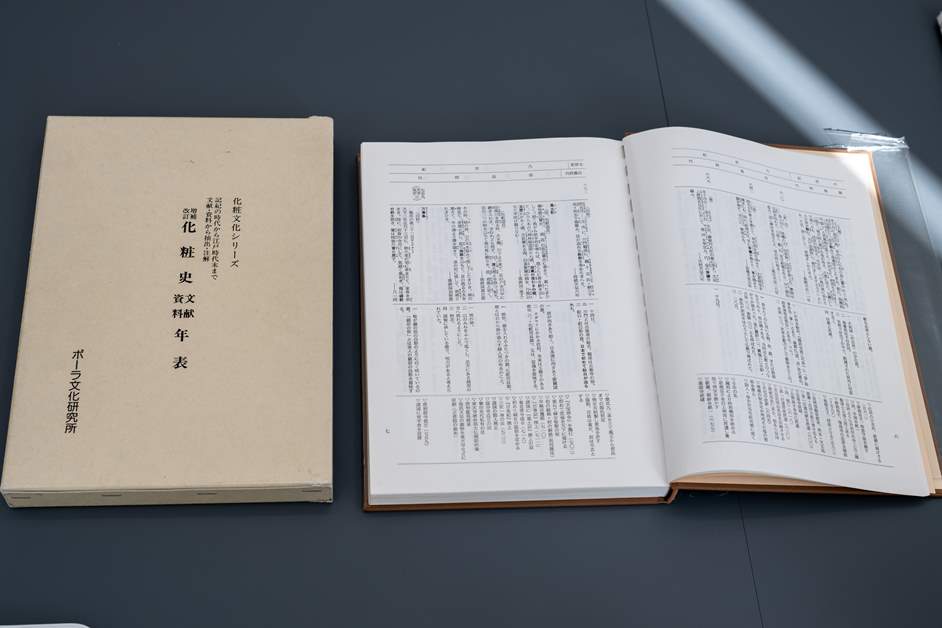
Excerpts drawn from works such as the *Uji Shūi Monogatari* from the Kamakura period and traditional Edo-period senryū have been compiled into a book serving as a chronology of the history of cosmetics, and can also be read at the Cosmetics Culture Gallery.
For example, the passage in the *Man’yōshū*—Japan’s oldest anthology of poetry—that served as the source for the term “Reiwa”—“In the auspicious month of early spring, when the air is pure and the wind is gentle, the plum blossoms reveal their beauty like powder before a mirror, and the orchids exude their fragrance like perfume worn on a sash”—is a description directly related to cosmetics. The plum blossoms are likened to the white powder on a beautiful woman’s face before a mirror, while the orchids are likened to the fragrance of the garments she wears to adorn herself.
The Pola Cultural Research Institute has also compiled information on modern makeup culture and published it as a book. “While our first book took the form of a chronology compiled from various sources, we published additional books—covering the modern and contemporary periods from the Meiji to the Shōwa eras, as well as the 30-year transition from the Heisei to the Reiwa eras (though the tone differs)—to make the subject of makeup more accessible and engaging for readers. These books can be read as a comprehensive history of makeup culture,” said Ms. Nishihara.
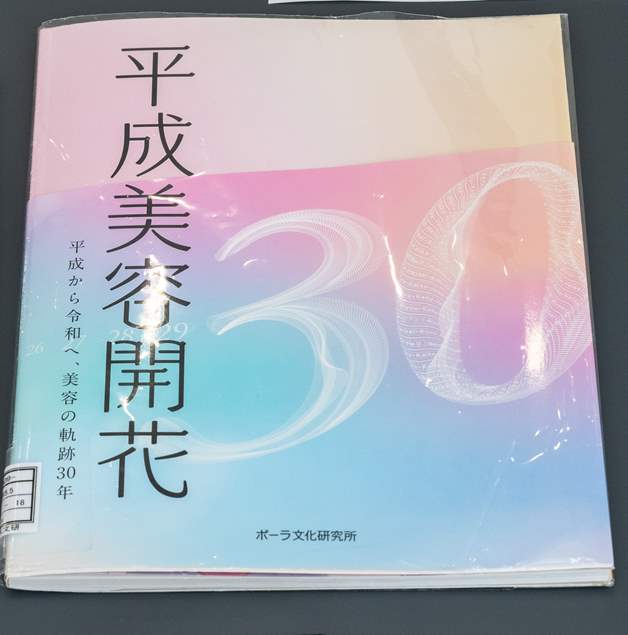
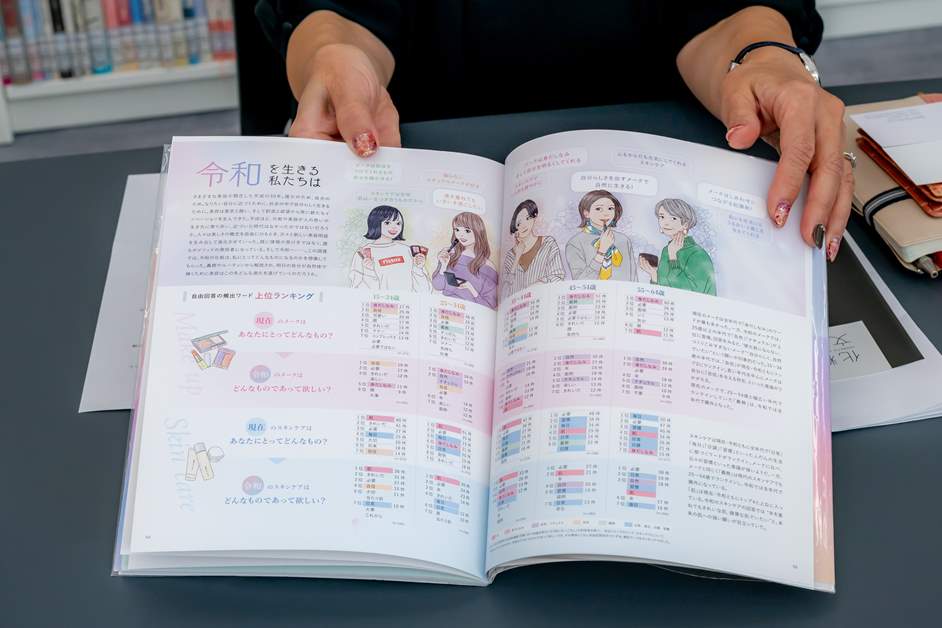
In *Heisei Beauty in Bloom*, changes in women’s attitudes toward makeup are explained clearly using illustrations. The book also presents data based on survey results gathered over many years. In producing this magazine, the Pola Cultural Research Institute reportedly analyzed women’s magazines from the past 30 years, extracted terms related to makeup, and created a database of approximately 10,000 entries, which served as the backbone for the planning and editing process. Incidentally, Ms. Nishihara was in charge of *Fujin Gahō*, while Ms. Watanabe was in charge of *nicola*. That’s way too much work!
The Pola Institute of Cultural Research launched “is,” a comprehensive magazine on beauty and culture, in 1978, and the academic journal “Cosmetic Culture” in 1979. Back issues of both publications are freely available to read in the “Books” area. The Pola Institute of Cultural Research’s collection includes approximately 10,000 books, including rare 18th-century volumes. “If you ask a curator a question, we’ll be happy to talk with you or give a lecture. Even if a book isn’t on the shelves, just let us know, and we’ll retrieve it from the closed stacks,” says Ms. Nishihara.
In addition, the shelves feature back issues of women’s and fashion magazines. It’s fun to compare how makeup and fashion have changed over the years.
In addition, the shelves feature back issues of women’s and fashion magazines. It’s fun to compare how makeup and fashion have changed over the years.
The “Art” Area, Where You Can See Rare Items Up Close
The Cosmetics Culture Gallery is currently hosting “The Aesthetics of Beginnings” as its opening exhibition. Using “beginnings” as a keyword, the exhibition introduces cosmetics culture through three themes. Following the first phase, “The Beginnings of Cosmetics Culture Research” (May 16–August 30, 2024), the second phase is “The Beginnings of Cosmetics” (September 5–December 13, 2024), and the third phase is “First Makeup” (December 19, 2024–March 28, 2025). For each phase, the shelves in the “Books” area will feature a curated selection of related titles. Ms. Watanabe, the curator who conceived the project, explains, “We wanted to highlight the gallery’s appeal by presenting a common theme. This also marks the relaunch of our activities, which is why we are developing the ‘Art & Books’ series around the theme of ‘beginnings.’”
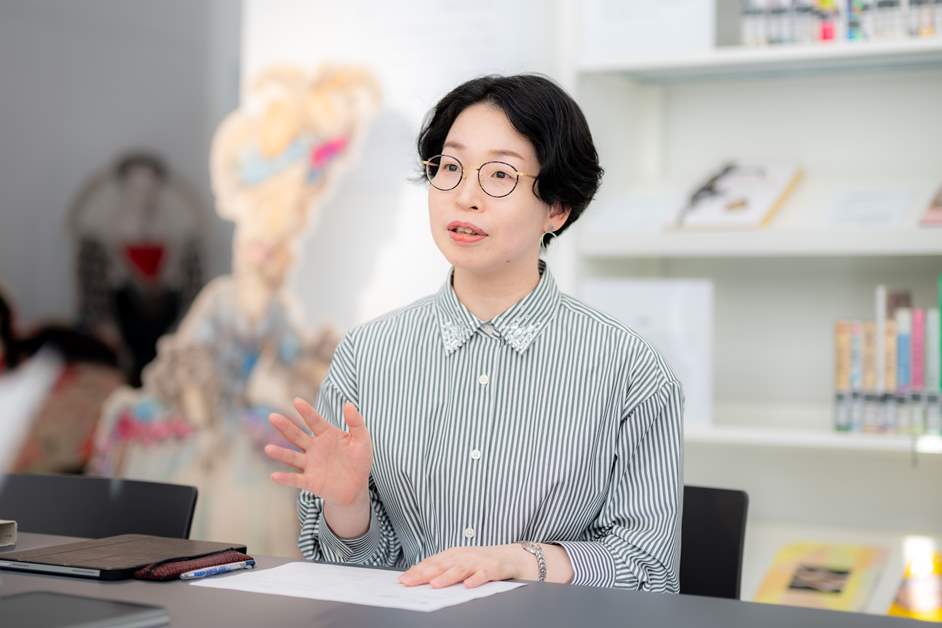
In the “Art” area—our exhibition space—we are also presenting an exhibition based on the “Aesthetics of Beginnings.” “For Phase 1, we focused primarily on Edo-period wedding makeup tools collected during the early days of the Pola Cultural Research Institute. By viewing these alongside ukiyo-e prints depicting scenes of makeup application and weddings, we aimed to help visitors understand how these tools were used. Since the theme is ‘The Beginnings of Cosmetics Culture Research,’ our aim is to allow visitors to experience the process of our research activities firsthand. “Furthermore, since the theme of Phase 2 is ‘The Beginnings of Cosmetics,’ we want visitors to see a diverse collection that extends beyond the Edo period. We’ve traced cosmetics back to their ‘primordial origins,’ showcasing tools used in ancient Egypt and Greece before the Common Era,” said Ms. Watanabe.
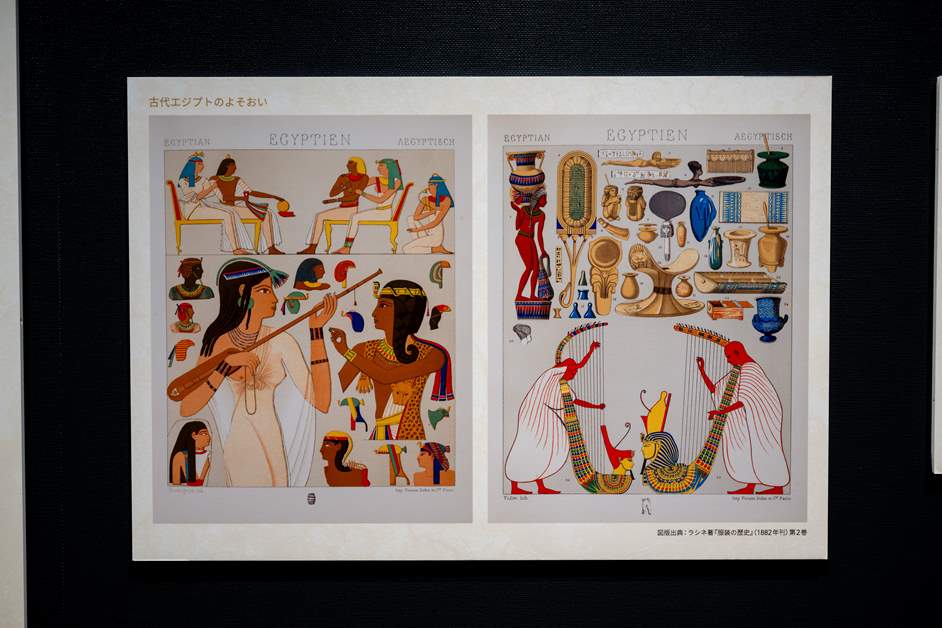
The Pola Cultural Research Institute houses a collection of approximately 6,500 items. Exhibits selected based on specific themes are on display from this collection. Visitors can view up close valuable artifacts that offer insight into “the origins of cosmetics,” such as a faience kohl jar from ancient Egypt that held two colors of kohl, and a unique fish-shaped stone palette.
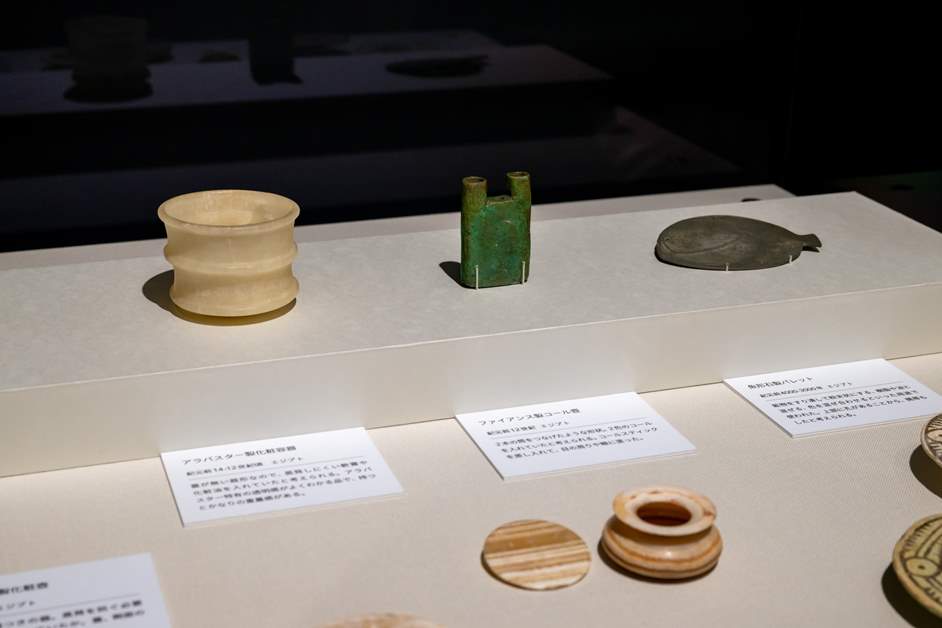
“I think the various exhibits will allow visitors to reflect on ancient makeup culture. ‘Ancient makeup wasn’t something confined solely to that era; the aesthetic sensibilities and attitudes toward makeup held by people back then still resonate with us today. I hope you’ll take the time to view the exhibition and experience this for yourselves,’” said Ms. Watanabe.
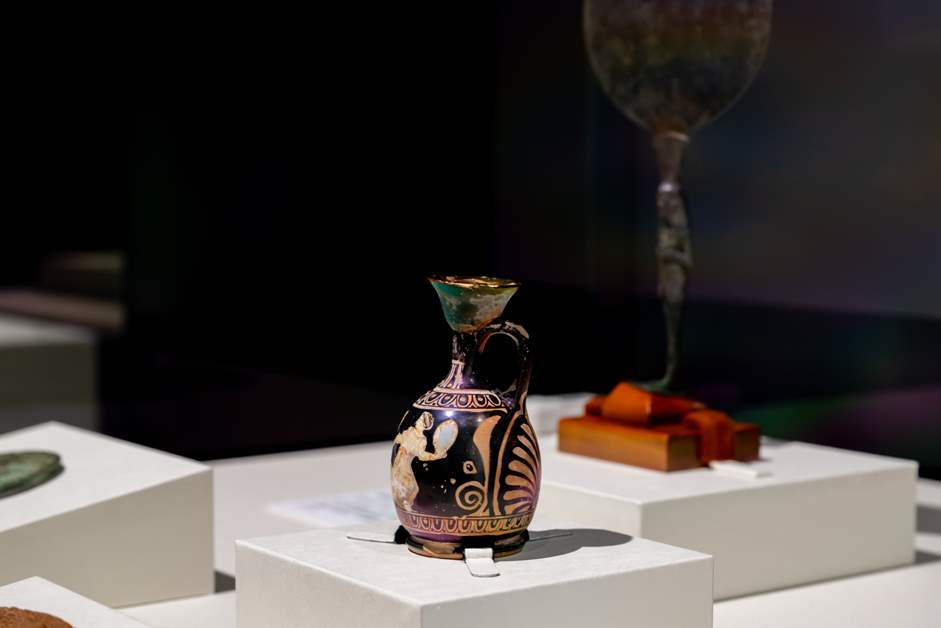
Starting on December 19, 2024, the third season of “First Makeup” begins. “In the Edo period, there were beauty rituals linked to rites of passage—such as shaving one’s eyebrows or applying tooth blackening—once a certain age was reached, and hairstyles also differed between unmarried and married women. I’d like to focus on the first time women applied makeup at these turning points in their lives,” said Ms. Watanabe.
A hands-on program that introduces participants to the fascinating world of makeup culture
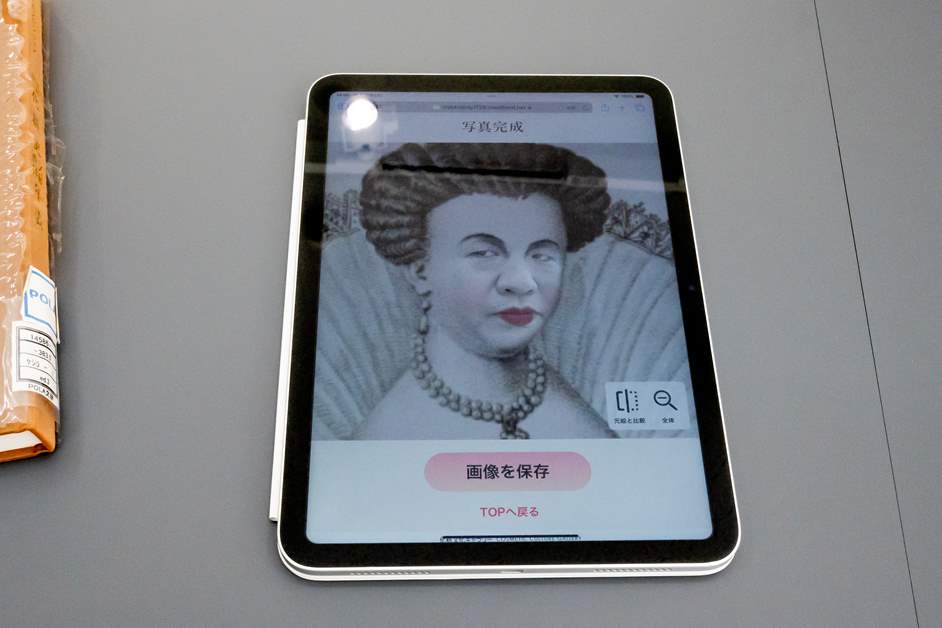
In addition to “Art & Books,” the Cosmetics Culture Gallery introduces the culture of cosmetics through programs such as gallery talks, workshops, and reference services. And when you visit the facility, be sure to try “BEAUTY TRIP,” an interactive app that utilizes the latest digital technology. Developed by the Pola Cultural Research Institute, this app works much like the “cutout photo panels” found at tourist spots, allowing you to transform into a beauty from various eras—such as a Western noblewoman, an Edo-period oiran, or a shogun’s consort. First, select your favorite painting on the tablet. I chose a noblewoman from the era of Elizabeth I.
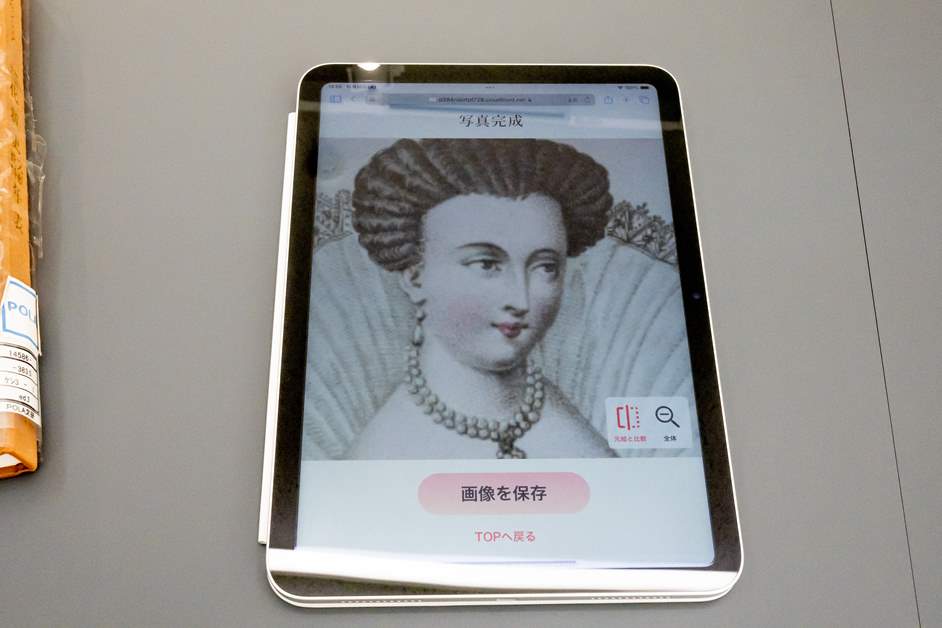
Simply take a photo of your face with your tablet’s camera, adjust the position as needed, and then apply the distinctive makeup of that era—just as it appears in the painting—right within the app to complete the look. Not only does it apply accent makeup like blush and lipstick, but it also faithfully recreates the whiteness and intensity of the white powder used in base makeup. Since you can even fine-tune the brightness, the result is a look that makes you feel as if you’ve stepped right into the world of the painting. You can also save the image to your smartphone, so it’s sure to be a hit with friends and peers!
Gallery talks, workshops, and reference materials—including “BEAUTY TRIP”—require reservations, so be sure to check the Pola Cultural Research Institute’s official website. The Cosmetics Culture Gallery attracts not only students and working professionals but also researchers and celebrities. Since opening in Minami-Aoyama, it’s said that the number of casual visitors has been increasing. Ms. Watanabe shares this message: “I think applying makeup is a familiar activity for many people, but in reality, there is a deep and expansive world of makeup culture within it. I hope you’ll come to the gallery and, by seeing, reading, and touching the exhibits, discover the joy and fascination of makeup culture.”
“I’d like to attract many people who simply love beautiful things or want to see something interesting,” says Nishihara, sharing his vision. “I’d also like to make this a gallery that people in Minato Ward—say, about 70 percent of the middle school students there—would recognize as a fun place to visit.”Now that attention is focused on the cultural aspects of makeup, why not pay a visit to this makeup culture gallery that offers enjoyment for people of all ages and genders?
《POLA Cultural Research Institute · Makeup Culture Gallery》
Location: 1F POLA Aoyama Building, 2-5-17 Minami-Aoyama, Minato-ku, Tokyo (inside
the POLA Cultural Research Institute) Opening Days: Every Thursday and Friday (closed on national holidays and during the year-end and New Year’s holidays) *Thursdays are by reservation only
Opening Hours: 11:00 a.m.–5:00 p.m. (Last admission at 4:30 p.m.)
Admission: Free
*Please check the official website below for details.
https://www.cosmetic-culture.po-holdings.co.jp/gallery/