



Experience the Future in Odaiba! Interact with the Latest Robots at the Renovated “Kawasaki Robostage”
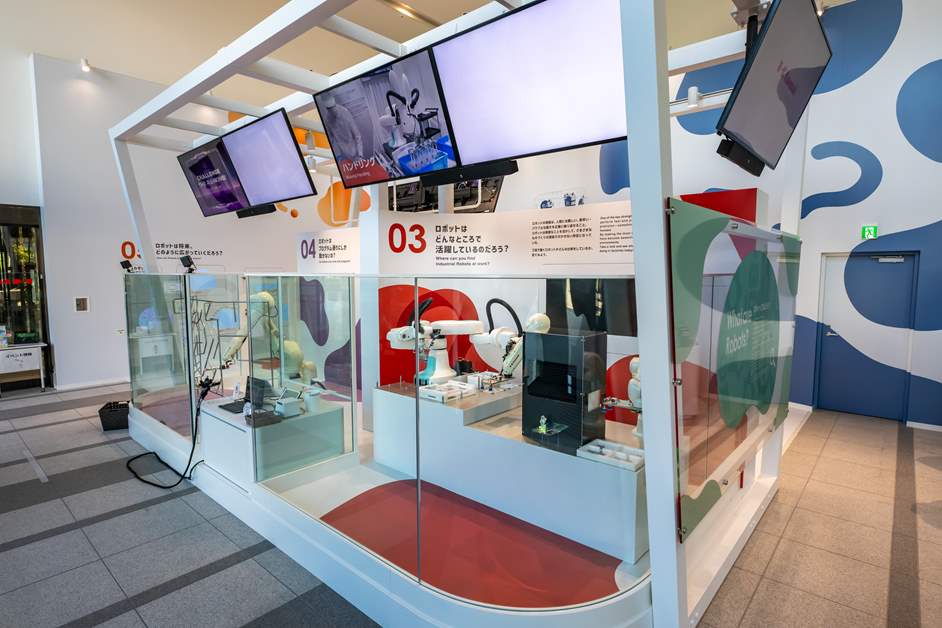
In Odaiba—a hub for shopping and entertainment—there was a spot where visitors could interact with the latest robots. Kawasaki Heavy Industries, Ltd. (hereinafter “Kawasaki Heavy Industries”)’s “Kawasaki
Robostage,” which reopened on November 1, 2025, is an experiential facility based on the concept of “realizing coexistence and collaboration between humans and robots.” Following the renovation, it has been transformed from a showroom displaying industrial robots into a “space for learning about robots.” In this article, we’ll explore the appeal of the newly renovated “Kawasaki Robostage” alongside Sora Okabe, a student tourism ambassador for Minato Ward (MINATO
CITY NEXT AMBASSADOR).
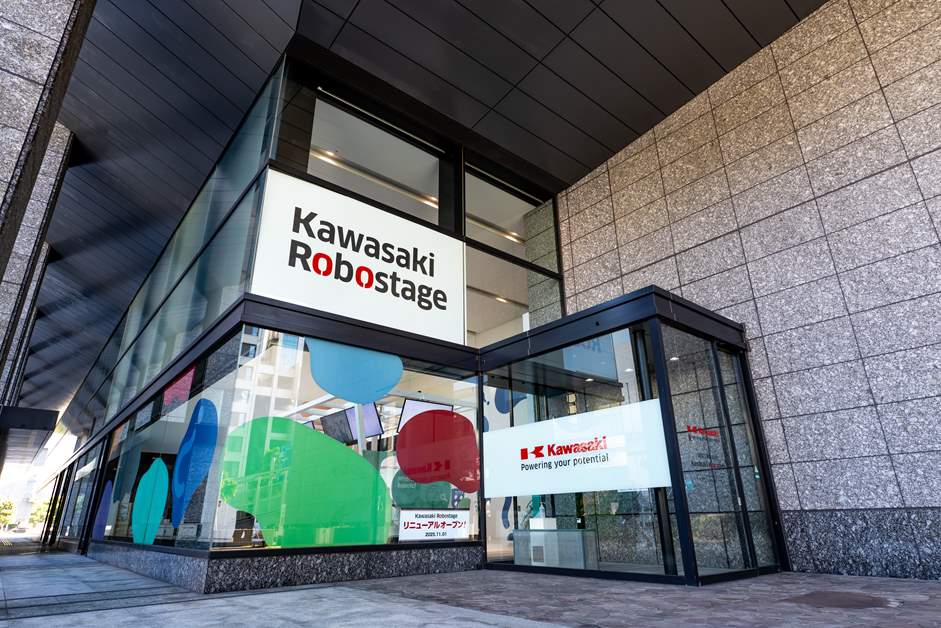
"Kawasaki Robostage" is located on the first floor of the Trade Pier Odaiba office building. It’s about a 5-minute walk from Tokyo Teleport Station on the Rinkai Line and Odaiba Kaihin Koen Station on the Yurikamome Line. The glass-walled facility, situated at the front of the building, exuded an open and futuristic atmosphere.
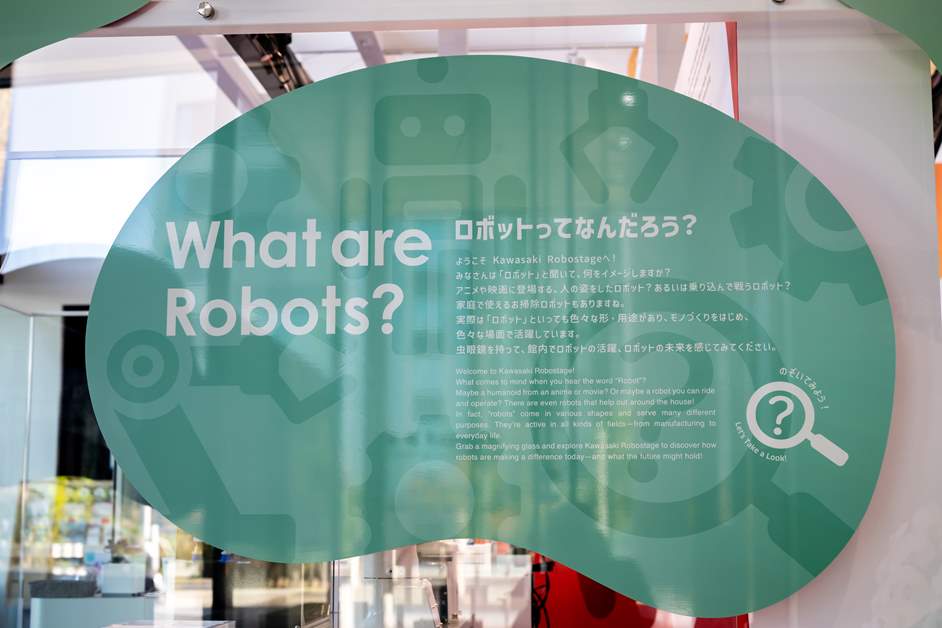
This facility originally opened in August 2016. It all began when the sales department of Kawasaki Heavy Industries’ Robot Business Center relocated to this building, prompting the company to repurpose the vacant first-floor space as a showroom. At the time, it reportedly served primarily as the “front line of business,” where customers could view robots and conduct business negotiations in the offices on the floors above. However, nearly 10 years have passed since it opened. Following the COVID-19 pandemic and the redevelopment of the surrounding area in conjunction with the Tokyo Olympics, the character of Odaiba has changed significantly. What visitors seek has also shifted from simply receiving information to seeking “experiences” and “learning.” Therefore, for this renovation, we have significantly revamped the exhibits with the hope that more people will “discover the excitement and potential of robots.”
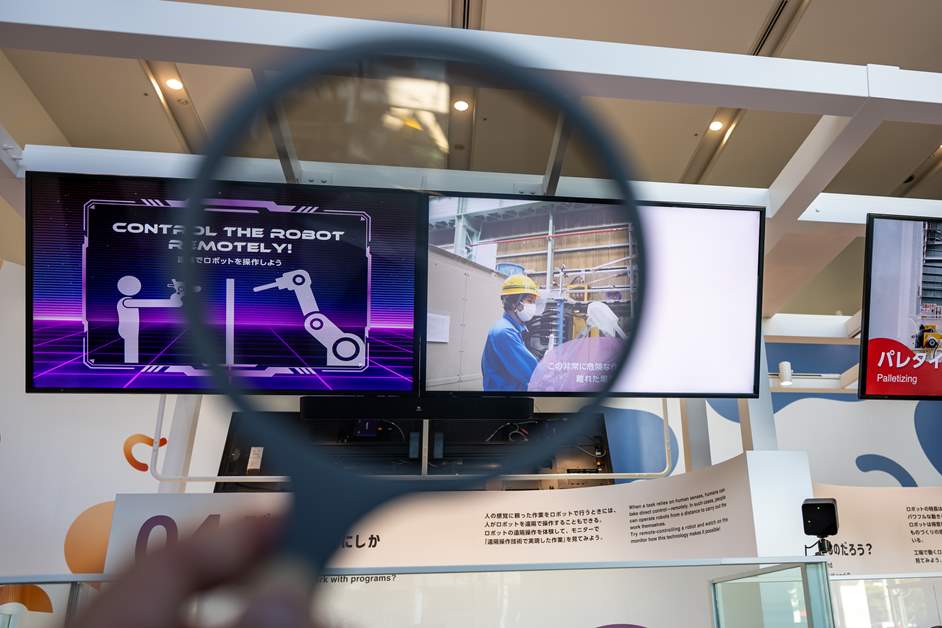
The magnifying glass-shaped lens handed out at the entrance is a key item for exploring the exhibition. Pure white monitors are installed throughout the museum, and when you look through this lens, videos and explanations appear. Apparently, this extra step of “holding the lens up” is a deliberate design choice intended to encourage visitors to engage actively with the exhibition.
Mr. Okabe, too, wandered through the building with a twinkle in his eye, as if enjoying a treasure hunt, wondering, “I wonder where and what is hidden next?” Rather than being given information, the process of discovering things for oneself makes the learning experience much more meaningful.
The exhibit featuring educational materials on the basics of robotics provides easy-to-understand explanations of the types, shapes, and complex structures of industrial robots. While many people may think of motorcycles, aircraft, and rail vehicles when they hear “Kawasaki Heavy Industries,” the company is actually a pioneer that launched Japan’s first commercial production of industrial robots. In 1969, Kawasaki Heavy Industries introduced Japan’s first industrial robot, the “Kawasaki Unimate 2000.” This exhibition encapsulates the technology and know-how that have supported Japanese manufacturing for over half a century since then.
Discover the Capabilities of Robots Through Demonstrations and Remote Control
One of the highlights of the exhibition is a demonstration featuring industrial robots. Here, the manufacturing process at a factory that produces acrylic stands (akusta) is recreated right before your eyes.
The entire process—from the robot precisely gripping the machined parts to carefully packing them into trays and preparing them for shipment—involves movements that humans simply cannot replicate. I was truly impressed by the robots as they repeatedly performed these swift, precise movements with accuracy down to a fraction of a millimeter.
Although robots operate according to pre-programmed instructions, there are actually many situations they cannot handle on their own. For example, robots operated remotely by humans are designed to handle objects that vary in shape from one instance to the next or to perform tasks that require the subtle intuition unique to humans and the ability to adapt on the fly.
In the “Remote Control Challenge” section, you can try operating “Successor,” a remote-control robot system developed by Kawasaki Heavy Industries.
You can choose to play using either a pad-style controller—familiar from video games—or a more specialized joystick-style controller. You can take on the challenge of guiding a metal rod attached to the end of a robotic arm through a series of intricately curved metal pipes.
If you touch the pipe five times, it’s game over. Since your time is displayed when you clear the level, it’s easy to get carried away. Apparently, some people who are used to using stick-type controllers in VR games and the like are able to achieve surprisingly high scores. Mr. Okabe also gripped his controller and took on the challenge! With a serious expression, he skillfully maneuvered his arm and successfully made it all the way to the finish line.
In the next area, you can learn about the future of robotics. Videos introduce themes such as “autonomously moving robots,” “robots and AI,” “mobility that combines motorcycles and robotics,” “the development of humanoid robots,” and “robots solving social issues.” Here, too, the magnifying glass-style lens comes in handy. Peering at the monitor through the lens, a vivid picture emerged of how robots of the future will contribute to society.
A Charming Social Robot Makes Its Debut
One robot that catches the eye as it moves freely around the facility is Nyokkey, a social robot. Unlike stationary industrial robots, Nyokkey is an autonomous service robot. Designed to work alongside people, it is already being put to use in medical and nursing care settings.
When you say, “Hello!” Nyokkey gives a cute response. Apparently, there are plans for him to work as a sales clerk at the facility’s merchandise booth in the future. In the near future, we might see Nyokkey working out on the streets as a matter of course.
At the end of the exhibit, there’s also a corner where visitors can draw their own “robots we’ll need in the future” and display them on the wall. From “robots that play with you” to “robots that listen to your worries,” the wall is covered with creative ideas—just looking at them is exciting.
Mr. Okabe also wrote down his own ideas for “robots needed in the future” and left them clearly displayed on the wall. Perhaps one day, the robots he envisioned will actually be brought to life using Kawasaki Heavy Industries’ technology.
A merchandise booth featuring rare items
The merchandise booths will feature items that “Kawasaki fans” won’t be able to resist. From intricate plastic models of industrial robots to everyday items like face towels and mugs, and even Nyokkey-kun keychains, the lineup is packed with carefully curated items.
One particularly unique item is the “Wasanbon” shaped like the Kawasaki Heavy Industries logo. In fact, it was created after the company solicited ideas for “new souvenirs” from its employees. The contrast between the rugged image of industrial products and the delicate sweetness of traditional Japanese confectionery is intriguing, and it’s sure to be a hit as a souvenir.
During this reporting trip, we had the chance to fully experience the latest robotics technology. Mr. Okabe also seemed pleased, remarking, “The world of robots now feels much closer to home.” Currently, about half of the visitors to “Kawasaki Robostage” are said to be international tourists. Interest in “Japanese robotics” is now a global phenomenon. In addition, inquiries about school field trips and group visits have been on the rise recently, and the facility reportedly offers special classes for children—the future generation—(reservations required). Kawasaki Heavy Industries is also actively organizing initiatives to make robots more accessible, such as the hands-on event “Become a Kawasaki Robot Engineer!” held at Haneda Innovation City. Perhaps the children who interact with robots at these events or at “Kawasaki Robostage” will one day become the engineers who build them. While “Kawasaki Robostage” tends to get crowded during major holidays like summer break, you can explore it at a relatively leisurely pace right after it opens on weekdays. Whether you’re a robot enthusiast or someone who hasn’t had much opportunity to interact with them before, why not visit “Kawasaki Robostage” and see for yourself the future that humans and robots are creating together?
《Kawasaki Robostage》
Location: 1F Trade Pier Odaiba, 2-3-1 Odaiba, Minato-ku, Tokyo
Hours: Weekdays 1:00 PM–6:00 PM; Saturdays, Sundays, and holidays 10:00 AM–6:00 PM
Closed: Every Tuesday (open if Tuesday is a holiday), Year-end and New Year holidays
Admission: Free
*For more details, please check the official website below.
https://kawasakirobotics.com/jp-sp/robostage/