



Spreading Smiles Around the World with “1 Chocolate”! A Message from Morinaga & Co. at Its New Headquarters in Shibaura
Valentine’s Day is a time when sweet scents and vibrant colors make our hearts sing. Every year on February 14, many of us choose chocolates while thinking of close friends, colleagues, and loved ones. But what if the chocolate you pick up actually contributes to the smiles of children in cocoa-producing regions and supports local community initiatives? Morinaga & Co., Ltd., a food manufacturer headquartered in the “Morinaga Shibaura Building”—which was completed in Shibaura, Minato Ward, in 2024—has been carrying out an initiative called “1 Chocolate for 1 Smile” since 2008. Launched with the aim of supporting “children in cocoa-producing countries,” this initiative has brought about change in nations near the equator and is set to take deeper root in the local community in 2026 through outreach classes at local elementary schools. For this article, we sat down with Keita Watanabe of the company’s Corporate Communications Department to learn more about the design philosophy behind the “Morinaga Shibaura Building,” the “1 Chocolate for 1 Smile” initiative, and the company’s activities in Minato Ward.
A New Office That Serves as Both a Disaster Preparedness Hub and a Community Gathering Place Opens
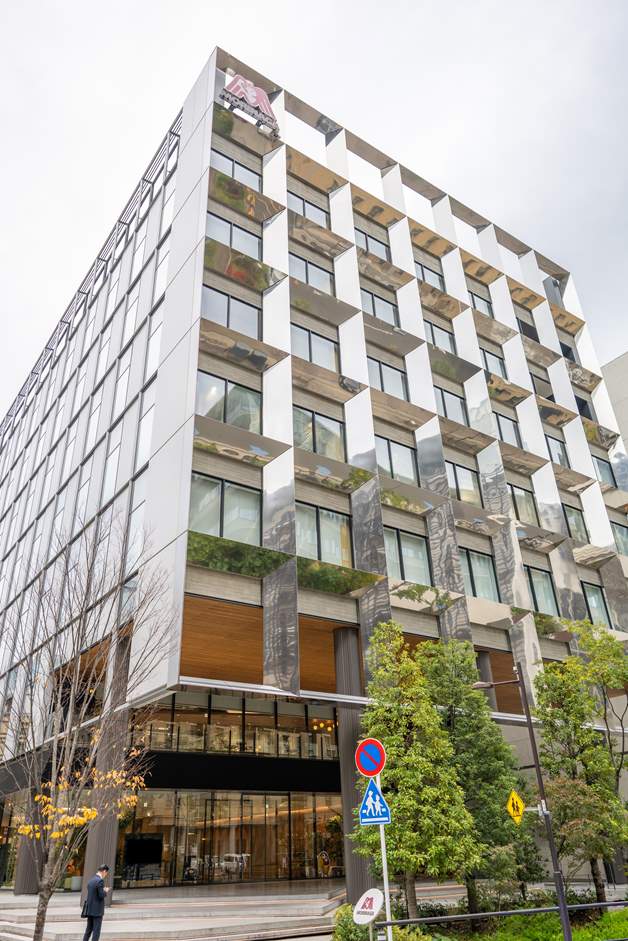
――First, please tell us about the new headquarters building. You replaced your aging company building, and in March 2024, the new “Morinaga Shibaura Building”—with seven stories above ground and one below—was completed. The lattice-like exterior is very striking; what was the intention behind this design?
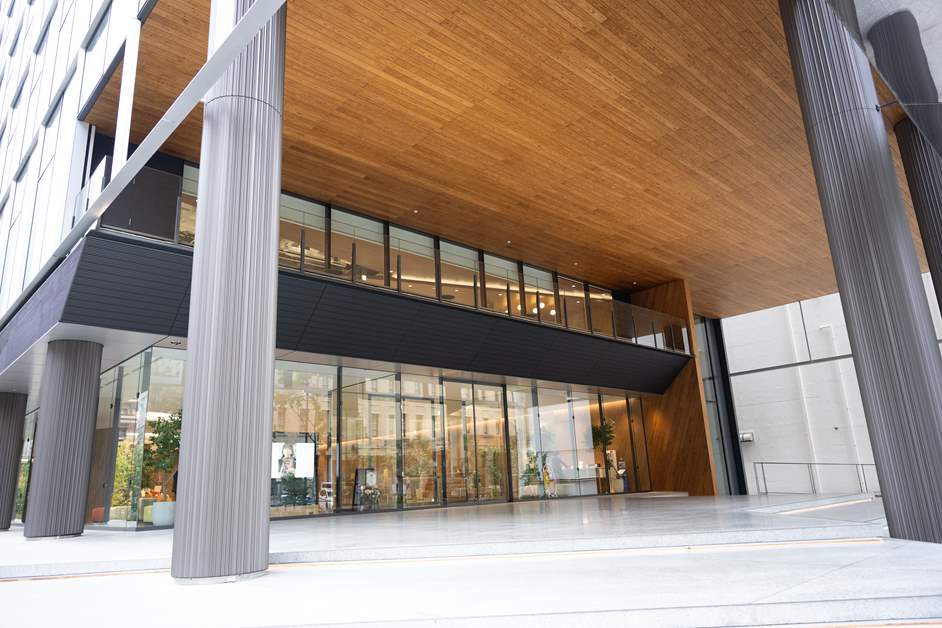
“Actually, that lattice-like mirrored design isn’t merely decorative—it’s an ingenious way to bring in ‘light and wind.’ It reflects light to efficiently illuminate the interior, and when the windows are opened, it creates a natural flow of air. Through this mechanism, we aimed to create an energy-efficient building that doesn’t rely too heavily on artificial lighting or air conditioning. In addition, wood has been used for the ceiling of the main entrance (piloti) as well as for the walls and columns inside the building; this wood is Imari timber from Imari City in Saga Prefecture, the hometown of the company’s founder, Taichiro Morinaga.”
“Actually, that lattice-like mirrored design isn’t merely decorative—it’s an ingenious way to bring in ‘light and wind.’ It reflects light to efficiently illuminate the interior, and when the windows are opened, it creates a natural flow of air. Through this mechanism, we aimed to create an energy-efficient building that doesn’t rely too heavily on artificial lighting or air conditioning. In addition, wood has been used for the ceiling of the main entrance (piloti) as well as for the walls and columns inside the building; this wood is Imari timber from Imari City in Saga Prefecture, the hometown of the company’s founder, Taichiro Morinaga.”
――So this building is a blend of cutting-edge technology and our founding spirit.
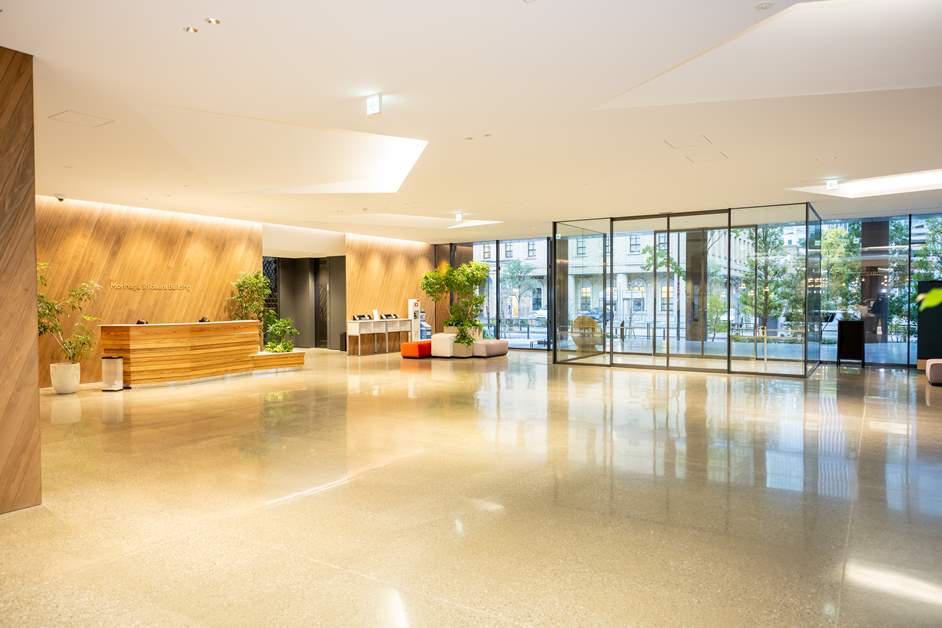
“The new headquarters building was designed to embody our ‘2030 Vision,’ which aims to transform us into a wellness company, as well as our corporate philosophy. When rebuilding our company-owned building—which had stood on this site since 1972—one of the things we prioritized was ‘coexistence with the local community.’ For example, the entrance hall on the first floor is designed to serve as a temporary evacuation shelter for people unable to return home in the event of a disaster, and we have deliberately kept the area near the entrance free of clutter to ensure a spacious environment. This design is intended to contribute to disaster prevention and mitigation in the local community.”
“The new headquarters building was designed to embody our ‘2030 Vision,’ which aims to transform us into a wellness company, as well as our corporate philosophy. When rebuilding our company-owned building—which had stood on this site since 1972—one of the things we prioritized was ‘coexistence with the local community.’ For example, the entrance hall on the first floor is designed to serve as a temporary evacuation shelter for people unable to return home in the event of a disaster, and we have deliberately kept the area near the entrance free of clutter to ensure a spacious environment. This design is intended to contribute to disaster prevention and mitigation in the local community.”
――There’s also a café on the first floor, isn’t there?
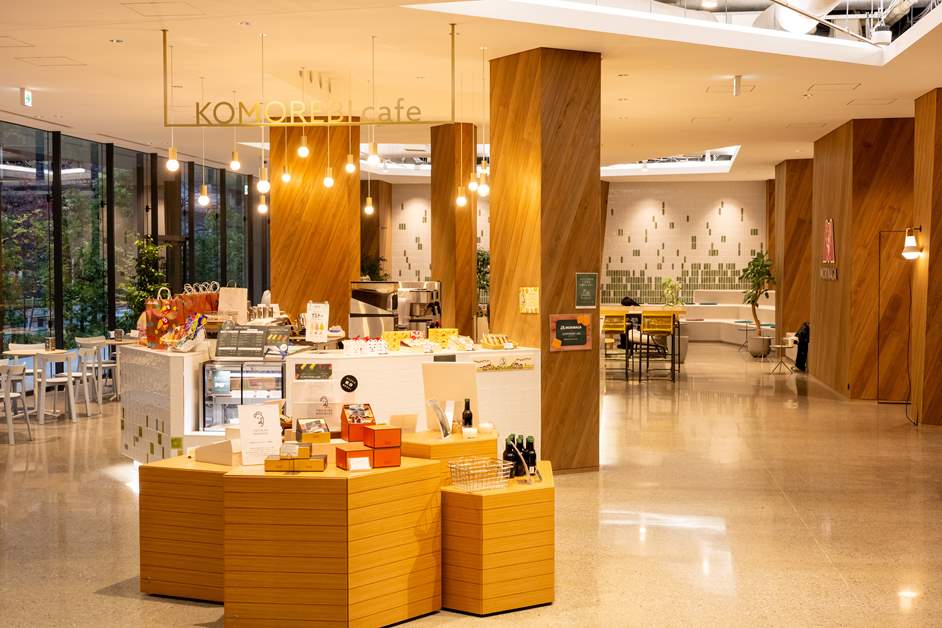
“KOMOREBI café” on the first floor is open not only to our employees but also to the general public. Given that we’re located in an office district, people who work nearby or live in the area often drop by, which fosters a sense of community. We aim to create a ‘space open to the community.’ The Shibaura and Tamachi areas are places where our company once had factories, so we have a very deep connection to this land. We hope to give back the joy of being able to continue our business here by contributing to the local community.”
“KOMOREBI café” on the first floor is open not only to our employees but also to the general public. Given that we’re located in an office district, people who work nearby or live in the area often drop by, which fosters a sense of community. We aim to create a ‘space open to the community.’ The Shibaura and Tamachi areas are places where our company once had factories, so we have a very deep connection to this land. We hope to give back the joy of being able to continue our business here by contributing to the local community.”
18 Years of Supporting Children in the Land of Cacao
――Now, I’d like to hear more about your company’s “1 Chocolate for 1 Smile” initiative. This initiative began in 2008 and will mark its 18th year in 2026—could you tell us what originally inspired it?
“It all began in 2008 when our marketing manager at the time learned about the serious issues facing the regions where cacao—the raw material for chocolate—is produced. Issues such as child labor and inadequate educational environments in cocoa-producing regions highlighted the reality that while we were delivering delicious chocolate, the very people who sustain its source were suffering. It was precisely during Morinaga Chocolate’s 90th anniversary that we began exploring what we, as a manufacturer, could do.”
“It all began in 2008 when our marketing manager at the time learned about the serious issues facing the regions where cacao—the raw material for chocolate—is produced. Issues such as child labor and inadequate educational environments in cocoa-producing regions highlighted the reality that while we were delivering delicious chocolate, the very people who sustain its source were suffering. It was precisely during Morinaga Chocolate’s 90th anniversary that we began exploring what we, as a manufacturer, could do.”
――That’s when the initiative to support farmers and children in cocoa-producing regions began, didn’t it?
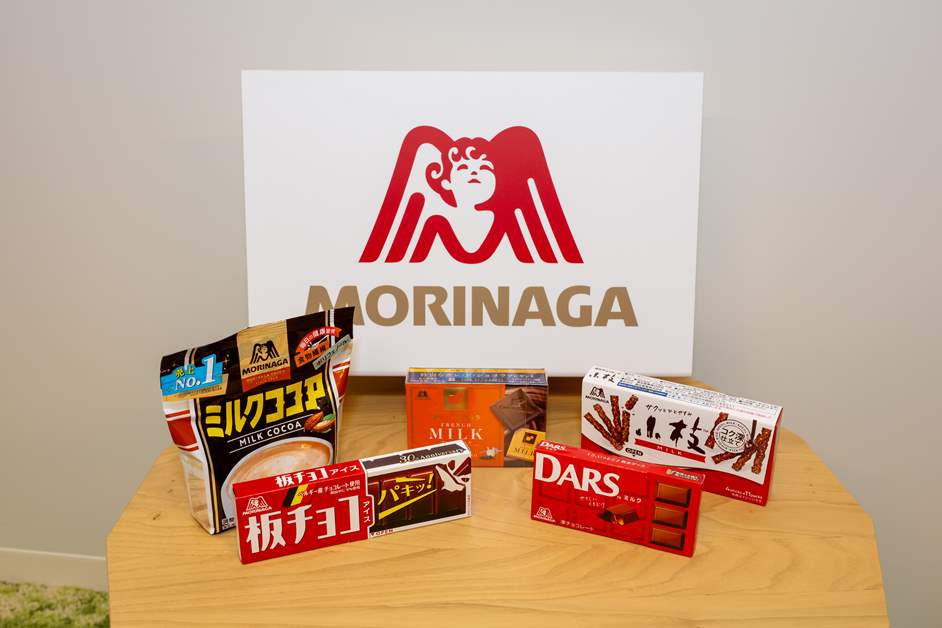
“The most distinctive feature of this initiative is that it’s ‘customer-participatory.’ While we have several annual initiatives—such as campaigns and collaborative projects—that lead to donations, the most symbolic of these is a special campaign that runs for about a month and a half, including the Valentine’s Day period. During this period, for every eligible Morinaga Chocolate product—such as ‘Dars,’ ‘Koeda,’ or ‘Carré de Chocolat’—purchased by a customer at convenience stores or supermarkets, 1 yen is donated. In recent years, products like “Morinaga Milk Cocoa” and “Bar Chocolate Ice Cream” have been added to the list, allowing customers to participate across an even wider range of categories.”
“The most distinctive feature of this initiative is that it’s ‘customer-participatory.’ While we have several annual initiatives—such as campaigns and collaborative projects—that lead to donations, the most symbolic of these is a special campaign that runs for about a month and a half, including the Valentine’s Day period. During this period, for every eligible Morinaga Chocolate product—such as ‘Dars,’ ‘Koeda,’ or ‘Carré de Chocolat’—purchased by a customer at convenience stores or supermarkets, 1 yen is donated. In recent years, products like “Morinaga Milk Cocoa” and “Bar Chocolate Ice Cream” have been added to the list, allowing customers to participate across an even wider range of categories.”
――Perhaps the simplicity of the “1 yen” concept is the secret to its longevity. What kind of changes have actually resulted from this support so far?
“Over the past 17 years, up to last year, the total amount donated reached approximately 340 million yen, and the number of children supported exceeded 17,000. One particularly striking story is that of Godfrey from Ghana, who was once a child laborer and was unable to receive an education. He received support starting in elementary school, which allowed him to continue his education; he went on to graduate from college and now teaches children as a teacher. When this initiative began, the term ‘sustainability’ hadn’t even become widely used yet. Seeing children who received support back then grow into adults and now nurture the next generation is exactly the kind of sustainable support we’ve been striving for.”
“Over the past 17 years, up to last year, the total amount donated reached approximately 340 million yen, and the number of children supported exceeded 17,000. One particularly striking story is that of Godfrey from Ghana, who was once a child laborer and was unable to receive an education. He received support starting in elementary school, which allowed him to continue his education; he went on to graduate from college and now teaches children as a teacher. When this initiative began, the term ‘sustainability’ hadn’t even become widely used yet. Seeing children who received support back then grow into adults and now nurture the next generation is exactly the kind of sustainable support we’ve been striving for.”
――I believe this means you’ve been a pioneer in the industry. I heard that you, Mr. Watanabe, have personally visited cocoa-producing regions.
“Yes. I visited Ghana in 2023. While there, I saw firsthand that systems are steadily being established to promote self-reliance, such as the provision of school meals and the organization of local volunteers to monitor child labor. What we’re doing isn’t just “one-off” aid that simply involves donating goods; rather, we’re building a “self-sustaining” system where, even after our support ends, the community can protect its children on its own while increasing its income through cocoa farming. With this mindset, I hope to continue providing ongoing support together with our partners, including the international NGO Plan International and the Japan-based NGO ACE.”
“Yes. I visited Ghana in 2023. While there, I saw firsthand that systems are steadily being established to promote self-reliance, such as the provision of school meals and the organization of local volunteers to monitor child labor. What we’re doing isn’t just “one-off” aid that simply involves donating goods; rather, we’re building a “self-sustaining” system where, even after our support ends, the community can protect its children on its own while increasing its income through cocoa farming. With this mindset, I hope to continue providing ongoing support together with our partners, including the international NGO Plan International and the Japan-based NGO ACE.”
A learning environment where participants use sweets to make social issues feel personally relevant
――Have you set any numerical targets for the future?
“Actually, we haven’t set any specific numerical targets. That’s because the challenges facing cocoa-producing regions aren’t something a single company can solve on its own. What matters most to us is simply ‘raising awareness about the current situation in cocoa-producing countries’ through these activities. For example, during last year’s summer vacation, we collaborated with Gakken Kids Net to run a campaign titled ‘1 Chocolate for 1 Smile Summer Campaign.’ We distributed worksheets designed to help children think about ‘the journey of chocolate’ and set up a booth displaying cocoa beans at an event called the Free Research Expo—all with the primary goal of raising children’s awareness. For this campaign, we designed a system where donations were generated not only through event participation but also simply by visiting the campaign website or downloading the worksheets. This is because we believe there is value in the act of children gaining information and thinking for themselves. We believe that raising awareness in this way and expanding the reach of our activities is what matters most.”
“Actually, we haven’t set any specific numerical targets. That’s because the challenges facing cocoa-producing regions aren’t something a single company can solve on its own. What matters most to us is simply ‘raising awareness about the current situation in cocoa-producing countries’ through these activities. For example, during last year’s summer vacation, we collaborated with Gakken Kids Net to run a campaign titled ‘1 Chocolate for 1 Smile Summer Campaign.’ We distributed worksheets designed to help children think about ‘the journey of chocolate’ and set up a booth displaying cocoa beans at an event called the Free Research Expo—all with the primary goal of raising children’s awareness. For this campaign, we designed a system where donations were generated not only through event participation but also simply by visiting the campaign website or downloading the worksheets. This is because we believe there is value in the act of children gaining information and thinking for themselves. We believe that raising awareness in this way and expanding the reach of our activities is what matters most.”
――It’s wonderful that learning about this leads to donations.
“That’s right. As part of this campaign, we also held an event called the ‘“Ah, I See! Chocolate” Wall Newspaper Contest.’ The contest asked participants to create their own wall newspapers, and elementary and middle school students from all over the country researched the topic with great enthusiasm, summarizing the challenges facing cocoa-producing countries and our initiatives in their own words. I am convinced that this chain of learning will help build a better society in the future.”
“That’s right. As part of this campaign, we also held an event called the ‘“Ah, I See! Chocolate” Wall Newspaper Contest.’ The contest asked participants to create their own wall newspapers, and elementary and middle school students from all over the country researched the topic with great enthusiasm, summarizing the challenges facing cocoa-producing countries and our initiatives in their own words. I am convinced that this chain of learning will help build a better society in the future.”
――You have a guest lecture scheduled at Shibahama Elementary School in February 2026. Could you also tell us about your community partnerships in Minato Ward?
“Shibahama Elementary School is right across the street from our office, and every day, all our employees watch as the children cheerfully make their way to and from school. This class came about from our desire to directly share with these children—the stars of our local community—what we’re working on around the world, and to learn together face-to-face. On the day of the event, Shinya Mori, our President, CEO, and COO, will serve as the instructor. During the class, we’ll use videos, quizzes, and workshops to encourage the children to think about the social issues behind chocolate—a treat they all love—as something that personally affects them. We want them to experience the SDG principle of ‘leaving no one behind’ not as an abstract concept, but through the tangible example of a single piece of chocolate.”
“Shibahama Elementary School is right across the street from our office, and every day, all our employees watch as the children cheerfully make their way to and from school. This class came about from our desire to directly share with these children—the stars of our local community—what we’re working on around the world, and to learn together face-to-face. On the day of the event, Shinya Mori, our President, CEO, and COO, will serve as the instructor. During the class, we’ll use videos, quizzes, and workshops to encourage the children to think about the social issues behind chocolate—a treat they all love—as something that personally affects them. We want them to experience the SDG principle of ‘leaving no one behind’ not as an abstract concept, but through the tangible example of a single piece of chocolate.”
“――I’m surprised that the president himself is serving as an instructor. It sounds like this will be an unforgettable lesson for the local children, too.”
“Actually, for this ‘Future Learning’ outreach program, it’s not just a specific department—many employees, including myself, travel to schools across the region to serve as instructors. I believe that because we have a tool—sweets—that children naturally relate to, we can convey even difficult social issues in a straightforward way. Nothing would make me happier than to see children from our local Shibahama Elementary School grow up with the mindset to change the world.”
“Actually, for this ‘Future Learning’ outreach program, it’s not just a specific department—many employees, including myself, travel to schools across the region to serve as instructors. I believe that because we have a tool—sweets—that children naturally relate to, we can convey even difficult social issues in a straightforward way. Nothing would make me happier than to see children from our local Shibahama Elementary School grow up with the mindset to change the world.”
――It’s clear that you place great importance on interacting with the local community, including through “KOMOREBI cafe” on the first floor of the new headquarters building.
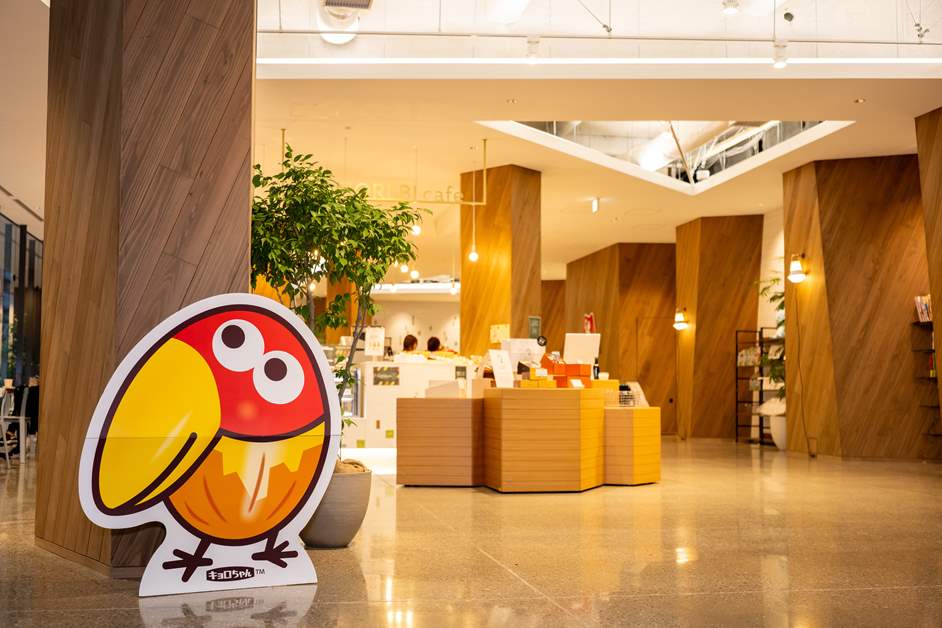
“Currently, we’re hosting a panel exhibition on the first floor, where the cafe is located, to showcase our activities. We’re also displaying the winning entries from the ‘Wall Newspaper Contest’ I mentioned earlier, so I hope you’ll take a look. By the way, the café’s concept is “Kakuhan” (mixing), which is the same theme as our new headquarters building. It’s a place where people gather, mingle, and where new ideas and smiles are born. Thanks to our affordable prices, we’ve received positive feedback from neighbors who say it’s become a cozy spot to relax. During last fall’s “Tamachi Halloween” event, nearly 1,000 people visited, and seeing the smiles on the children’s faces as they ran toward Kyoro-chan in his mascot suit made me realize once again the significance of putting down roots in this community. Additionally, this fiscal year, during the special “1 Chocolate for 1 Smile” campaign running from Monday, February 2, to Friday, February 13, we’ll be giving away a “Dozens” pack to the first 30 customers each day who visit the café. We hope you’ll take this opportunity to stop by.”
“Currently, we’re hosting a panel exhibition on the first floor, where the cafe is located, to showcase our activities. We’re also displaying the winning entries from the ‘Wall Newspaper Contest’ I mentioned earlier, so I hope you’ll take a look. By the way, the café’s concept is “Kakuhan” (mixing), which is the same theme as our new headquarters building. It’s a place where people gather, mingle, and where new ideas and smiles are born. Thanks to our affordable prices, we’ve received positive feedback from neighbors who say it’s become a cozy spot to relax. During last fall’s “Tamachi Halloween” event, nearly 1,000 people visited, and seeing the smiles on the children’s faces as they ran toward Kyoro-chan in his mascot suit made me realize once again the significance of putting down roots in this community. Additionally, this fiscal year, during the special “1 Chocolate for 1 Smile” campaign running from Monday, February 2, to Friday, February 13, we’ll be giving away a “Dozens” pack to the first 30 customers each day who visit the café. We hope you’ll take this opportunity to stop by.”
――Finally, could you please share a message for everyone celebrating Valentine’s Day in 2026?
“Valentine’s Day is a special day—the one day of the year when chocolate truly takes center stage. Whether you’re sharing your feelings with someone special or treating yourself, I hope each of you is enjoying a happy moment. As confectionery makers, our hope is that you’ll extend that circle of happiness to include the ‘people who make chocolate.’ Every piece of chocolate you hold in your hands helps fund schools and school lunches for children in cocoa-producing regions across the ocean, and gives a young person the power to make their dreams come true. We’d be delighted if Valentine’s Day could serve as an opportunity, even in a small way, to turn your attention toward cocoa-producing regions.”
“Valentine’s Day is a special day—the one day of the year when chocolate truly takes center stage. Whether you’re sharing your feelings with someone special or treating yourself, I hope each of you is enjoying a happy moment. As confectionery makers, our hope is that you’ll extend that circle of happiness to include the ‘people who make chocolate.’ Every piece of chocolate you hold in your hands helps fund schools and school lunches for children in cocoa-producing regions across the ocean, and gives a young person the power to make their dreams come true. We’d be delighted if Valentine’s Day could serve as an opportunity, even in a small way, to turn your attention toward cocoa-producing regions.”