



The Representative Auditor of the Japan Heritage Promotion Association Explains the Significance of “Japan Heritage” and the Multifaceted Stories of Local Communities
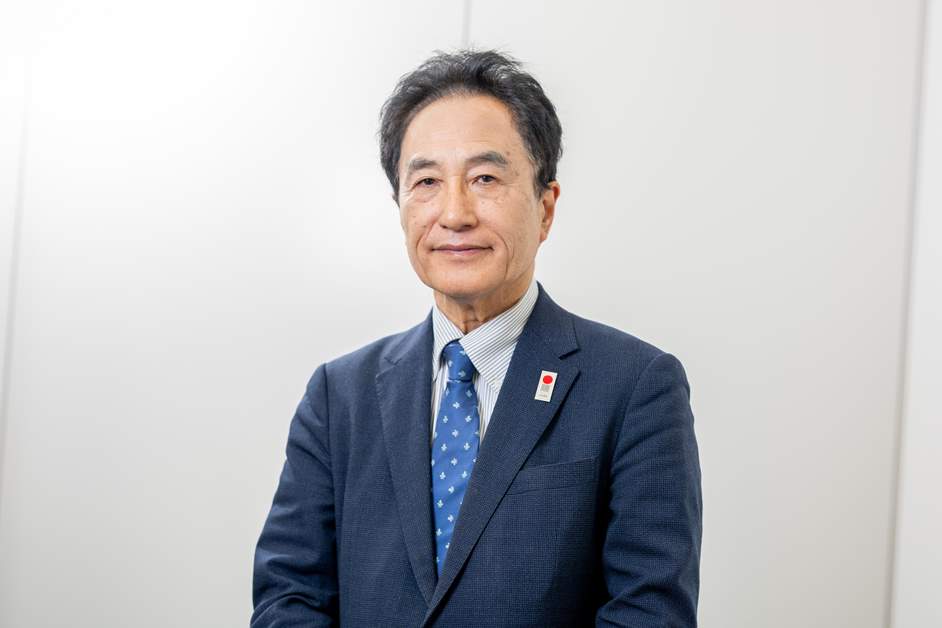
Japan Heritage connects Japan’s rich cultural assets through stories rooted in history and tradition. Launched in 2015 by the Agency for Cultural Affairs, this program is beginning to bear fruit in the form of regional revitalization and tourism promotion. The Japan Heritage Promotion Association, a general incorporated association, is dedicated to fostering storytellers and promoting the program through initiatives such as the Japan Heritage Certification Exam. In this interview, we spoke with Naotsugu Kuroda, the Representative Auditor, about the significance of Japan Heritage, the benefits of certification, and the role of the Minato City Tourism Association, which serves as an official partner of Japan Heritage.
Certification Exam to Promote Awareness and Appreciation of Japan Heritage Sites
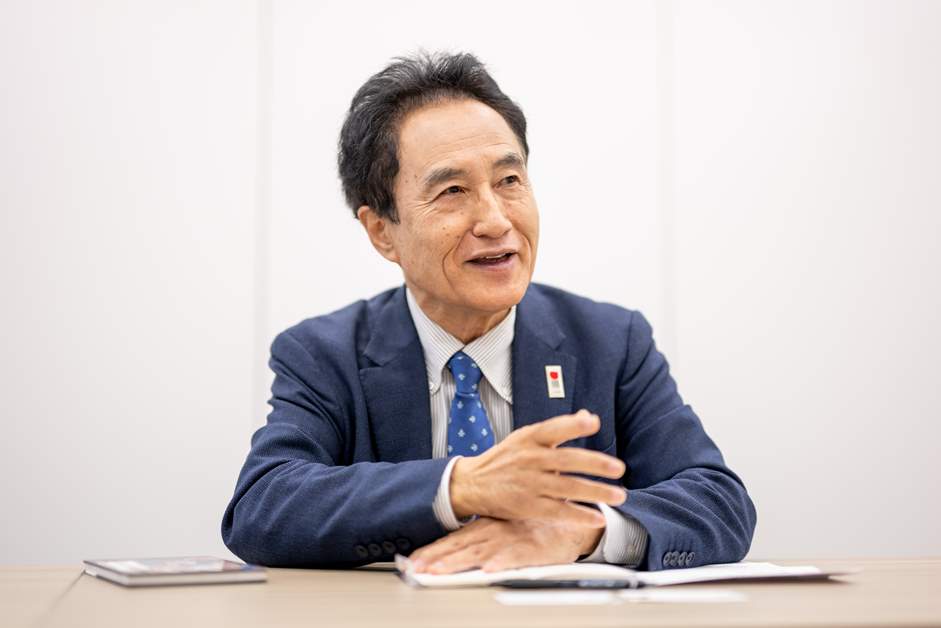
――First, could you tell us about your involvement with Japan Heritage? How did you come to be involved in promoting Japan Heritage?
“I serve as an advisor to the Themed Travel Department at the travel agency Club Tourism, and I’ve been involved in planning numerous themed trips both in Japan and abroad. My initial involvement with Japan Heritage began when, as part of that work, I ended up assisting a colleague from my same graduating class who had been seconded to the World Heritage Academy, an organization dedicated to raising awareness of World Heritage sites. At first, I helped with the World Heritage Certification Exam and planned and wrote itineraries for tours visiting World Heritage sites. However, as I continued giving lectures and leading tours, I gradually began to recognize the challenges facing World Heritage sites. Since World Heritage sites are designated by UNESCO, international coordination is inevitably required. For example, there was the reality that even cultural practices cherished by the Japanese—such as Japan’s traditional whaling culture—were difficult to recognize within the World Heritage framework. Around that time, the Agency for Cultural Affairs launched a new program called “Japan Heritage.” “Japan Heritage” is a system that recognizes a combination of tangible and intangible cultural properties as a single narrative, with the aim of revitalizing local communities and fostering regional development. Since the destinations for the history tours we were planning happened to coincide with designated Japan Heritage sites, a representative from the Agency for Cultural Affairs approached us and asked, “Would you be willing to plan tours of the Japan Heritage sites?” Since then, the Themed Travel Department, where I work, has been actively planning Japan Heritage tours and promoting their appeal through lectures and other events. That was the beginning of my long association with Japan Heritage.”
“I serve as an advisor to the Themed Travel Department at the travel agency Club Tourism, and I’ve been involved in planning numerous themed trips both in Japan and abroad. My initial involvement with Japan Heritage began when, as part of that work, I ended up assisting a colleague from my same graduating class who had been seconded to the World Heritage Academy, an organization dedicated to raising awareness of World Heritage sites. At first, I helped with the World Heritage Certification Exam and planned and wrote itineraries for tours visiting World Heritage sites. However, as I continued giving lectures and leading tours, I gradually began to recognize the challenges facing World Heritage sites. Since World Heritage sites are designated by UNESCO, international coordination is inevitably required. For example, there was the reality that even cultural practices cherished by the Japanese—such as Japan’s traditional whaling culture—were difficult to recognize within the World Heritage framework. Around that time, the Agency for Cultural Affairs launched a new program called “Japan Heritage.” “Japan Heritage” is a system that recognizes a combination of tangible and intangible cultural properties as a single narrative, with the aim of revitalizing local communities and fostering regional development. Since the destinations for the history tours we were planning happened to coincide with designated Japan Heritage sites, a representative from the Agency for Cultural Affairs approached us and asked, “Would you be willing to plan tours of the Japan Heritage sites?” Since then, the Themed Travel Department, where I work, has been actively planning Japan Heritage tours and promoting their appeal through lectures and other events. That was the beginning of my long association with Japan Heritage.”
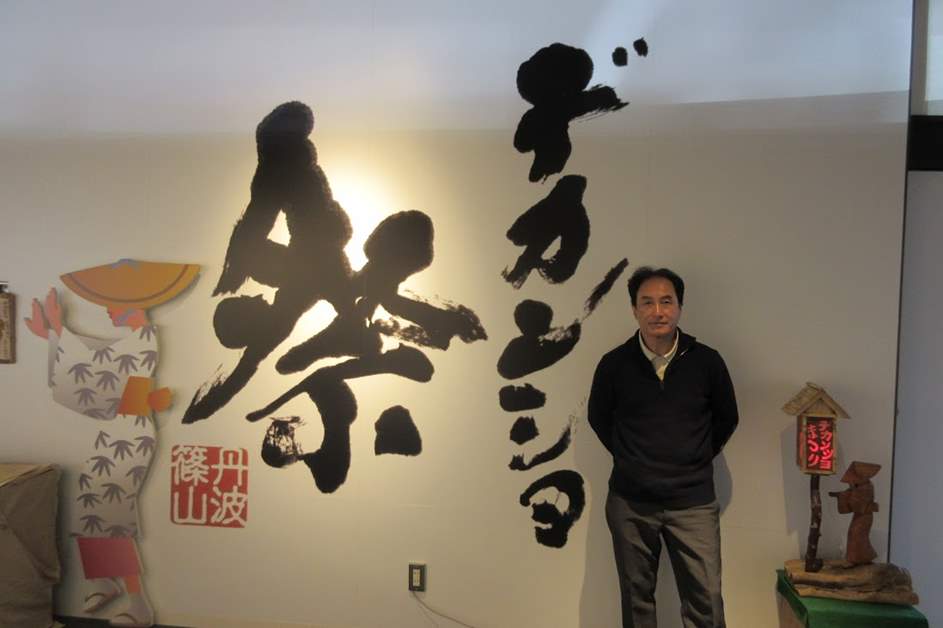
――So, the timing was just right. Could you please explain once again what the Japan Heritage program is all about?
“Simply put, it’s a system that recognizes not just individual cultural properties, but the entire story they tell. Traditional cultural administration focused primarily on preserving National Treasures and Important Cultural Properties. However, Japan Heritage aims to utilize these assets as tourism resources and link them to regional revitalization. Japan Heritage is broadly divided into two types. One is the “regional type,” which features a story that is self-contained within a single municipality. The other is the “serial type” (or “network type”), which involves stories connected by a common theme that span multiple municipalities. As of 2026, 104 stories have been designated by the Agency for Cultural Affairs. By presenting them in this narrative format, even those who are not well-versed in history can gain a deeper understanding of the region—asking questions such as, “Why is this temple located here?” or “Why has this festival continued?” “It is a system in which individual points connect to form lines and then expand into a broader landscape, thereby bringing the region’s identity into sharp relief.”
“Simply put, it’s a system that recognizes not just individual cultural properties, but the entire story they tell. Traditional cultural administration focused primarily on preserving National Treasures and Important Cultural Properties. However, Japan Heritage aims to utilize these assets as tourism resources and link them to regional revitalization. Japan Heritage is broadly divided into two types. One is the “regional type,” which features a story that is self-contained within a single municipality. The other is the “serial type” (or “network type”), which involves stories connected by a common theme that span multiple municipalities. As of 2026, 104 stories have been designated by the Agency for Cultural Affairs. By presenting them in this narrative format, even those who are not well-versed in history can gain a deeper understanding of the region—asking questions such as, “Why is this temple located here?” or “Why has this festival continued?” “It is a system in which individual points connect to form lines and then expand into a broader landscape, thereby bringing the region’s identity into sharp relief.”
――The Japan Heritage Promotion Association is the organization dedicated to promoting Japan Heritage. Could you tell us about the process leading up to its establishment?
“It all started when people interested in Japan Heritage began attending a course I was teaching through Club Tourism. Driven by a desire to learn more about Japan Heritage, a study group was formed in 2021. Members of that group then proposed, ‘Let’s conduct a formal certification exam to promote Japan Heritage,’ and in January 2023, we incorporated as a general incorporated association and became the Japan Heritage Promotion Association.”
“It all started when people interested in Japan Heritage began attending a course I was teaching through Club Tourism. Driven by a desire to learn more about Japan Heritage, a study group was formed in 2021. Members of that group then proposed, ‘Let’s conduct a formal certification exam to promote Japan Heritage,’ and in January 2023, we incorporated as a general incorporated association and became the Japan Heritage Promotion Association.”
――What exactly is the Japan Heritage Certification Exam administered by the Japan Heritage Promotion Association?
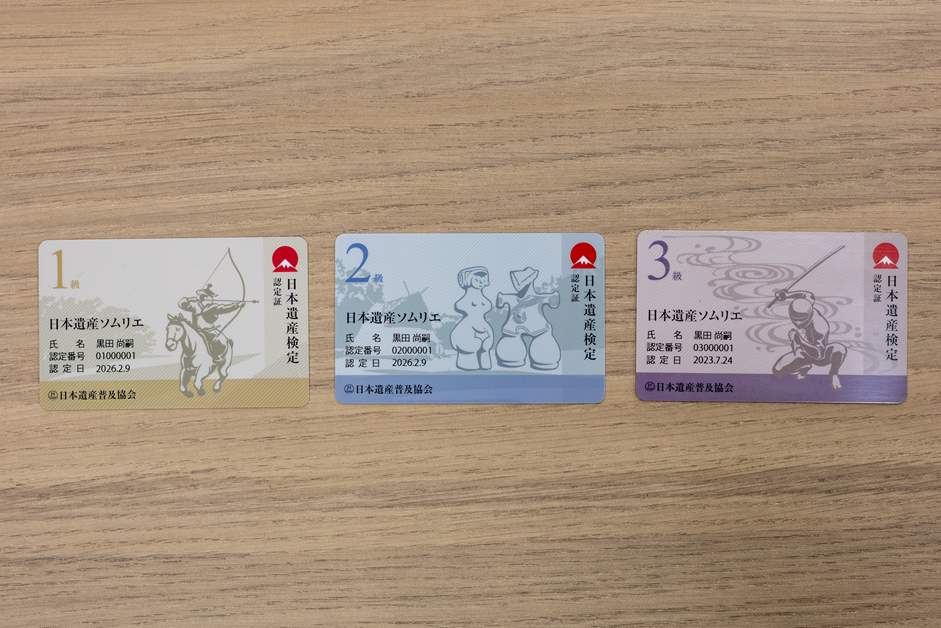
“The Japan Heritage Certification Exam is not designed to fail candidates. We want it to serve as a gateway to help more people learn about Japan Heritage. Currently, we offer Levels 3, 2, and 1. Level 3, which serves as the foundation, is designed to provide a broad but basic understanding of the 104 story points and is administered online. Successful candidates are awarded the title of ‘Japan Heritage Sommelier.’ It’s not just about passing the exam and being done; we’ve established a system that allows them to participate free of charge in training sessions and lectures led by curators even after they pass.”
“The Japan Heritage Certification Exam is not designed to fail candidates. We want it to serve as a gateway to help more people learn about Japan Heritage. Currently, we offer Levels 3, 2, and 1. Level 3, which serves as the foundation, is designed to provide a broad but basic understanding of the 104 story points and is administered online. Successful candidates are awarded the title of ‘Japan Heritage Sommelier.’ It’s not just about passing the exam and being done; we’ve established a system that allows them to participate free of charge in training sessions and lectures led by curators even after they pass.”
――So, is the process such that those who pass Level 3 can take the Level 2 and Level 1 exams?
“That’s right. Level 2 is a bit more difficult. Then, once a certain number of candidates had passed Level 2, we administered the top-tier Level 1 exam. Level 1 is set at a very high standard and tests candidates’ deep historical knowledge underlying the stories. The first exam was extremely competitive, with only four people passing. In response, starting this January, we launched the ‘Japan Heritage Professional Course (Eye-Opening Japan Heritage)’ for those aiming for Level 1 or seeking to become professional guides. It is an online course in which I explain all 104 stories one by one, and the recordings are available for viewing. The content is so comprehensive that mastering this course will make you an immediately effective Japan Heritage guide.”
“That’s right. Level 2 is a bit more difficult. Then, once a certain number of candidates had passed Level 2, we administered the top-tier Level 1 exam. Level 1 is set at a very high standard and tests candidates’ deep historical knowledge underlying the stories. The first exam was extremely competitive, with only four people passing. In response, starting this January, we launched the ‘Japan Heritage Professional Course (Eye-Opening Japan Heritage)’ for those aiming for Level 1 or seeking to become professional guides. It is an online course in which I explain all 104 stories one by one, and the recordings are available for viewing. The content is so comprehensive that mastering this course will make you an immediately effective Japan Heritage guide.”
The Importance of Firsthand Information, as Passed Down by the Descendants of Ninjas
――The “Japan Heritage Professional Course” is a course that could only be offered by Mr. Kuroda, who knows Japan Heritage inside and out. I’ve heard that you’re actually a “descendant of ninjas.” Does that background influence your perspective when interpreting Japan Heritage?
“Yes. I’m from Iga-Ueno in Mie Prefecture, and I was born across the street from the birthplace of Matsuo Bashō, the master of haiku. Furthermore, tracing my ancestry back, I’m descended from the ‘Kuroda Rascals’—the head of the shōen (manor) at Tōdai-ji Temple, who were involved in the origins of the Iga-ryū ninja. I didn’t know this until my grandfather passed away, but the experience of being raised in a solitary house deep in the mountains and the philosophy instilled in me were the very essence of ‘ninja.’ Ninjas possess the ‘Five Arts of Escape’ (Goton), based on the Five Elements (Gogyo). While the general image is that of vanishing in a smoke screen, the essence is quite different. For example, Water Escape is the geopolitics of thoroughly investigating water sources and water flows; Wood Escape involves understanding plant ecosystems to gain knowledge of medicinal herbs and gunpowder; and Earth Escape means having a thorough understanding of the terrain. In other words, the essence of a ninja’s work lies in ‘gathering and utilizing information.’”
“Yes. I’m from Iga-Ueno in Mie Prefecture, and I was born across the street from the birthplace of Matsuo Bashō, the master of haiku. Furthermore, tracing my ancestry back, I’m descended from the ‘Kuroda Rascals’—the head of the shōen (manor) at Tōdai-ji Temple, who were involved in the origins of the Iga-ryū ninja. I didn’t know this until my grandfather passed away, but the experience of being raised in a solitary house deep in the mountains and the philosophy instilled in me were the very essence of ‘ninja.’ Ninjas possess the ‘Five Arts of Escape’ (Goton), based on the Five Elements (Gogyo). While the general image is that of vanishing in a smoke screen, the essence is quite different. For example, Water Escape is the geopolitics of thoroughly investigating water sources and water flows; Wood Escape involves understanding plant ecosystems to gain knowledge of medicinal herbs and gunpowder; and Earth Escape means having a thorough understanding of the terrain. In other words, the essence of a ninja’s work lies in ‘gathering and utilizing information.’”
――So you’re saying your approach to information is different from that of ordinary people.
“That’s right. Ninjas value firsthand information above all else. Many people today travel relying solely on second- or third-hand information found in guidebooks or on the internet. However, a true ninja goes to the location on foot, climbs to high vantage points to survey the terrain, converses with local elders, and ponders the origins behind place names. They accumulate firsthand insights, such as, ‘Ah, so this place is called Kutsukake because it was where people used to change their straw sandals in the old days.’ By doing so, one can uncover the hidden history and true stories of a place—beyond mere surface-level tourism. Since I’ve been practicing this approach since my teens, I believe that when I tell the stories of Japan Heritage sites, I can delve into deeper layers that go beyond what’s found in textbooks. Kaoru Kanetaka, who was once the president of the Japan Travel Writers Association, once advised me, “Since you’re from Iga, if you’re going to write travel articles, you should do so as the ‘Heisei Matsuo Bashō.’” Ever since then, I’ve continued to share the essence of travel under the pen name “Heisei Basho.”
“That’s right. Ninjas value firsthand information above all else. Many people today travel relying solely on second- or third-hand information found in guidebooks or on the internet. However, a true ninja goes to the location on foot, climbs to high vantage points to survey the terrain, converses with local elders, and ponders the origins behind place names. They accumulate firsthand insights, such as, ‘Ah, so this place is called Kutsukake because it was where people used to change their straw sandals in the old days.’ By doing so, one can uncover the hidden history and true stories of a place—beyond mere surface-level tourism. Since I’ve been practicing this approach since my teens, I believe that when I tell the stories of Japan Heritage sites, I can delve into deeper layers that go beyond what’s found in textbooks. Kaoru Kanetaka, who was once the president of the Japan Travel Writers Association, once advised me, “Since you’re from Iga, if you’re going to write travel articles, you should do so as the ‘Heisei Matsuo Bashō.’” Ever since then, I’ve continued to share the essence of travel under the pen name “Heisei Basho.”
This certification has set the region in motion
――Is it possible to delve deeper into or further develop stories that have been designated as Japan Heritage?
“Of course. In fact, I think the real appeal lies in how you can add your own unique perspective based on the designated stories. For example, there’s a Japan Heritage site in Isehara City, Kanagawa Prefecture, called ‘Oyama Pilgrimage.’ While the official story focuses mainly on the ‘Oyama-kō’ from the Edo period, people in the Kansai region tend to view Mount Oyama primarily as the site founded by Ryōben, the first chief priest of Tōdai-ji Temple. Furthermore, history enthusiasts will likely be drawn to the history of the monk-soldiers who supported the Hōjō clan. Depending on the target audience—whether you emphasize, ‘This is a site associated with Rōben from the Nara period,’ or ‘This was a strategic stronghold during the Warring States period’—by approaching the story from multiple angles, Japan Heritage sites become even more fascinating. The story of Masuda City in Shimane Prefecture also centers on Sesshū, who was invited by the Masuda clan in the Middle Ages, but it is also a place associated with the poet Kakinomoto no Hitomaro, who was active from the Asuka period through the early Nara period and left many poems in the *Man’yōshū*. “Introducing it as ‘the town beloved by two masters—Setsu-shū, the master of painting, and Hitomaro, the master of poetry’ might resonate more deeply with people. In this way, reframing the story within the continuity of history further enhances the value of Japan Heritage.”
“Of course. In fact, I think the real appeal lies in how you can add your own unique perspective based on the designated stories. For example, there’s a Japan Heritage site in Isehara City, Kanagawa Prefecture, called ‘Oyama Pilgrimage.’ While the official story focuses mainly on the ‘Oyama-kō’ from the Edo period, people in the Kansai region tend to view Mount Oyama primarily as the site founded by Ryōben, the first chief priest of Tōdai-ji Temple. Furthermore, history enthusiasts will likely be drawn to the history of the monk-soldiers who supported the Hōjō clan. Depending on the target audience—whether you emphasize, ‘This is a site associated with Rōben from the Nara period,’ or ‘This was a strategic stronghold during the Warring States period’—by approaching the story from multiple angles, Japan Heritage sites become even more fascinating. The story of Masuda City in Shimane Prefecture also centers on Sesshū, who was invited by the Masuda clan in the Middle Ages, but it is also a place associated with the poet Kakinomoto no Hitomaro, who was active from the Asuka period through the early Nara period and left many poems in the *Man’yōshū*. “Introducing it as ‘the town beloved by two masters—Setsu-shū, the master of painting, and Hitomaro, the master of poetry’ might resonate more deeply with people. In this way, reframing the story within the continuity of history further enhances the value of Japan Heritage.”
――That’s very interesting. So, what specific benefits does a region gain when its story is designated as a Japan Heritage site?
“While economic growth through tourism is certainly a benefit, I believe the greatest benefits are the restoration of pride in the region and the deepening of community bonds. As a successful example, there are the cases of my hometown, Iga City, and the neighboring city of Koka in Shiga Prefecture. After being designated as a serial-type Japan Heritage site titled ‘The Village of Ninjas: Iga and Koka—In Search of Real Ninjas,’ exchanges transcending administrative boundaries emerged between the two cities. “With the shared goal of ‘accurately conveying the true image of ninjas,’ local residents have come to take pride in their town’s history. The region has seen significant momentum since the designation—from celebrating February 22 as ‘Ninja Day’ (Nin-Nin-Nin) to media coverage that has broadcast the image of real ninjas nationwide.”
“While economic growth through tourism is certainly a benefit, I believe the greatest benefits are the restoration of pride in the region and the deepening of community bonds. As a successful example, there are the cases of my hometown, Iga City, and the neighboring city of Koka in Shiga Prefecture. After being designated as a serial-type Japan Heritage site titled ‘The Village of Ninjas: Iga and Koka—In Search of Real Ninjas,’ exchanges transcending administrative boundaries emerged between the two cities. “With the shared goal of ‘accurately conveying the true image of ninjas,’ local residents have come to take pride in their town’s history. The region has seen significant momentum since the designation—from celebrating February 22 as ‘Ninja Day’ (Nin-Nin-Nin) to media coverage that has broadcast the image of real ninjas nationwide.”
――So that was a major turning point. However, I’ve heard that even after being designated as a Japan Heritage site, ongoing efforts are required.
“That’s the major difference from World Heritage sites. Once a site is designated as a World Heritage site, the designation isn’t revoked unless something extraordinary happens, but for Japan Heritage sites, the designation can be revoked if it’s determined that efforts toward ‘utilization and revitalization’ are insufficient. In fact, there have been such cases in the past. That’s precisely why the region must constantly refine its story and keep sharing it. While there are challenges, I believe this serves as the engine that drives the region’s vitality.”
“That’s the major difference from World Heritage sites. Once a site is designated as a World Heritage site, the designation isn’t revoked unless something extraordinary happens, but for Japan Heritage sites, the designation can be revoked if it’s determined that efforts toward ‘utilization and revitalization’ are insufficient. In fact, there have been such cases in the past. That’s precisely why the region must constantly refine its story and keep sharing it. While there are challenges, I believe this serves as the engine that drives the region’s vitality.”
What We Expect from Minato Ward as the Gateway to the City Center
――The Minato City Tourism Association serves as an official partner of the Japan Heritage program. Mr. Kuroda, what are your expectations for Minato City?
“Minato Ward is truly the ‘gateway to the city center.’ It is home to the religious traditions of Zojo-ji Temple, which date back to the Edo period; Shiba Daijingu Shrine; and Odaiba and Takanawa, which served as the stage for Japan’s modern opening to the world. No other area condenses such a rich and layered history in such a concentrated space. Currently, Hachioji City is the only location within Tokyo that has been designated as a Japan Heritage site. To be honest, I feel it’s a tremendous waste that there are no Japan Heritage flags in the central areas of Tokyo—where tourists gather most—or in the city centers of Kyoto and the area around Tōdai-ji Temple in Nara. If a Japan Heritage flag were raised in Minato Ward, the gateway visited by people from all over the world, the promotional impact would be immeasurable.”
“Minato Ward is truly the ‘gateway to the city center.’ It is home to the religious traditions of Zojo-ji Temple, which date back to the Edo period; Shiba Daijingu Shrine; and Odaiba and Takanawa, which served as the stage for Japan’s modern opening to the world. No other area condenses such a rich and layered history in such a concentrated space. Currently, Hachioji City is the only location within Tokyo that has been designated as a Japan Heritage site. To be honest, I feel it’s a tremendous waste that there are no Japan Heritage flags in the central areas of Tokyo—where tourists gather most—or in the city centers of Kyoto and the area around Tōdai-ji Temple in Nara. If a Japan Heritage flag were raised in Minato Ward, the gateway visited by people from all over the world, the promotional impact would be immeasurable.”
――What role should the Minato City Tourism Association take on?
“Rather than treating certification as the ultimate goal, the first step is to freely incorporate the know-how associated with Japan Heritage. I look forward to initiatives that convey to not only government officials and tourism professionals but also local residents just how wonderful the stories of their own neighborhoods are. For example, Minato City has a powerful narrative known as ‘The Peace of the Tokugawa.’ Not only the areas around Zojo-ji Temple and Shiba, but also the Takanawa Gateway area once played a vital role in maintaining peace as the gateway to Edo. Even Odaiba can be described not merely as a leisure spot, but through the story of ‘a place built to defend the nation that upheld peace without ever exchanging a single shot.’ Rather than simply introducing these locations as isolated tourist spots, we need to weave together the narratives that run through them and share them with residents and business owners. By doing so, Minato Ward will evolve from a “place people just pass through” into a “place whose stories are passed down through the generations.”
“Rather than treating certification as the ultimate goal, the first step is to freely incorporate the know-how associated with Japan Heritage. I look forward to initiatives that convey to not only government officials and tourism professionals but also local residents just how wonderful the stories of their own neighborhoods are. For example, Minato City has a powerful narrative known as ‘The Peace of the Tokugawa.’ Not only the areas around Zojo-ji Temple and Shiba, but also the Takanawa Gateway area once played a vital role in maintaining peace as the gateway to Edo. Even Odaiba can be described not merely as a leisure spot, but through the story of ‘a place built to defend the nation that upheld peace without ever exchanging a single shot.’ Rather than simply introducing these locations as isolated tourist spots, we need to weave together the narratives that run through them and share them with residents and business owners. By doing so, Minato Ward will evolve from a “place people just pass through” into a “place whose stories are passed down through the generations.”
――Finally, please share a message for the readers of this article.
“Japan Heritage is by no means something distant. There are surely wonderful stories waiting to be discovered right in your hometown or in the immediate vicinity of where you live now. Don’t just browse the Agency for Cultural Affairs’ website—go out and visit these places in person. And try talking to the locals. I hope you’ll blend what you see with your own eyes, hear with your own ears, and feel with your own skin—along with the insights gained through those experiences—into the existing stories. Don’t just memorize facts; tell the story by infusing it with your own feelings. Only then will Japan Heritage truly become a living story. Please help increase the number of Japan Heritage sites you can talk about in your own words—saying things like, ‘My town has such wonderful Japan Heritage sites!’ That is the greatest force for preserving Japan’s traditional culture and passing it on to future generations.”
“Japan Heritage is by no means something distant. There are surely wonderful stories waiting to be discovered right in your hometown or in the immediate vicinity of where you live now. Don’t just browse the Agency for Cultural Affairs’ website—go out and visit these places in person. And try talking to the locals. I hope you’ll blend what you see with your own eyes, hear with your own ears, and feel with your own skin—along with the insights gained through those experiences—into the existing stories. Don’t just memorize facts; tell the story by infusing it with your own feelings. Only then will Japan Heritage truly become a living story. Please help increase the number of Japan Heritage sites you can talk about in your own words—saying things like, ‘My town has such wonderful Japan Heritage sites!’ That is the greatest force for preserving Japan’s traditional culture and passing it on to future generations.”