



The World of Food Unfolds at Takanawa’s “Small Museum of Food and Daily Life” and “Food Culture Library”
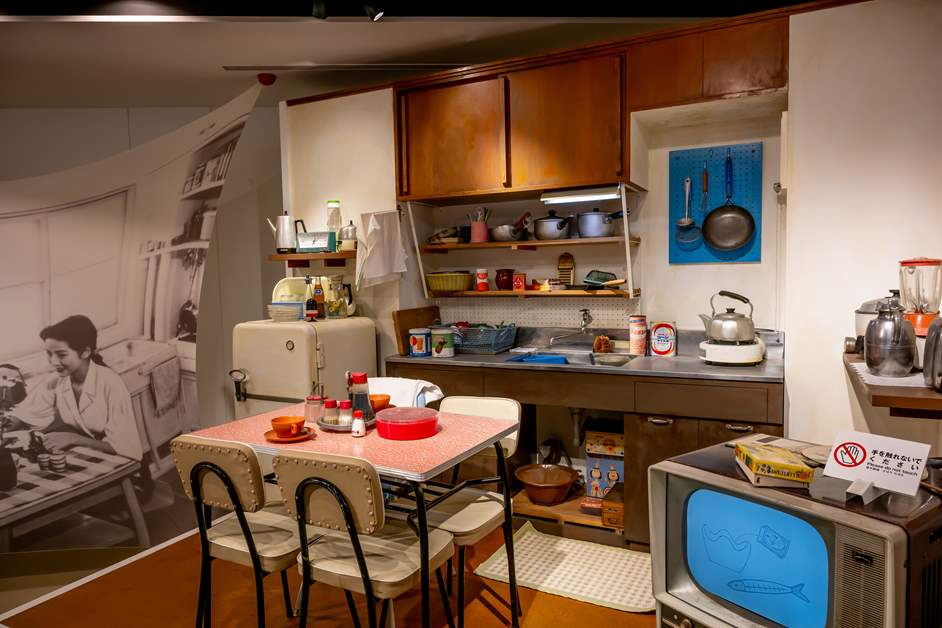
The food landscape is undergoing significant changes due to rising food prices and various issues surrounding rice—including what has been dubbed the “Reiwa Rice Crisis.” It is precisely in times like these that we may need to take a fresh look at “food.” The Ajinomoto Group Takanawa Training Center, located in Takanawa 3-chome, features various facilities that convey the history and evolution of Japanese food culture. At the “Small Museum of Food and Daily Life,” operated by Ajinomoto Co., Inc., visitors can learn about the umami seasoning “Ajinomoto®” and the Ajinomoto Group’s 100-year history. Additionally, at the “Food Culture Library,” operated by the Ajinomoto Food Culture Center (a public interest incorporated foundation), visitors can browse over 45,000 specialized books on food. In this article, we introduce the various facilities within the Ajinomoto Group Takanawa Training Center—a place that could be called a “food wonderland”—and explore the profound depths of Japanese food culture.
"The Little Museum of Food and Daily Life": Tracing the History of Food and the Ajinomoto Group
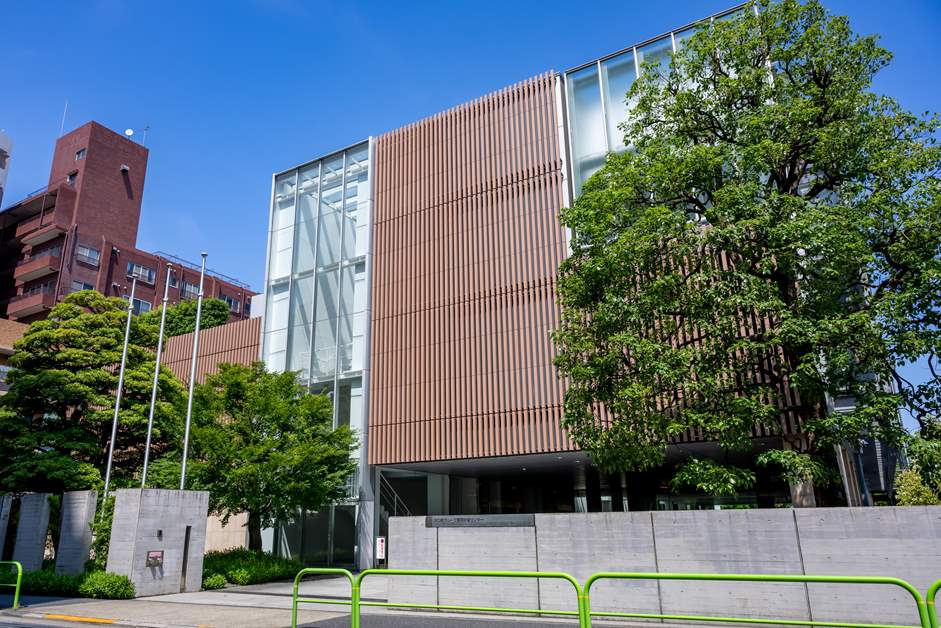
Built in 2004, the Ajinomoto Group Takanawa Training Center is about a 3-minute walk from Takanawadai Station on the Toei Asakusa Subway Line. Originally, this site was purchased in 1916 (Taisho 5) by Saburosuke Suzuki II, the founder of Ajinomoto Co., Inc. After serving as his residence and temporary office, it was used after the war as the “Ajinomoto Memorial Hall” for employee training and other purposes.
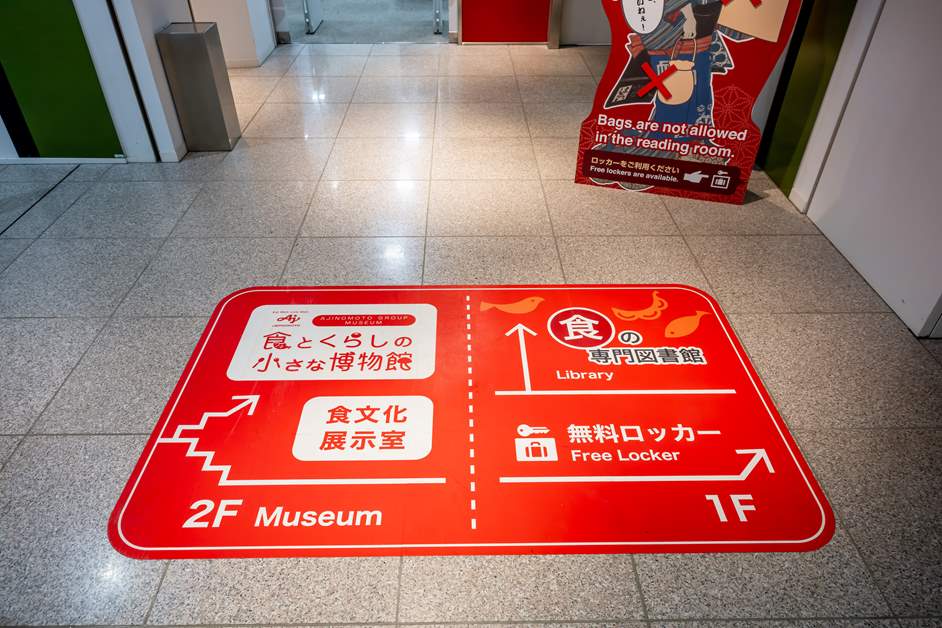
Within the Ajinomoto Group Takanawa Training Center, three facilities are open to the public: the “Small Museum of Food and Daily Life,” the “Food Culture Library,” and the “Food Culture Exhibition Room.” Admission to all three facilities is free.
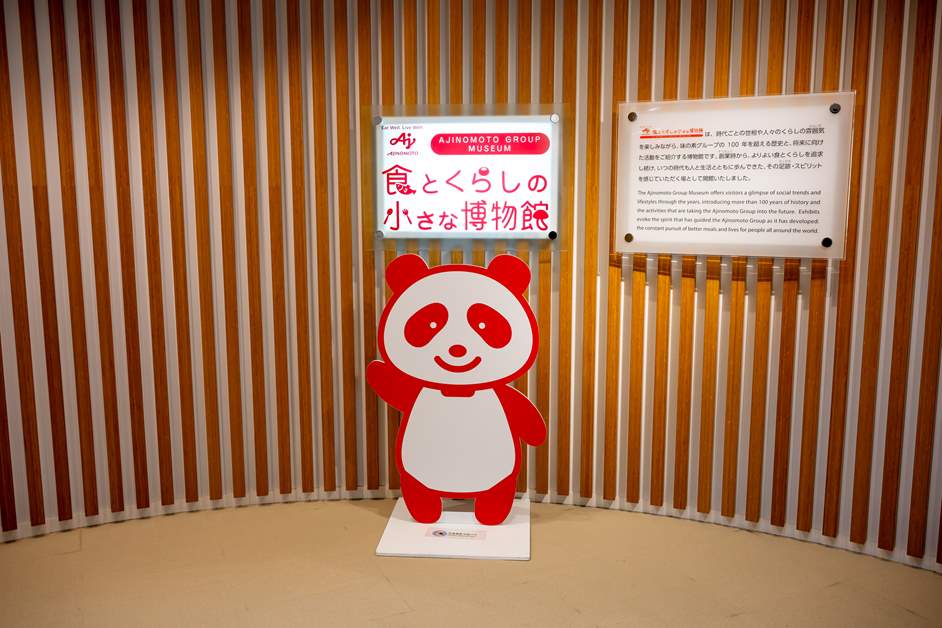
The “Small Museum of Food and Daily Life” on the second floor is a museum that introduces the history of the Ajinomoto Group and its future initiatives. At the entrance, “Ajipanda®”—the corporate mascot familiar from “Ajinomoto®” bottles—welcomed us.
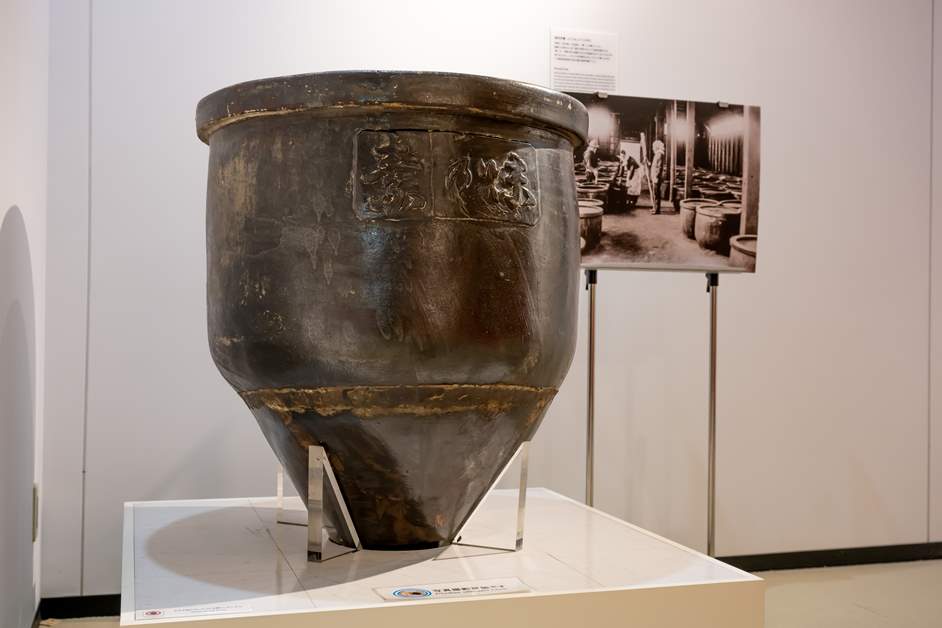
As soon as you step inside, your eyes are drawn to a large clay jar on display near the entrance. This jar, known as a “Dōmyōji jar,” is made of clay and was reportedly used in the early production of “Ajinomoto®.” Kazuyoshi Takagi, Senior Manager of the Global Communications Department at Ajinomoto Co., Inc., which operates the museum, explains, “The production of ‘Ajinomoto®’ began in 1908 (Meiji 41). At that time, we used hydrochloric acid to break down proteins and extract glutamic acid, the umami component; however, iron jars would corrode when exposed to hydrochloric acid. So, after repeated trial and error, we began using Dojōji jars made of clay, which do not corrode,” he explained.
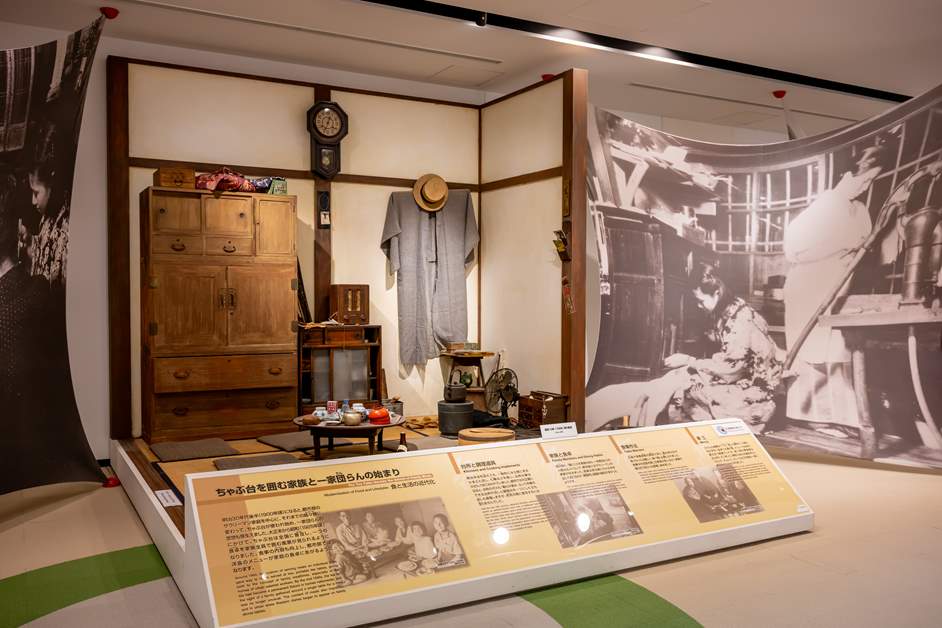
In the area showcasing the history of the Ajinomoto Group, the period from 1900 to the present is divided into four eras, and the exhibition highlights the changing dining scenes of each era alongside the company’s products. The first era spans from the Meiji period to the early Shōwa period (1900–1945). A room featuring a chabudai—said to have become widespread nationwide around 1925 (Taishō 14)—has been recreated. “Back then, there was still no concept of separating the dining room from the bedroom, and it seems many households would clear away the chabudai and lay out futons when it was time to sleep,” says Mr. Takagi.
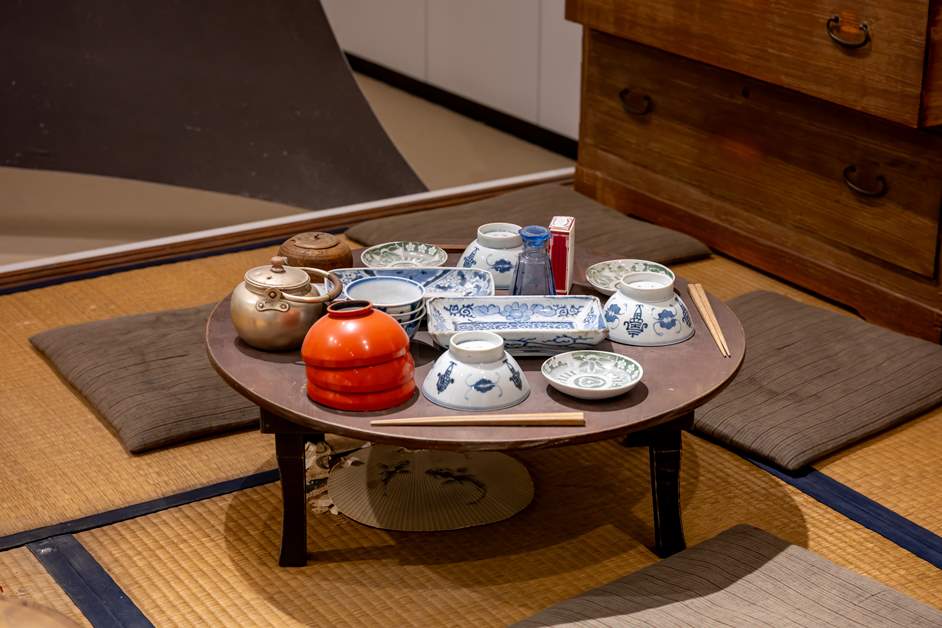
At that time, it was common for multiple generations to live under one roof. While many households prohibited conversation during meals, the practice of “family gatherings”—where families would chat together—eventually became widespread. “The basic meal consisted of one soup and one dish, but as the Shōwa era began, the quality of meals improved, and Western-style dishes began to appear on dining tables in urban areas,” said Mr. Takagi.
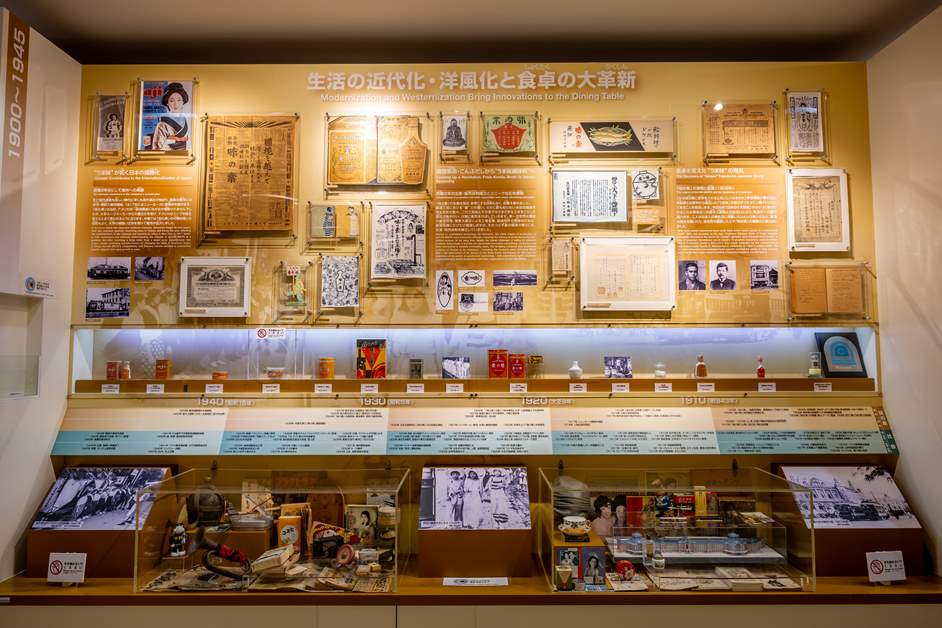
The development of “Ajinomoto®” began in 1908 (Meiji 41), when Dr. Kikunae Ikeda of the Imperial University of Tokyo discovered that the “umami” component extracted from kelp was monosodium glutamate. The following year, Saburōsuke Suzuki II, an acquaintance of Dr. Ikeda, embarked on the commercialization of “Ajinomoto®” using monosodium glutamate. Inside the museum, a roughly 6-minute video tracing the footsteps of these two men is also shown.
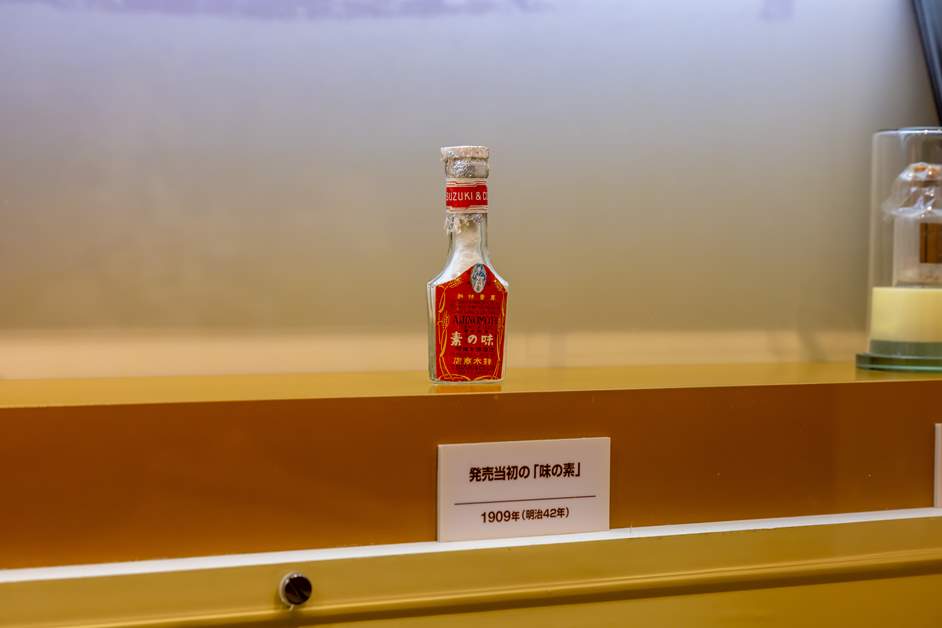
Production of “Ajinomoto®” began at the Zushi Plant, and general sales started in 1909 (Meiji 42). An early version of “Ajinomoto®” from when it first went on sale was also on display.
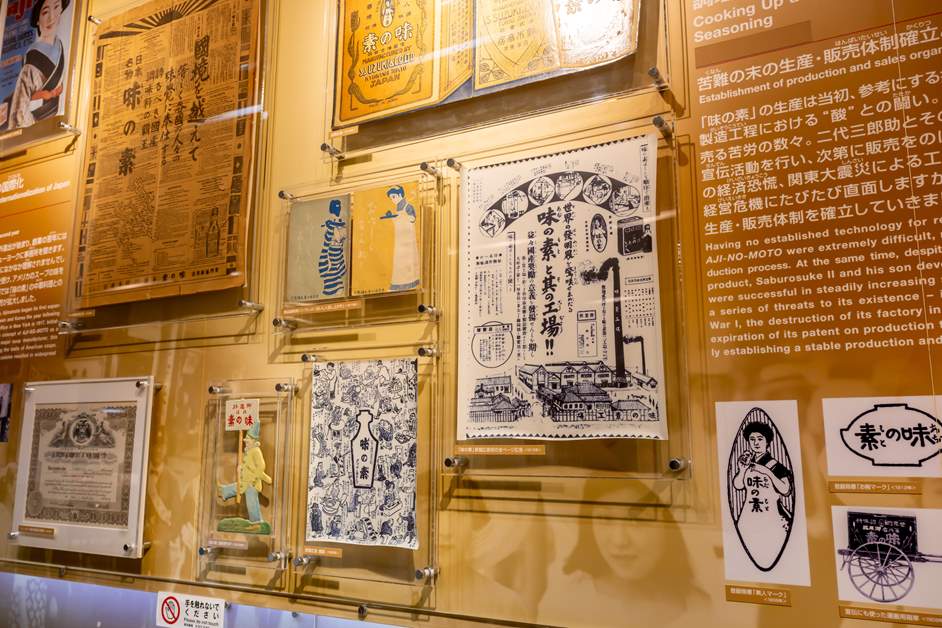
When it first went on sale, “Ajinomoto®” was an unfamiliar product to the general public, so the company reportedly struggled with raising awareness and promoting it. Through a multifaceted PR campaign—including newspaper ads, in-store advertisements, and product brochures—the name “Ajinomoto®” gradually became widely known.
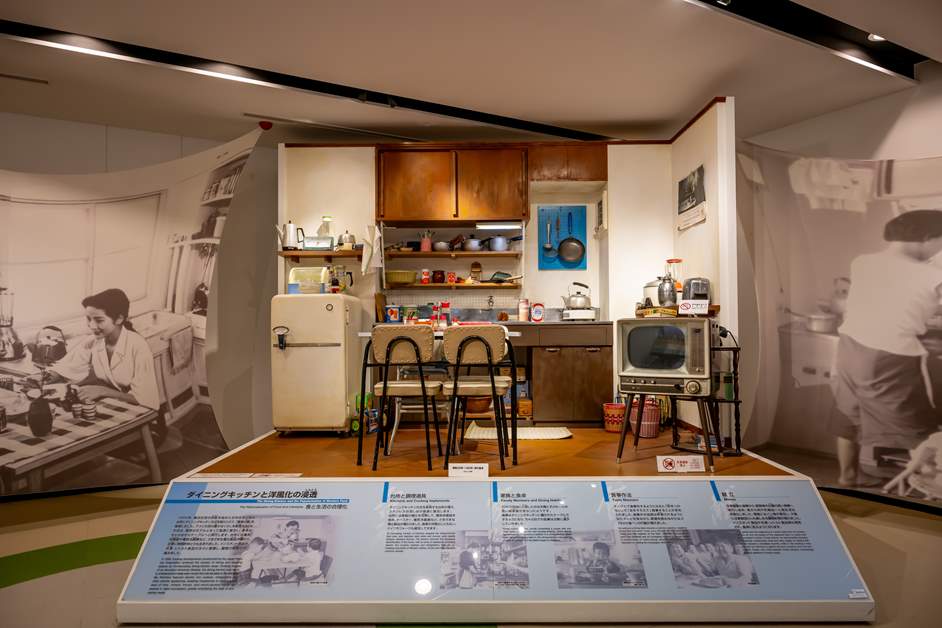
Following the postwar reconstruction, a wave of Westernization eventually swept into Japanese dining habits. The era that followed spanned from the postwar period through the era of rapid economic growth (1946–1975). In 1956 (Shōwa 31), the Japan Housing Corporation introduced the American-style “dining kitchen”—a design integrating the kitchen and dining area—into its apartment complexes. “In the reenactment exhibit, you can see what mealtime looked like during the transition from low wooden tables to regular tables,” says Mr. Takagi.
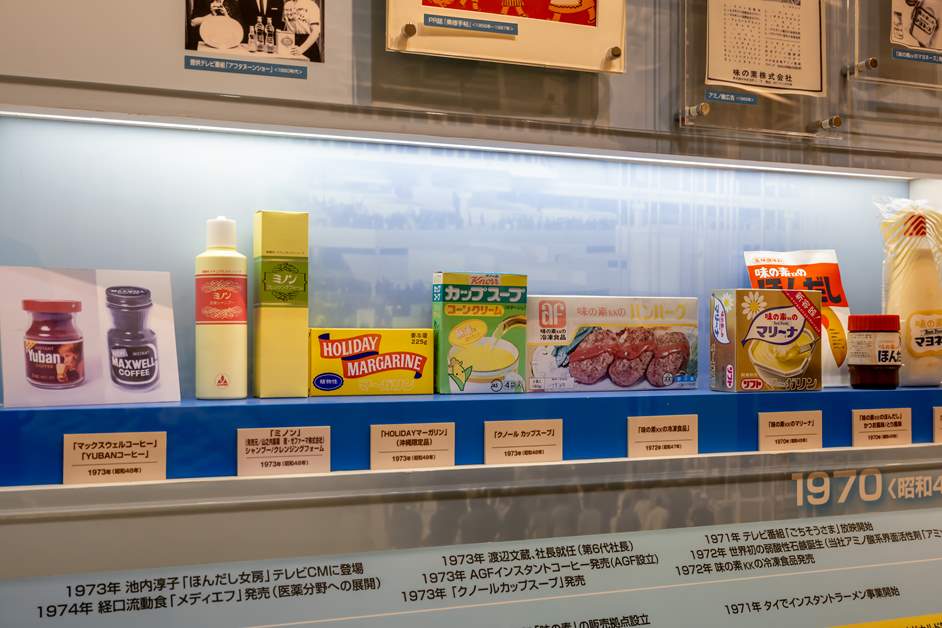
At that time, the Ajinomoto Group was pursuing full-scale diversification of its domestic food business alongside its overseas expansion. “Throughout the 1960s and 1970s, we launched a variety of products, including ‘Hondashi®,’ ‘Knorr® Soup’—developed in partnership with the U.S.-based Corn Products Company—as well as frozen foods and mayonnaise,” said Mr. Takagi.
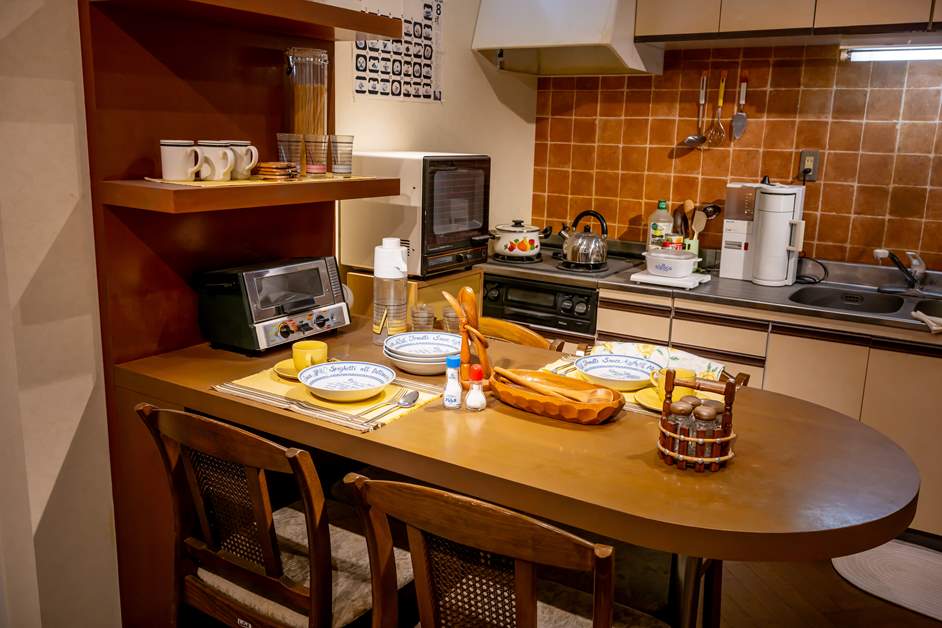
The next era spanned the end of the period of rapid economic growth, from the late Shōwa era to the early Heisei era (1976–1990). By this time, built-in kitchens, microwave ovens, and dishwashers had become widespread, making cooking much more convenient than in the past. “While the focus shifted toward enjoying meals, the number of households where family members did not eat together—even when living under the same roof—began to increase,” said Mr. Takagi.
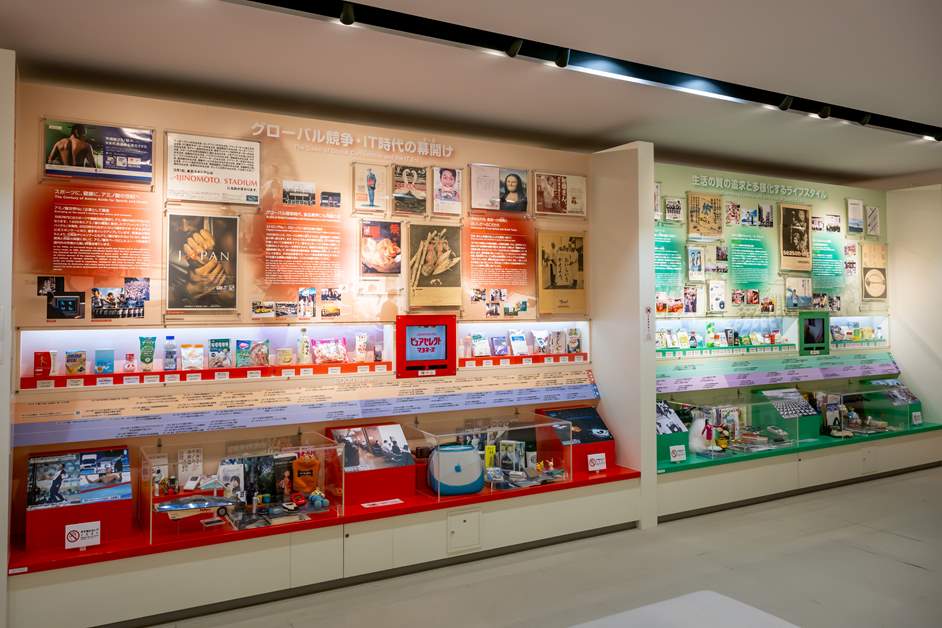
The final era spanned from the Heisei era to the Reiwa era (1991–20XX). As public awareness of food issues grew, there was an increasing demand for food safety. In addition, as global competition intensified, a wave of restructuring swept through the food industry. “Starting with J-Oil Mills, which became a group company, the Ajinomoto Group carried out reorganizations involving more than 60 businesses,” said Mr. Takagi.
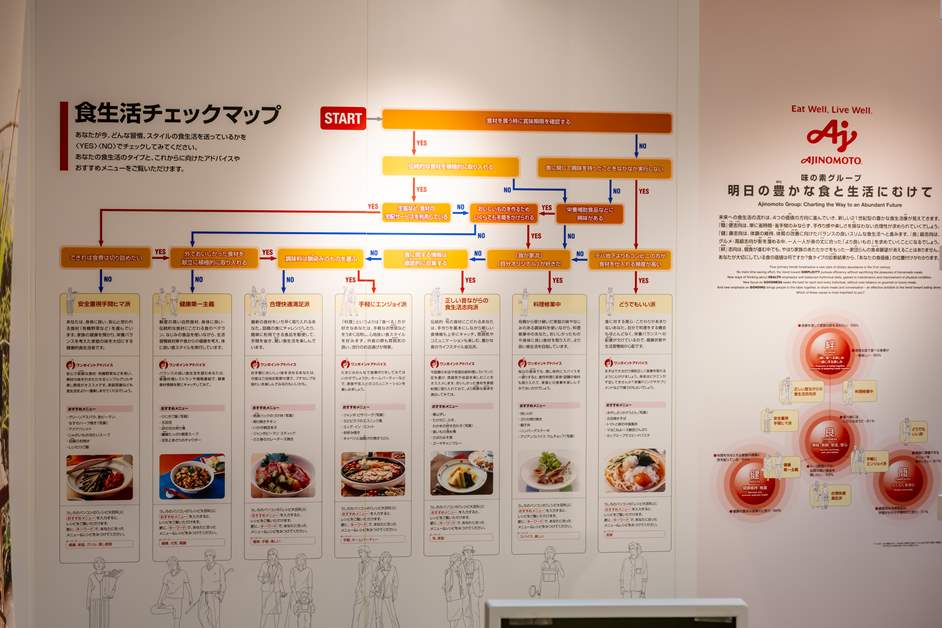
At the “Diet Check Map” corner, which assesses visitors’ eating habits, you can learn about your dietary profile and discover recommended menus. Why not use this as a guide for your daily eating habits?
Visitors to the “Small Museum of Food and Daily Life” are mainly local residents, and the museum reportedly attracts a wide range of people, from parents with children to students. “At our museum,” says Ms. Takagi, “we don’t just display products—we also showcase items that reflect the era and screen TV commercials. We hope you’ll enjoy your visit, whether you’re feeling nostalgic or letting your imagination wander. “No prior knowledge is necessary, so please feel free to drop by on a whim—we’d be delighted if this serves as a gateway to your interest,” she says with a smile. In addition, an area showcasing the Ajinomoto Group’s future initiatives featured its global business operations, efforts toward safety and security, and technologies for research and development.
"Food Culture Exhibition Room": A Place to Experience Japanese Food Culture
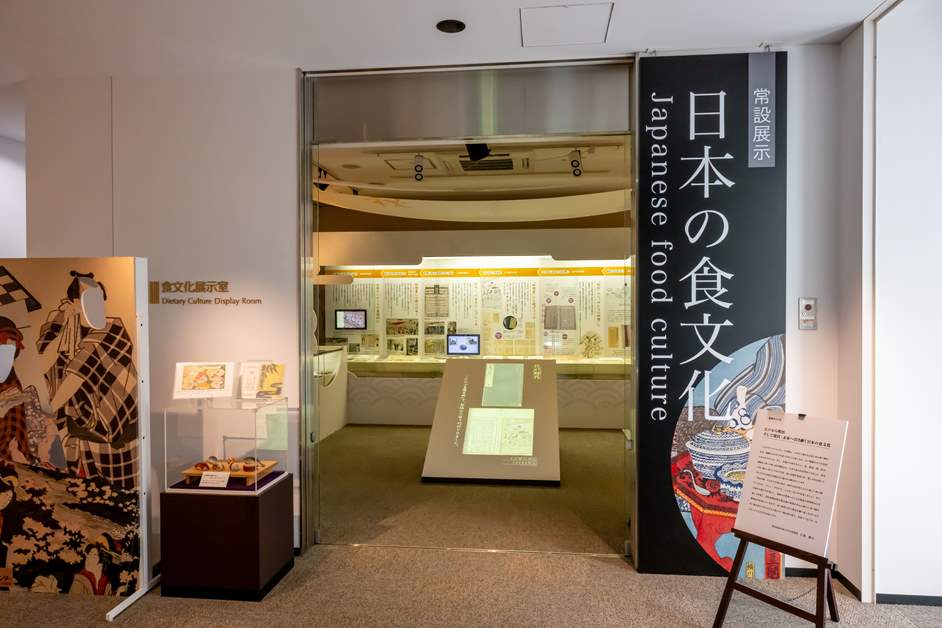
Also located on the second floor of the Ajinomoto Group Takanawa Training Center is the “Food Culture Exhibition Room,” operated by the Ajinomoto Food Culture Center, a public interest incorporated foundation. Through Edo-period woodblock prints and food samples recreated from cookbooks of that era, the exhibition traces the history of Japanese food culture.
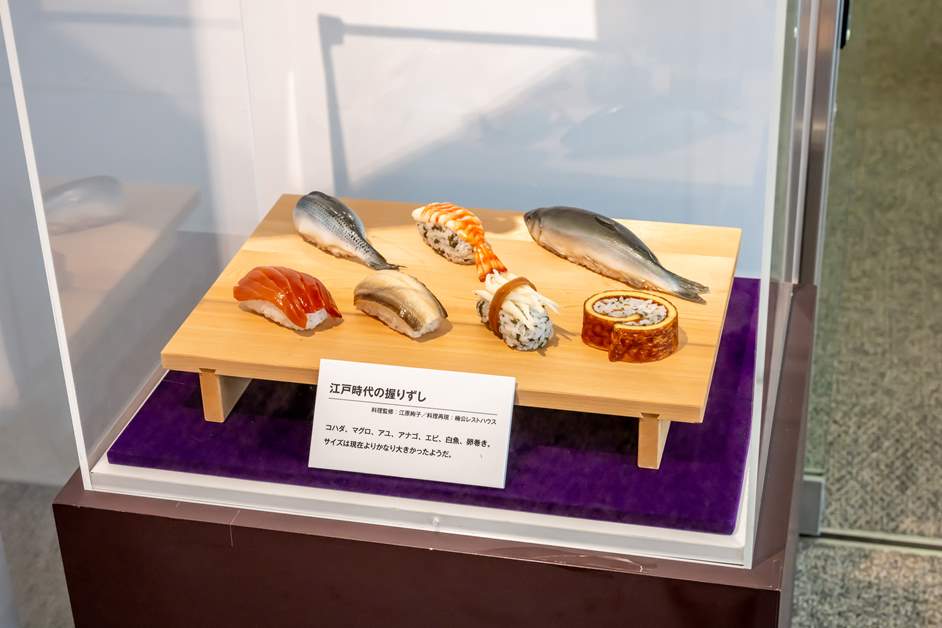
In front of the exhibition room, there is a display of food samples of Edo-period nigiri sushi. They were reportedly recreated based on a guidebook on making nigiri sushi titled *How to Make Homemade Sushi*, published in 1910 (Meiji 43).
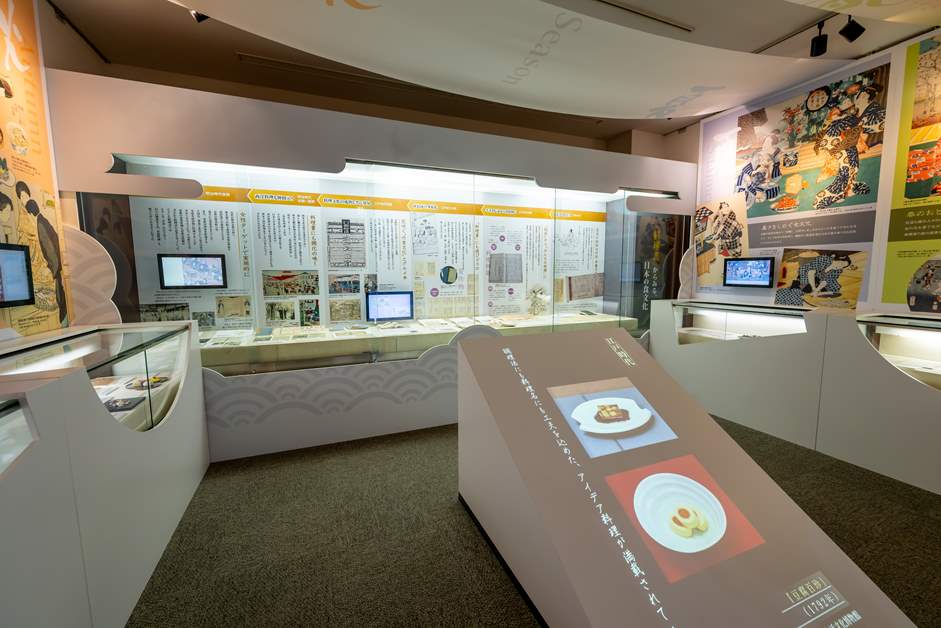
The exhibition hall introduces Japanese food culture as it changes with the seasons—spring, summer, fall, and winter. Hideo Kawajiri (at the time of the interview), Executive Director of the Ajinomoto Food Culture Center (a public interest incorporated foundation) and Director of the “Food Culture Library,” explains, “We are exhibiting historical materials from the Edo period through the Meiji era and into the early Showa era, viewed through the dual lenses of the four seasons and food culture.”
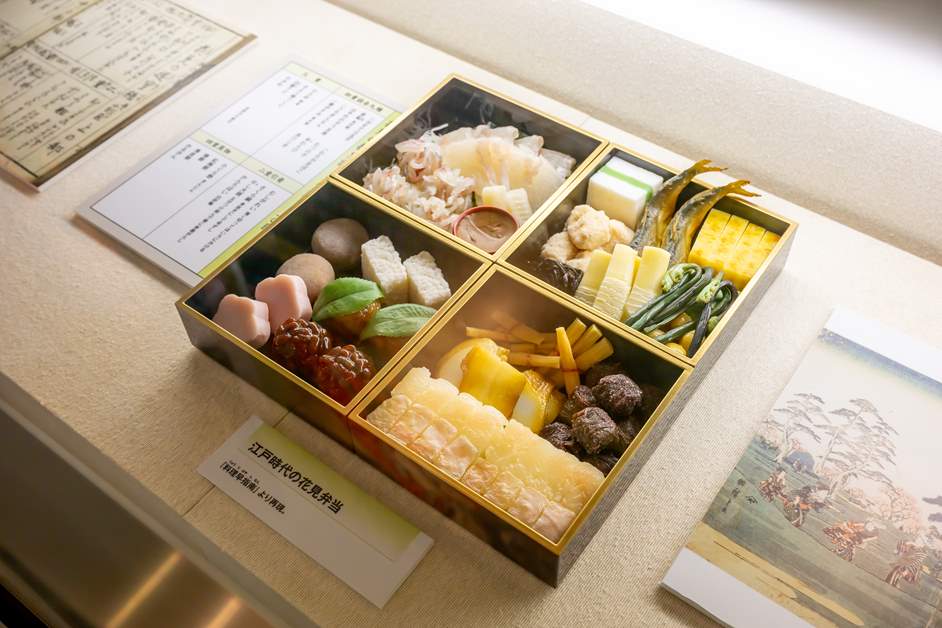
During the Edo period, hanami—enjoying food and drink while admiring the cherry blossoms—was a quintessential spring pastime. “We have on display a replica of a hanami bento based on the cookbook *Ryori Hayashinhan* from that era. We first made an authentic hanami bento using the book as a reference, and then a specialist vendor created this replica based on that original,” said Mr. Kawajiri.
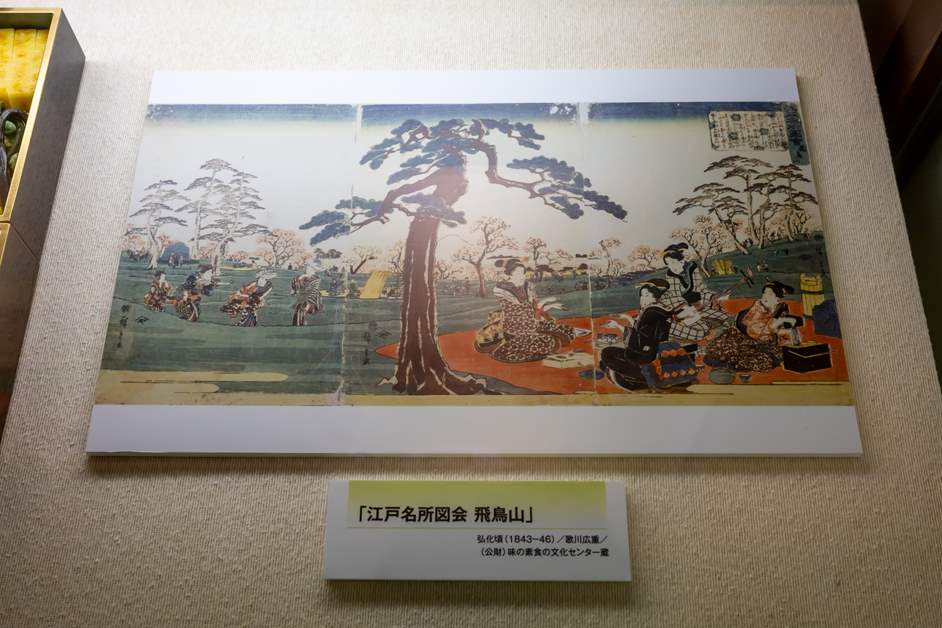
"Edo Meisho Zue: Asukayama" by Utagawa Hiroshige is a woodblock print depicting people enjoying cherry blossom viewing at Asukayama, a spot still known today as a famous cherry blossom viewing destination.
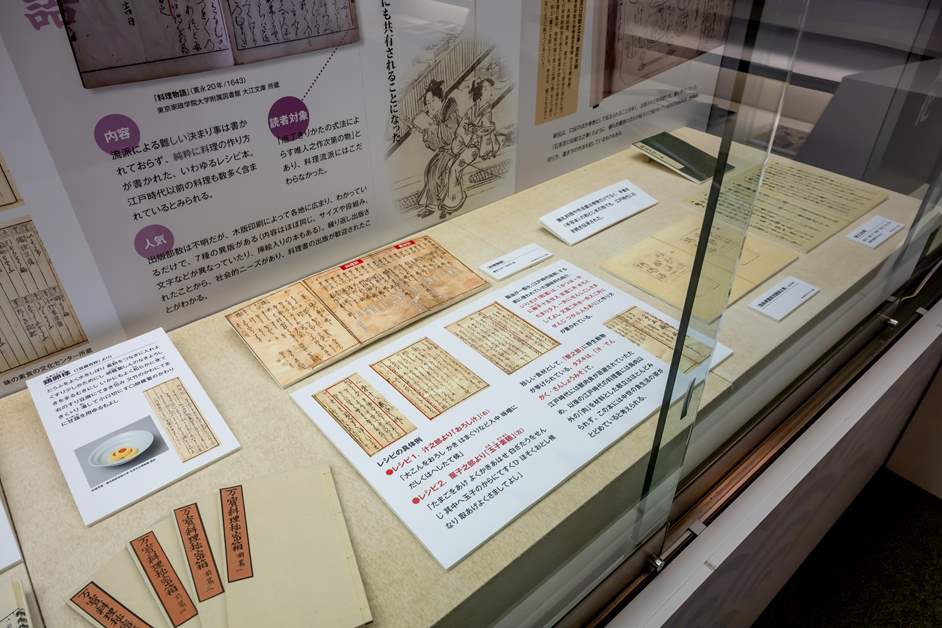
The exhibition provides a detailed explanation of *Ryori Monogatari*, a cookbook from the early Edo period. It is said that this book contained numerous recipes for dishes from before the Edo period. “In addition, cookbooks known as *Hyakuchinmono*—which featured, for example, 100 different tofu recipes or 100 ways to prepare egg dishes—became bestsellers. “What’s interesting is that cookbooks from that era didn’t specify seasoning measurements in much detail. It wasn’t until the Meiji era that descriptions of seasoning—such as ‘one teaspoon’—began to appear,” said Mr. Kawajiri.
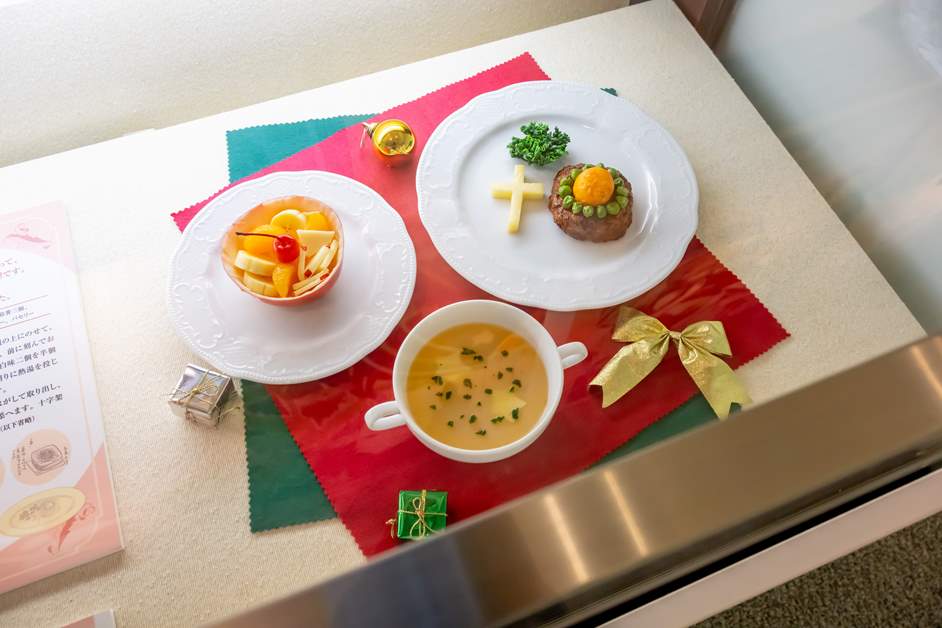
First published in 1913 (Taisho 2), *Ryori no Tomo* is a monthly magazine featuring Japanese, Western, and Chinese cuisine. This replica recreates the menu for a “Christmas Party for Children” that appeared in the December issue of Showa 4.
The “Food Culture Exhibition Room” is small but features a rich collection of exhibits. In addition to the permanent exhibition, special exhibitions are also planned. “Following last year’s 2024 exhibition, ‘Food, Era, and People as Seen in the *Daijapan Bussan Zue*: Part 1—Japanese Food Culture,’ we plan to hold the second installment, ‘Bounty of the Sea, Bounty of the Mountains,’ in August this year. *The Great Illustrated Encyclopedia of Japanese Products* is a series of 118 ukiyo-e prints by Utagawa Hiroshige III, depicting specialty products from across Japan. This year, we will again select prints from the 118-piece series that fit the theme for display,” said Mr. Kawajiri.
"Food Culture Library," Where You Can Read Specialized Books on Food
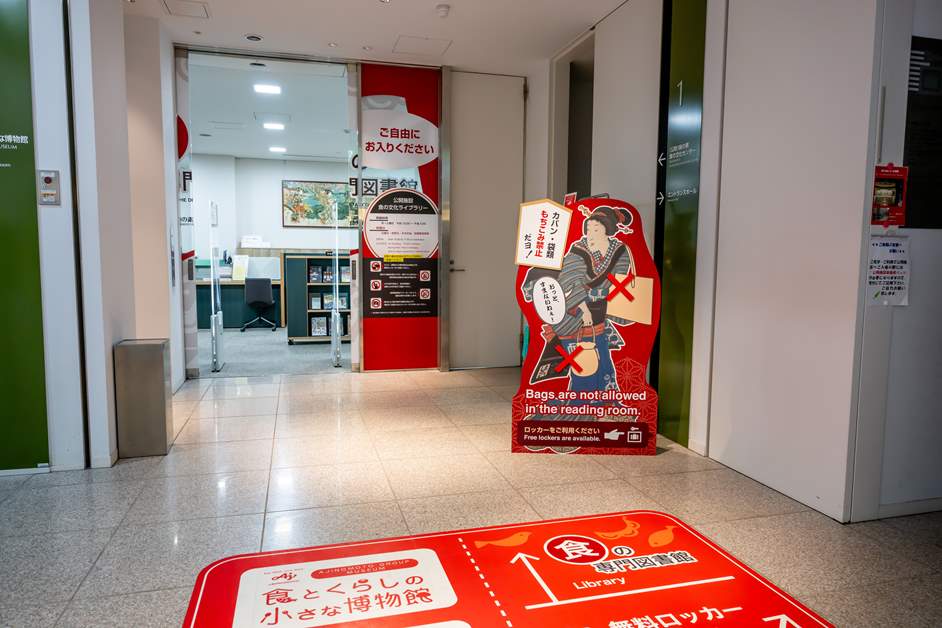
Next, we head to the “Food Culture Library” on the first floor. The Ajinomoto Food Culture Center, a public interest incorporated foundation that operates this library and the “Food Culture Exhibition Room,” traces its origins to food culture initiatives originally launched by Ajinomoto Co., Inc. “The Ajinomoto Food Culture Center Foundation was established in 1989, and subsequently, in 2013, it received certification from the Cabinet Office and transitioned to a public interest incorporated foundation,” said Mr. Kawajiri.
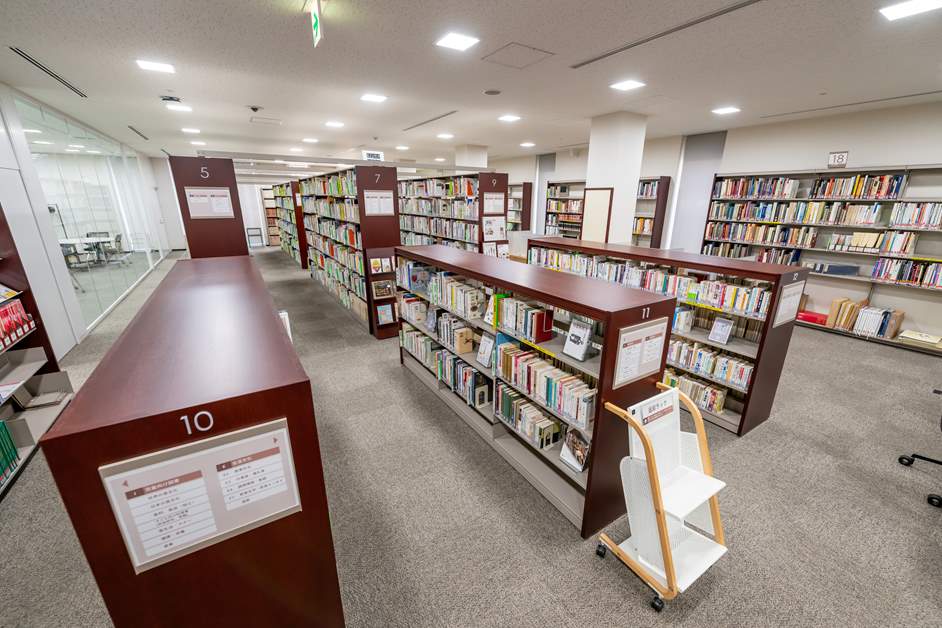
The “Food Culture Library,” which houses a wide variety of books and materials—ranging from monographs, magazines, and academic papers on food culture to video archives—is truly a specialized library dedicated to food. “Visitors can browse the books our foundation has been collecting since 1989. We’ve also digitized rare books dating from the Taisho era through the early Showa era, so you can view them on dedicated terminals,” said Ms. Kawajiri.
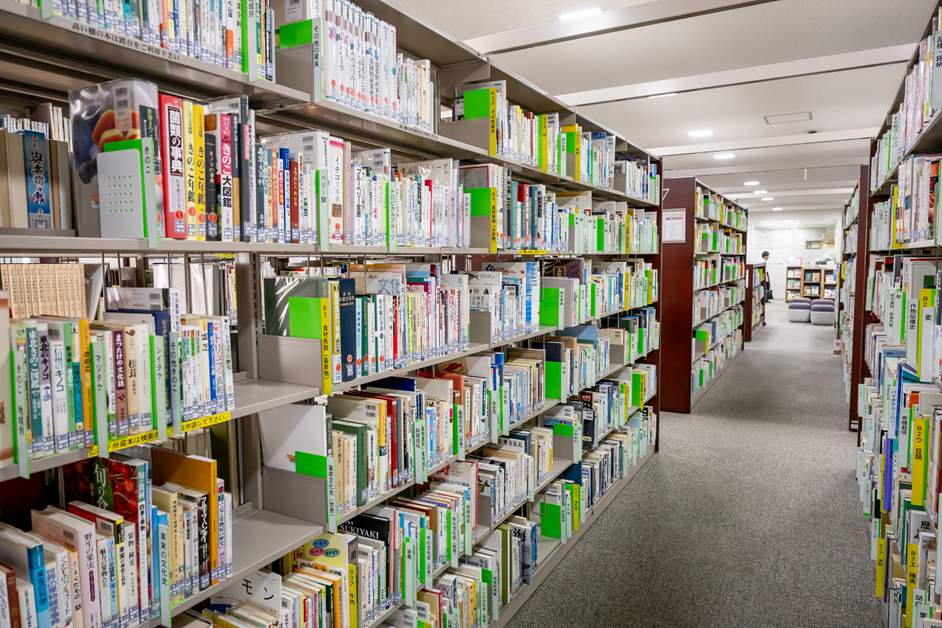
Careful thought has gone into the book arrangement, such as categorizing books in detail to make it easier to find specific titles. As expected, the majority of users are people in food-related professions. “We have users ranging from food manufacturers and university researchers to chefs and food writers,” says Ms. Kawajiri.
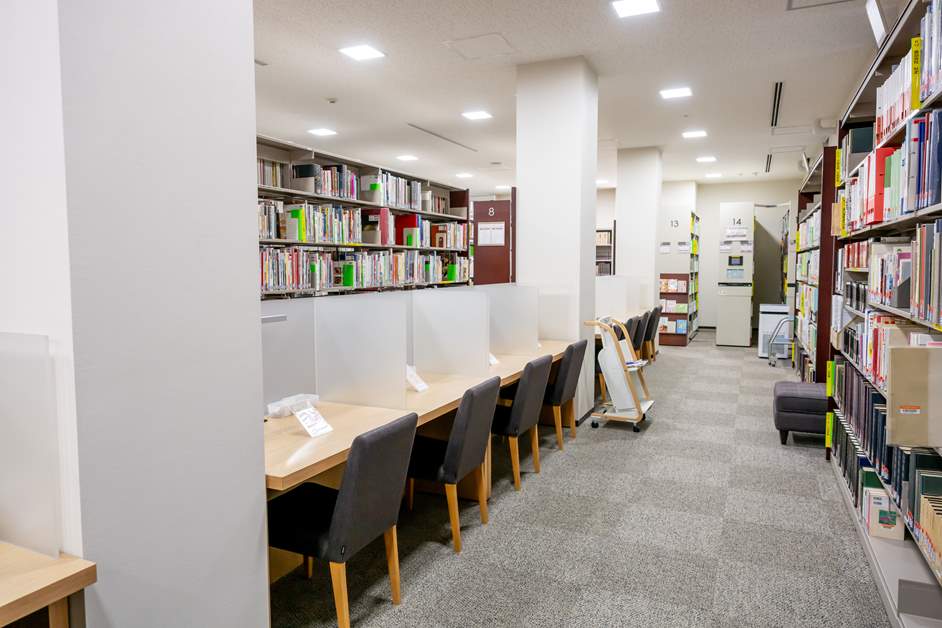
If you find a book that interests you, you can read it at a reading table or in the reading room. To borrow books or view rare books, you must register for a library card at the counter.
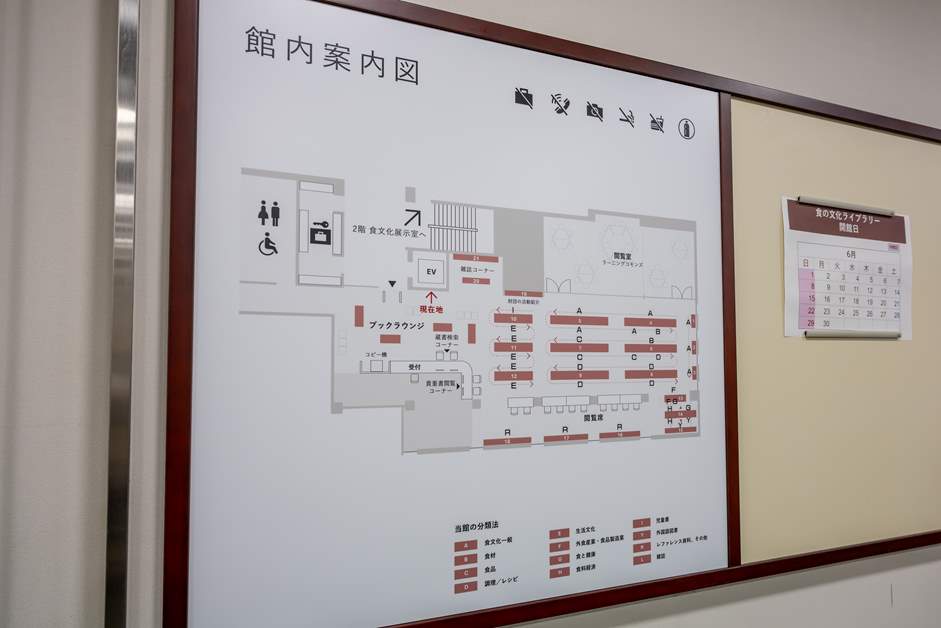
The “Food Culture Library” is a place where you can find books on food culture and read them at your leisure. Ms. Kawajiri explains the facility’s appeal: “Some people may think the term ‘food culture’ sounds a bit intimidating, but I believe knowledge about food makes everyday meals more enjoyable and fulfilling. Plus, we have plenty of books that are fun for the general public to read—not just difficult specialized texts—so please do come visit.” When looking for a book, use the terminals in the catalog search area, and if you have any questions, feel free to ask the staff at the counter.
The “Small Museum of Food and Daily Life,” the “Food Culture Exhibition Room,” and the “Food Culture Library” at the Ajinomoto Group Takanawa Training Center are facilities that help visitors rediscover the importance of food, which is so closely intertwined with people’s daily lives. Admission and use of all these facilities are free, allowing anyone to learn about Japanese food culture. For those interested, this place could truly be called a “food mecca.” Now, more than ever, as attention focuses on issues surrounding food, why not take this opportunity to broaden your knowledge of food?
"The Little Museum of Food and Daily Life"
Location: 2nd Floor
, Ajinomoto Group Takanawa Training Center, 3-13-65 Takanawa, Minato-ku, Tokyo Hours: 10:00 a.m. – 5:00
p.m. Open: Monday–Saturday
Closed: Sundays, national holidays, and year-end/New Year holidays
*Please check the official website below for details.
https://www.ajinomoto.co.jp/kfb/museum/
《Food Culture Library & Food Culture Exhibition Room》
Location: 3-13-65 Takanawa, Minato-ku, Tokyo; 1st and 2nd floors
of the Ajinomoto Group Takanawa Training Center Hours: 10:00 a.m.–5:00
p.m. Open: Monday–Saturday
Closed: Sundays, national holidays, year-end and New Year holidays, library reorganization periods, and occasional temporary closures
*Please check the official website below for details.
https://www.syokubunka.or.jp/