



Brewed with Ingredients from Tokyo: The Only Sake Brewery in the 23 Wards—The History of “Tokyo Minato Brewery,” Bridging Memories of the Bakumatsu Era and the Toji of the Reiwa Era
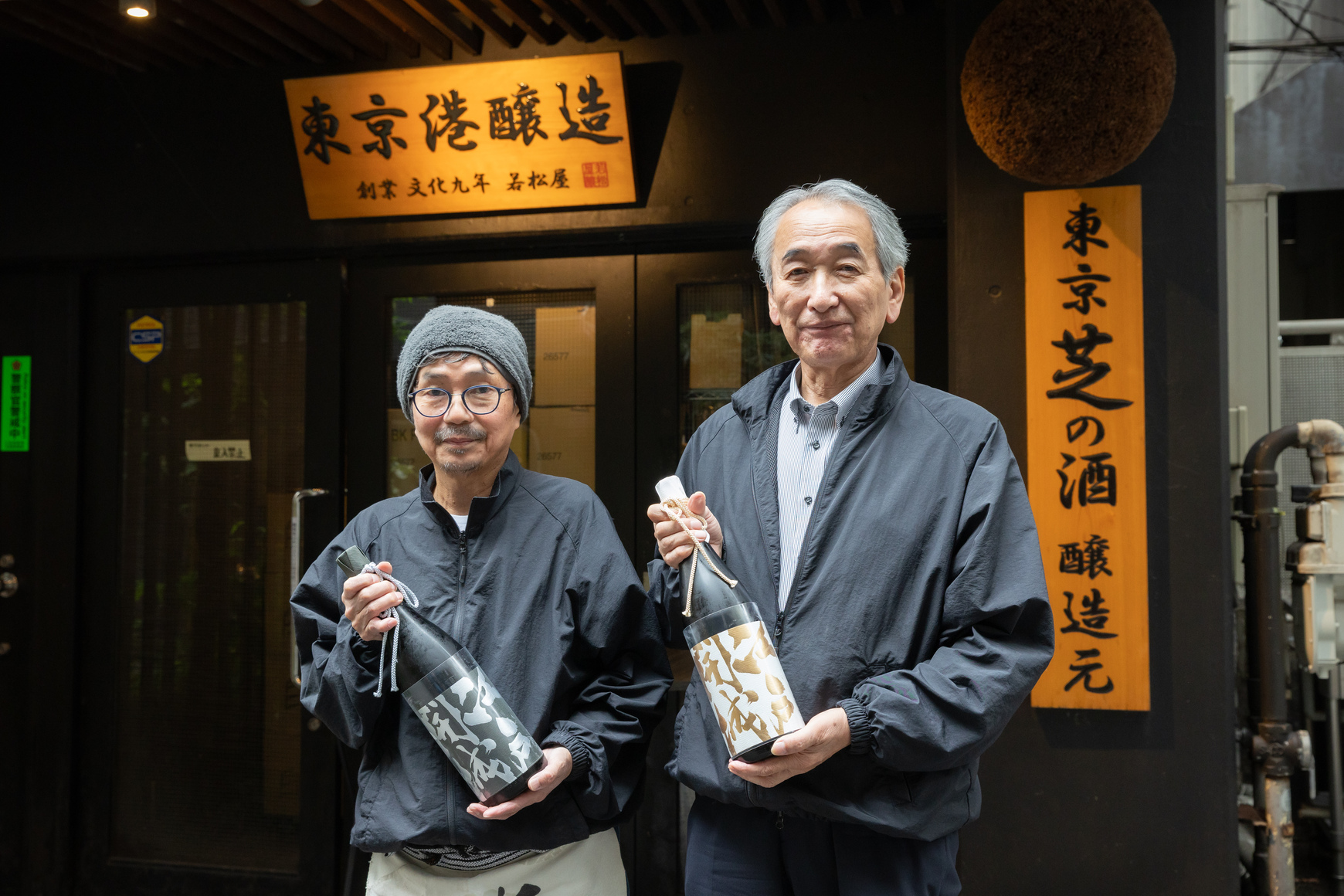
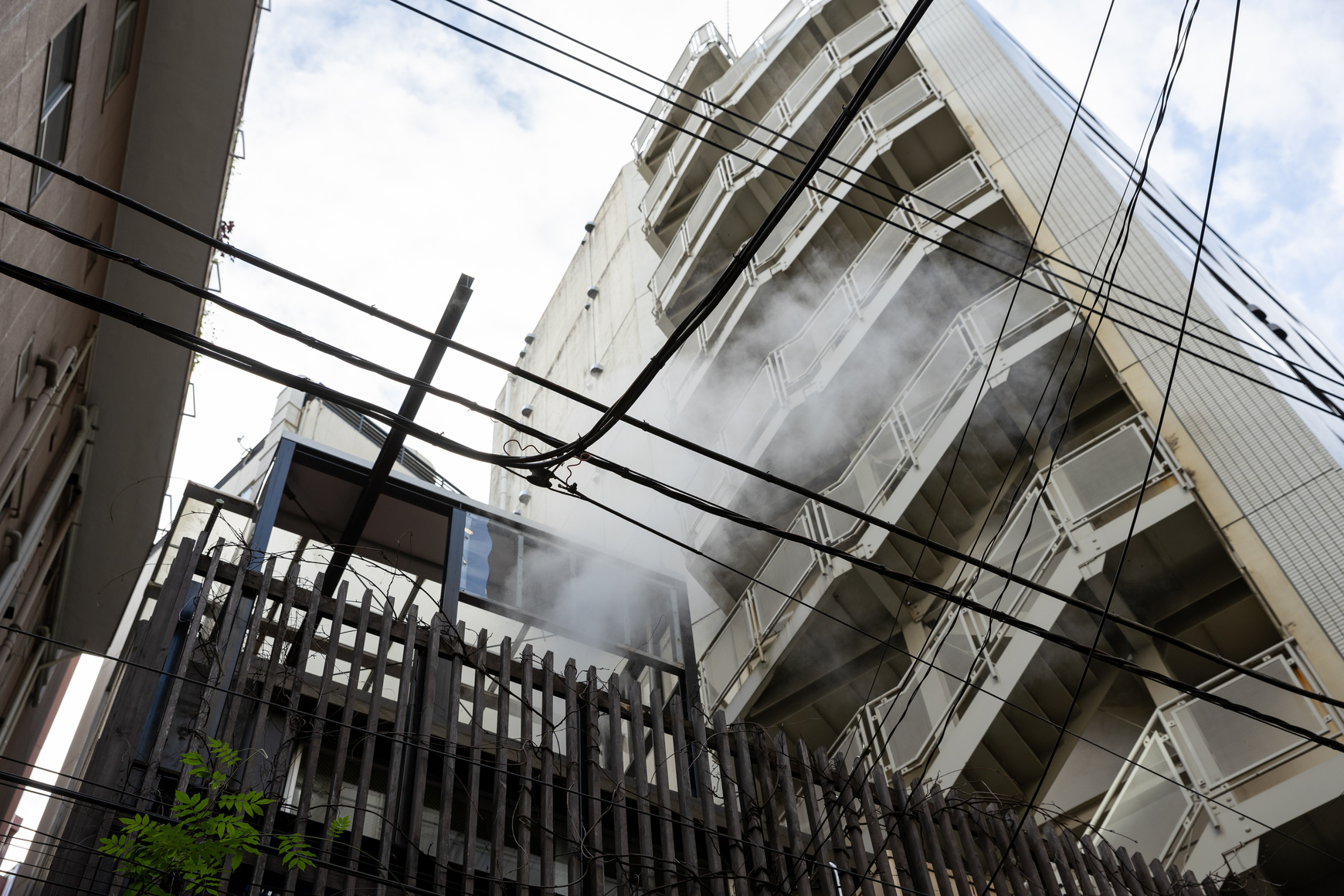
8:00 a.m. White steam rises from between the buildings in the city center, and the scent of steamed rice wafts gently through the air.
A four-story building stands in the Shiba office district of Minato Ward. I’ve come to “Tokyo Minato Brewery,” which brews the sake “Edo Kaijo” inside this building. Although this brewery doesn’t usually offer tours, I was given a special opportunity to see the sake-making process firsthand.
A four-story building stands in the Shiba office district of Minato Ward. I’ve come to “Tokyo Minato Brewery,” which brews the sake “Edo Kaijo” inside this building. Although this brewery doesn’t usually offer tours, I was given a special opportunity to see the sake-making process firsthand.
Compact Sake Brewing in a Downtown Tokyo Building Using Tokyo Tap Water
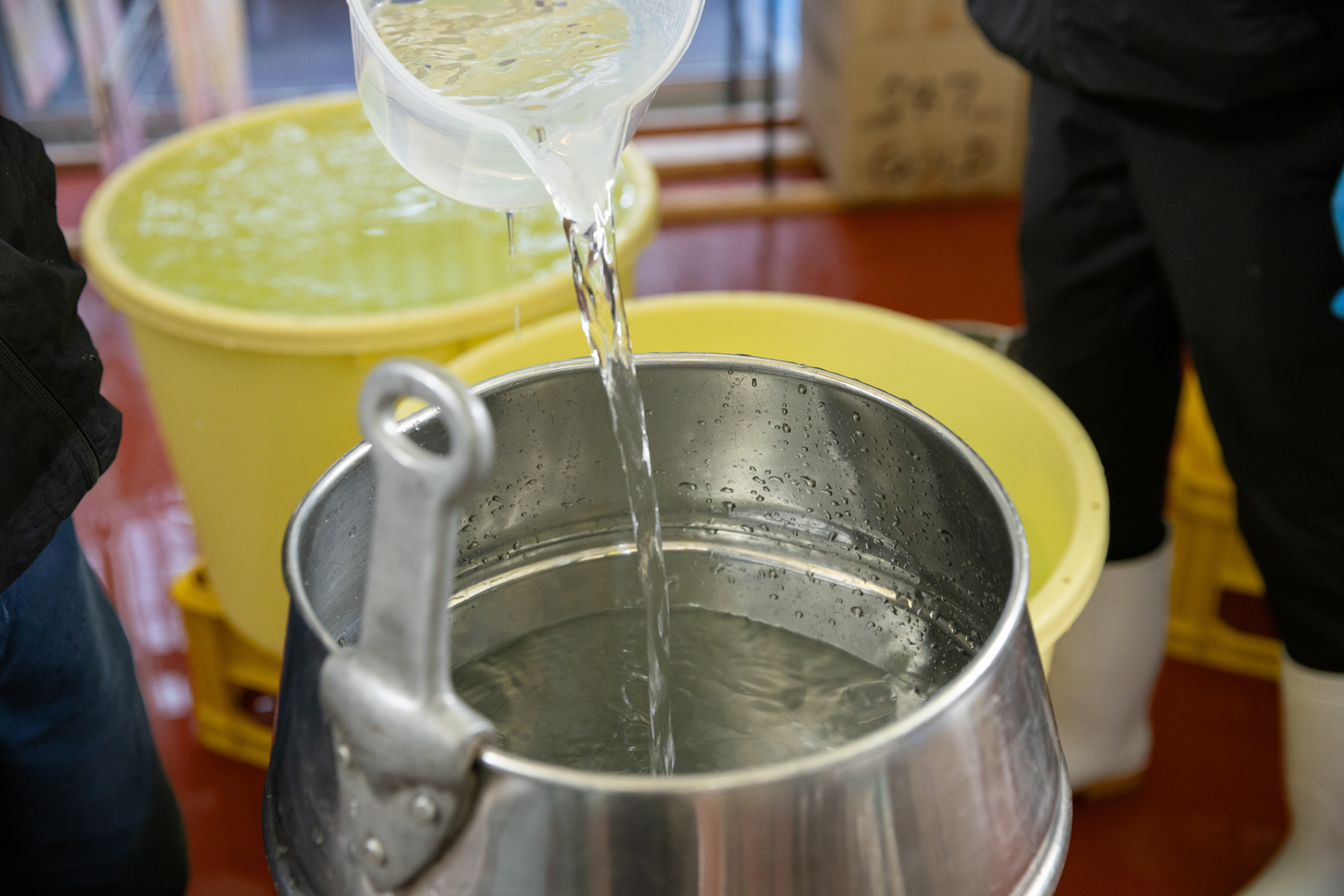
Tokyo Minato Brewery is located in a corner of the Shiba business district. How do they brew sake in this area, which has no natural water source? As it turns out, they use Tokyo’s tap water for the brewing process.
We spoke with head brewer Yoshimi Terasawa about brewing sake using tap water.
“I’ve been brewing sake at a brewery in Odaiba since 2000, and I’ve known since then that tap water can be used for sake brewing. Tokyo’s tap water undergoes advanced purification processes to enhance both safety and taste. It also contains just the right amount of minerals that serve as nutrients for sake yeast, so we believe it’s well-suited for sake brewing.”
While many breweries use groundwater for mashing, Tokyo Minato Brewery deliberately chooses to use tap water. One of the reasons we selected Tokyo’s tap water is not only its safety but also its water quality, which is well-suited for sake brewing.
Brewing sake inside a building means the process takes place in a very limited space compared to other breweries across the country. How is this made possible?
“At the Odaiba brewery, we’ve spent the past 10 years taking on the challenge of brewing sake of a quality that surpasses that of other breweries, all within a 52-square-meter space. Now, the four-story space where we’re brewing sake measures 171 square meters, so we’ve really come to appreciate what a proper production space should be like.”
The fourth floor houses the steaming kettle (koshiki) and the koji room; the third floor has the mash tanks and the analysis lab; the second floor features the mash tanks and the press; and the first floor holds the storage tanks.
Rice and koji are transported via the stairs, while the moromi (fermenting mash) is lowered to the floor below through a hose fed through a hole in the floor. The shubo (starter culture) is raised and lowered from the balcony using a winch (a machine for moving heavy loads), and then rolled to its destination on casters attached to the bottom of the tank.
Various ingenious methods were employed to move materials around in this vertically oriented building.
As I climb the stairs in the building, it seems the room temperature is gradually rising.
“Taking advantage of the fact that warm air rises and cold air sinks, we’ve designed the facility so that the koji-making process—which requires a warm space with a room temperature of about 30 degrees—is located on the top floor.”
Upon arriving on the fourth floor, the source of the steam I’d seen rising from the bottom of the building became clear. I was told that by steaming the rice for exactly one hour and ten minutes every single time, they ensure a consistent flavor in their sake.
On the third floor, they were carrying out the “cooling” process, in which rice steamed in a koshi was spread out flat to cool. The rice for koji is cooled to the appropriate temperature, transported to the koji room, and sprinkled with koji starter to produce koji. The enzymes in the koji convert the starch in the rice into sugar, and the yeast then converts that sugar into alcohol, thereby facilitating the fermentation of sake.
The second floor is the brewing room, where many tanks are lined up. I’ve heard they’re also conducting experiments here in which they press vibration speakers against the bottom of the tanks to transmit the vibrations of music to the mash.
“We’re applying vibrations to the fermenting mash to investigate how this affects the fermentation process. We’re currently verifying whether different types of music cause changes in flavor and aroma.”
A future where sake exposed to jazz or classical music lines the shelves of shops may not be too far off.
At Tokyo Minato Brewery, we brew about 50 batches a year, at a rate of once a week.
“I think what makes us special is that we continue to produce new sake even during the summer months, when other breweries aren’t brewing. Also, since this brewery is surrounded by tall buildings, it doesn’t receive direct sunlight, which helps us save on electricity bills even in the height of summer.”
While downtown buildings present constraints in terms of space and sourcing raw materials, the brewery operates a compact production process that takes full advantage of its prime location.
A Directly Operated Store Full of Unique Items—The Perfect Place to Find Special Tokyo Souvenirs
Across from the warehouse building is the Tokyo Port Brewery’s company-owned shop. You can enjoy paid tastings there, and stopping by to pick out souvenirs is one of the pleasures of exploring Shiba.
We recommend “Edo Kaijo All Tokyo,” which uses only ingredients sourced from Tokyo—including water, rice, and yeast. From samples collected by students, the yeast strains capable of alcohol fermentation were identified, and those with exceptional flavor and aroma were carefully selected.
“Through an industry-academia partnership with the Tokyo College of Biotechnology, we use ‘Tokyo Yeast,’ an original strain collected from honeybees in Hibiya Park. It is a high-quality yeast selected from samples collected at approximately 300 locations, including the stone walls of Kitanomaru Park and the grass and tree bark of Hibiya Park.”
Additionally, “Edo Kaijo All Edo”—brewed with Tokyo-grown rice and “Yedo Yeast”—is also popular. Yedo Yeast is a sake yeast with a long history, first discovered during the Meiji period.
“Yedo Yeast,” passed down since the Meiji era, and “Tokyo Yeast,” discovered by vocational students. Why not come and taste these sake brewed with Tokyo-sourced yeast that transcends the ages?
Furthermore, “Sustainable Sake Project Air”—a sake produced using water derived from air—is another surprising offering. It uses water produced by an air-to-water machine developed, manufactured, and sold by AquaM Co., Ltd. This sustainable brewing initiative also serves as an opportunity to reflect on the future of water resources.
For those unfamiliar with sake, we also sell “Tokyo Amazake,” made entirely from ingredients sourced in Tokyo, as well as Ezaki Glico’s “Pocky <Tokyo Amazake>,” which uses this amazake.
The Untold Story Behind the Revival of “Wakamatsuya,” the Site of Edo Castle’s Bloodless Surrender
After touring the shop, we spoke with Mr. Shunichi Saito, Representative Director of Wakamatsu Co., Ltd., which operates Tokyo Minato Brewery, about the history of the brewery.
“The predecessor of Tokyo Minato Brewery was ‘Wakamatsuya,’ a sake brewery founded in Shiba in 1812 (Bunka 9). During the late Edo period, it served as an official merchant for the Satsuma Domain, and it is said that Takamori Saigo and Kaishu Katsu visited the establishment. However, the high sake taxes of the time became a heavy burden, and the business closed after the fourth-generation owner passed away in 1909 (Meiji 42).”
Afterward, Wakamatsuya operated in the food and beverage industry, and following World War II, it ran a general store. Mr. Saito entered the real estate industry in his 30s.
“Just before the bubble economy, I purchased eight plots of land and built a shared building on them. The four-story building that now houses the sake brewery is a renovated version of a building on my private property that I used to live in.”
Since Heisei 11 (1999), he has served as vice president of the Minato Ward Shopping District Association, and he says he often had the opportunity to visit shopping districts in rural areas. While observing these shuttered streets in rural areas, he noticed that the sake breweries were the only places that still had a sense of vitality.
“As the internet began to spread, I felt a sense of crisis regarding the growth of the retail industry. Just as I was thinking, ‘How can we carry on the family business?’ I saw the sake brewery—the only bustling spot on those shuttered streets—and remembered that our building had also been a sake brewery until 100 years ago.”
While considering the revival of the sake brewery, he reportedly visited a small brewery in Odaiba. There, he met Mr. Terasawa, who would later become the head brewer at Tokyo Minato Brewing, and the two began their challenge to revive the sake brewery.
In 2008 (Heisei 20), they began applying for a “sake brewing license”—a permit that had long been considered difficult to obtain after the war—and two years later, they secured licenses to produce “other brewed alcoholic beverages” and “liqueurs.” In 2011 (Heisei 23), Tokyo Minato Brewery opened its doors and began producing doburoku.
They persisted with their applications, and five years later, they obtained the sake brewing license. Sake brewing was revived for the first time in about 100 years.
What is the story behind “Edo Kaijo,” the flagship brand of Tokyo Port Brewery?
“Edo Kaijo” refers to the surrender of Edo Castle in 1868 (Keio 4) between the forces of the new government and the former shogunate. Since Edo Castle was surrendered without bloodshed, this event is also known as the “Bloodless Surrender of Edo Castle.”
“During the Bakumatsu period, the Satsuma Domain had a residence in this area. It is said that Takamori Saigō, Kaishū Katsu, and others visited Wakamatsuya, and that the private parlor was used for secret talks leading up to the Bloodless Surrender of Edo Castle. To honor the history of this land and pay tribute to those achievements, we named this brand ‘Edo Kaijo.’”
It seems this brand name was born from the intertwining of Mr. Saito’s journey—reviving Wakamatsuya’s historic sake brewery despite the trials of the times—and the historical footprints etched into Wakamatsuya itself.
Passing on the Value of Sake to the Next Generation: Branding Aimed at Creating a “Sake Brewery Where Guests Can Stay”
Kaede Saito, the eldest daughter of CEO Shunichi Saito and Senior Managing Director and Art Director at Wakamatsu Co., Ltd., handled the branding for the company—from the label designs for all of the sake brewery’s products, including “Edo Kaijo,” to store design and website development.
“Since sake itself is a traditional Japanese product, I found it challenging to design using the kanji characters for ‘Edo Kaijo.’ I struggled with how to establish a modern brand identity using a name written in kanji. While using English would have been a neat solution, using kanji tends to make the design feel too raw.”
Kaede treated the four characters of “Edo Kaijo” as a single object, giving the characters a sense of movement and deliberately letting them extend beyond the label’s edges to create a sense of unity in the design.
“Without being constrained by traditional notions of what sake should look like, we’ve expressed a worldview unique to Edo Kaijo, incorporating everything from typography to the texture of the materials.”
The concept for “Sake Lounge tpb”—where guests can enjoy Tokyo Minato Brewing’s sake and creative cuisine—was also reportedly inspired by Kaede’s idea.
“We originally ran a standing bar, but just as our food truck operating permit was about to expire, a space became available on the 10th floor of our company building. We wanted to showcase Mr. Terasawa’s delicious sake in a more bold way right here in our own building. We decided we wanted to make full use of the assets we already had. Also, since our brewery is small, the default scenario is for customers to ‘buy sake to take home.’ We felt it was a shame that we couldn’t get them to stay longer.”
A sake lounge and bar produced by the brewery, located on the 10th floor of our building. It’s quite a fresh concept, isn’t it?
“That’s right. Here, we’re taking on various challenges, such as adopting a lounge and bar style and experimenting with sake cocktails. We want to dispel the image that ‘sake is a drink for izakayas.’”
In 2026, Tokyo Minato Brewery marked the 10-year milestone since obtaining its sake brewing license. How does Kaede envision the future of Tokyo Minato Brewery?
“I feel like we’ve managed to get through the past 10 years largely on momentum. For the next 10 years, I want to organize everything we’ve cultivated so far—including our data—and use it to elevate the company to even greater heights. Since our production volume has plateaued, I’ve been thinking about expanding the brewery or perhaps even trying to brew sake on the land surrounding the building. I’m excited about the challenge ahead: figuring out how to make the most of our unique asset—being the only sake brewery in the 23 wards.”
“I feel like we’ve managed to get through the past 10 years largely on momentum. For the next 10 years, I want to organize everything we’ve cultivated so far—including our data—and use it to elevate the company to even greater heights. Since our production volume has plateaued, I’ve been thinking about expanding the brewery or perhaps even trying to brew sake on the land surrounding the building. I’m excited about the challenge ahead: figuring out how to make the most of our unique asset—being the only sake brewery in the 23 wards.”
Through this interview, I learned that a truly outstanding product is created not only through the craftsmanship required to brew delicious sake, but also through the visual appeal that highlights its flavor and the added value of brewing in an urban setting.
“With sake consumption on the decline, we want to become a one-of-a-kind brewery that can promote the appeal of sake to the younger generation—who may have never tried it—as the next big trend,” says Kaede.
Tokyo Minato Brewery has operated in the Shiba district since the Edo period and was revived after a hiatus of about 100 years. Through various innovations and experiments—such as compact brewing methods and branding that challenges conventional notions of sake—the brewery is proposing new ways to enjoy sake.
Address: 4-7-10 Shiba, Minato-ku, Tokyo
Directions: 5-minute walk from Mita Station on the Toei Mita and Asakusa Subway Lines
Hours: Monday–Friday 11:00 a.m.–7:00 p.m., Saturday 11:00 a.m.–5:00 p.m.
Closed: Sundays and national holidays
Phone: 03-3451-2626
Directions: 5-minute walk from Mita Station on the Toei Mita and Asakusa Subway Lines
Hours: Monday–Friday 11:00 a.m.–7:00 p.m., Saturday 11:00 a.m.–5:00 p.m.
Closed: Sundays and national holidays
Phone: 03-3451-2626
Address: 10th Floor, Shiba Wakamatsu Building, 4-7-8 Shiba, Minato-ku, Tokyo
Directions: 5-minute walk from “Mita Station” on the Toei Mita and Asakusa Subway Lines
Hours: Tuesday–Friday 5:00 PM–10:30 PM, Saturday 2:00 PM–9:30 PM
Closed: Sundays, Mondays, and national holidays
Phone: 050-1724-4222
Directions: 5-minute walk from “Mita Station” on the Toei Mita and Asakusa Subway Lines
Hours: Tuesday–Friday 5:00 PM–10:30 PM, Saturday 2:00 PM–9:30 PM
Closed: Sundays, Mondays, and national holidays
Phone: 050-1724-4222